
Bausch And Lomb Tessar lenses Triple Alliance Period
- Auction No.:
- 16343
- Location:
- Spokane Vly, WA - United States
- Started:
- 10/18/2026 12:35AM
- Ends:
- 10/28/2026 12:35AM
- Time Left:
-
- Shipping:
- Buyer pays shipping
- Payment:
- PayPal, Personal or Cashier's Check, Money Orders
- Hits:
- 31
This here is something you won't find every day...And the odds of you remembering how such a unit all fits together and functions is not likely, being this is well over a century in age and those who operated these instruments as a commonplace activity have long since joined the stars overhead.
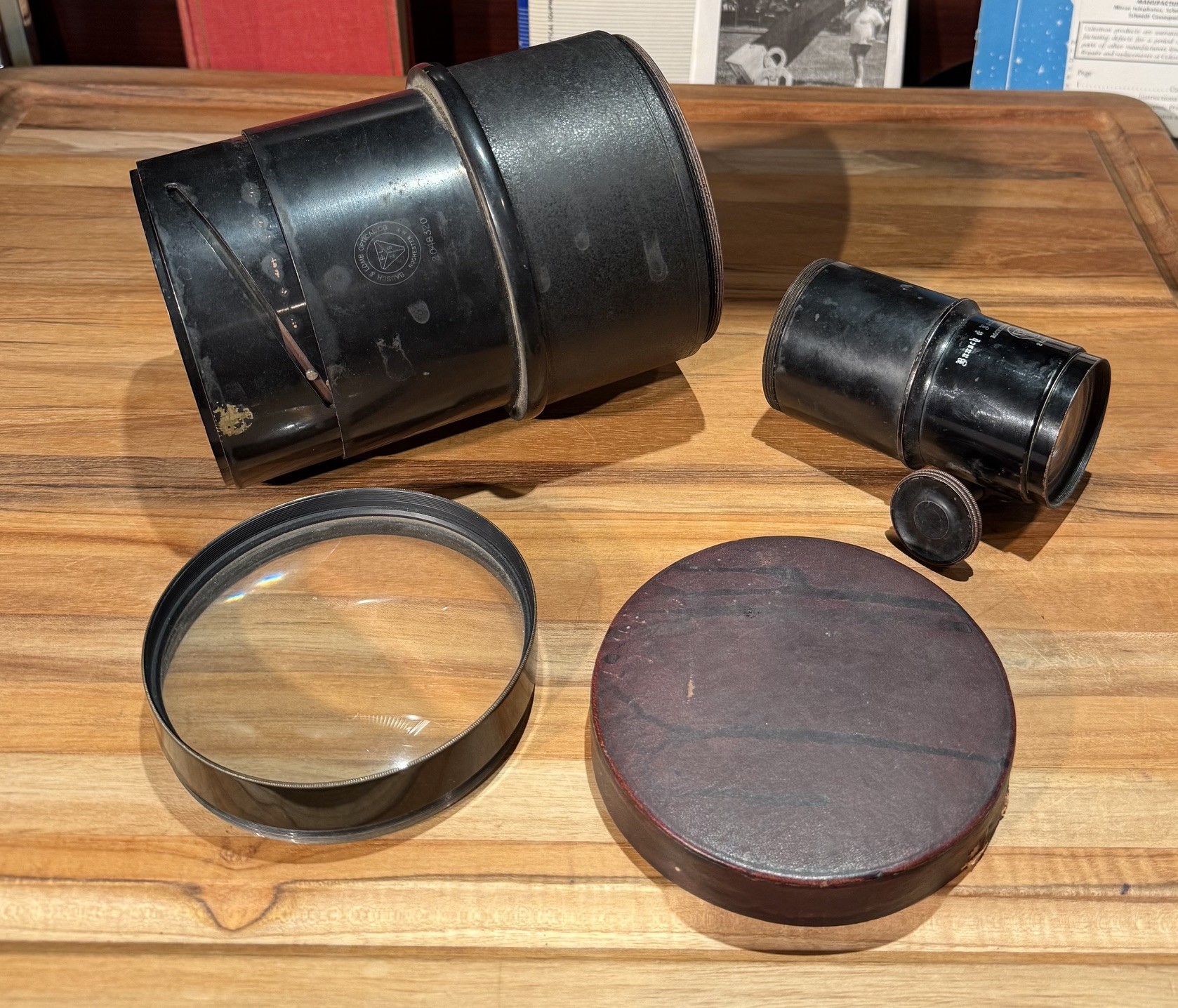
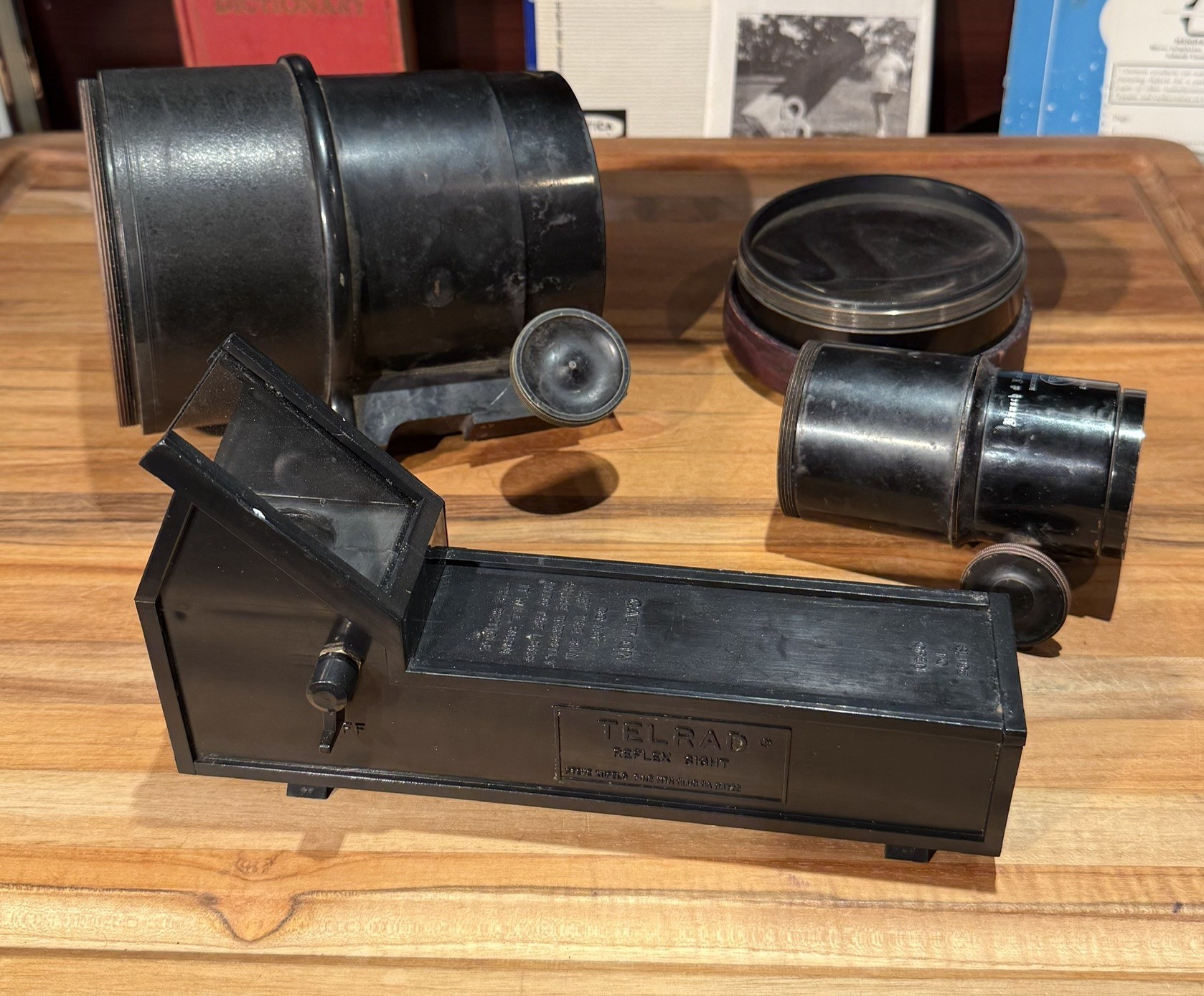
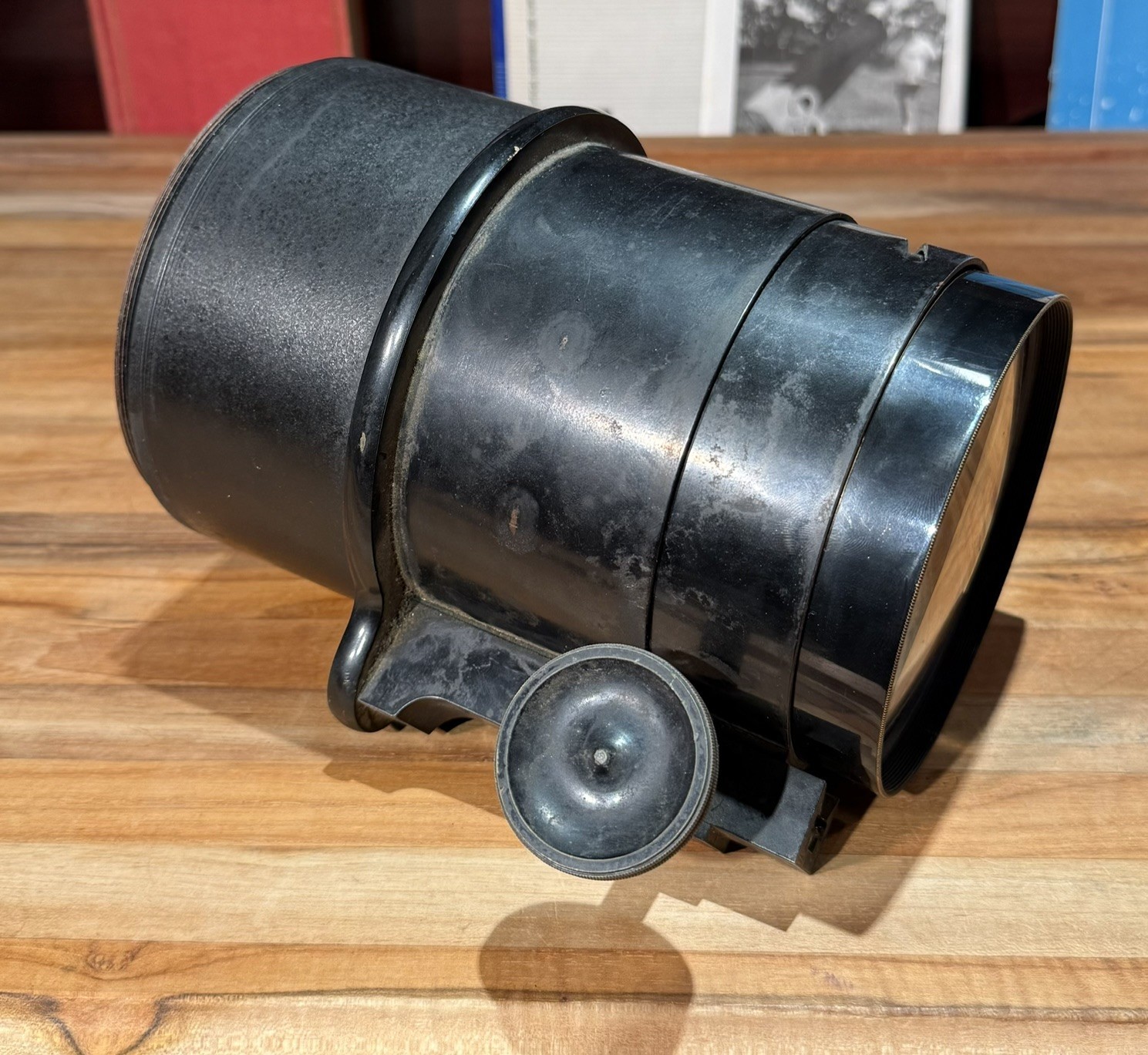
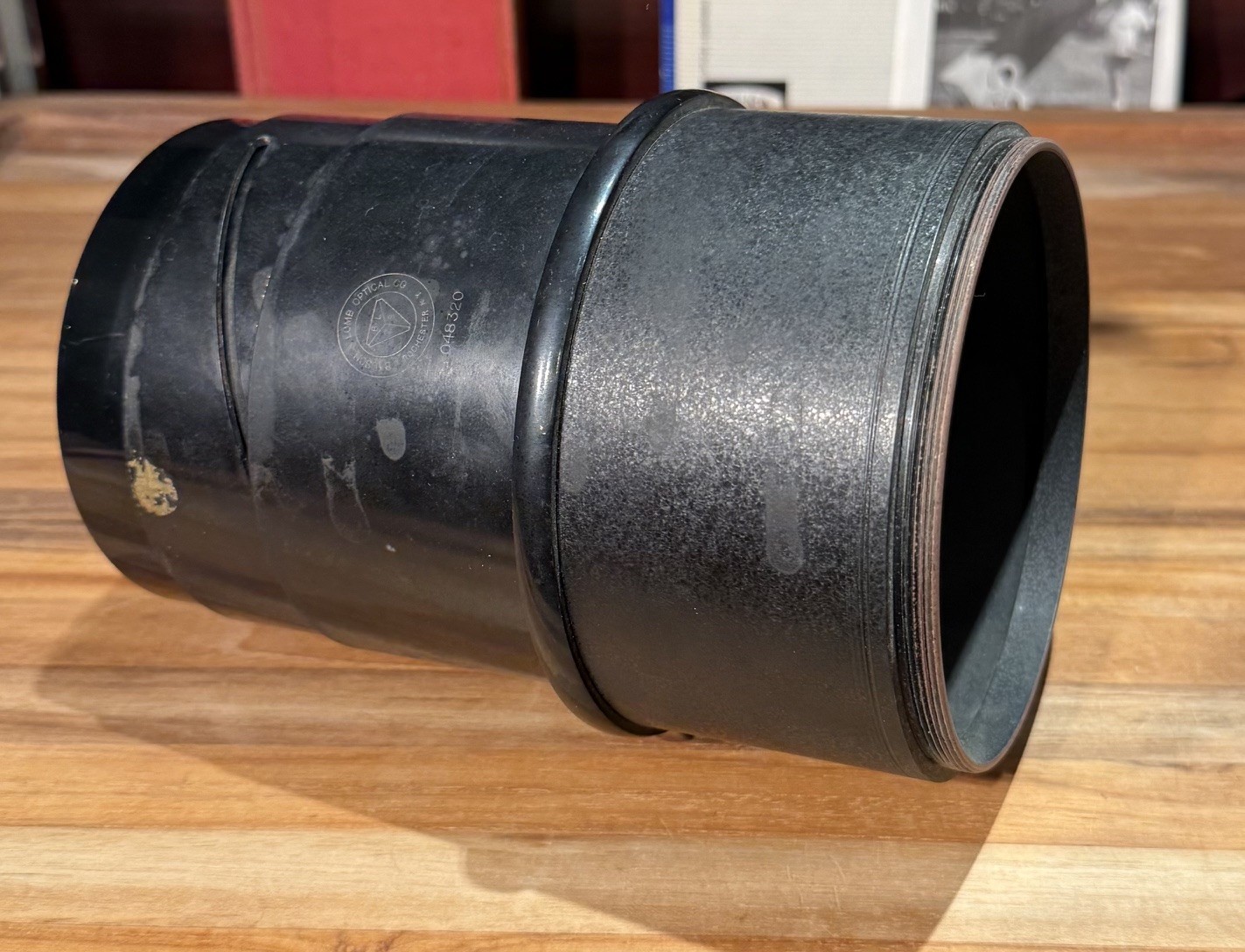
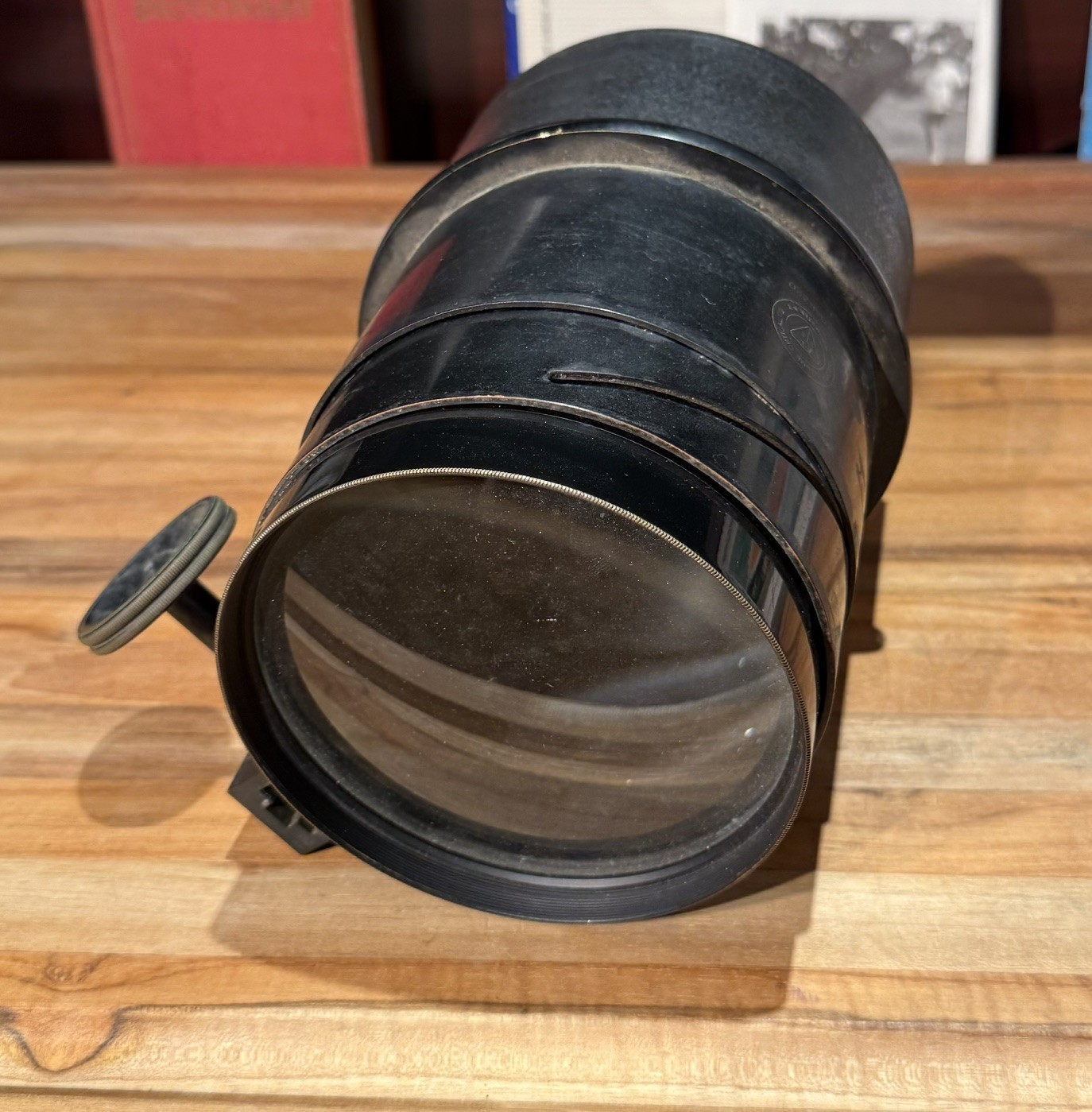
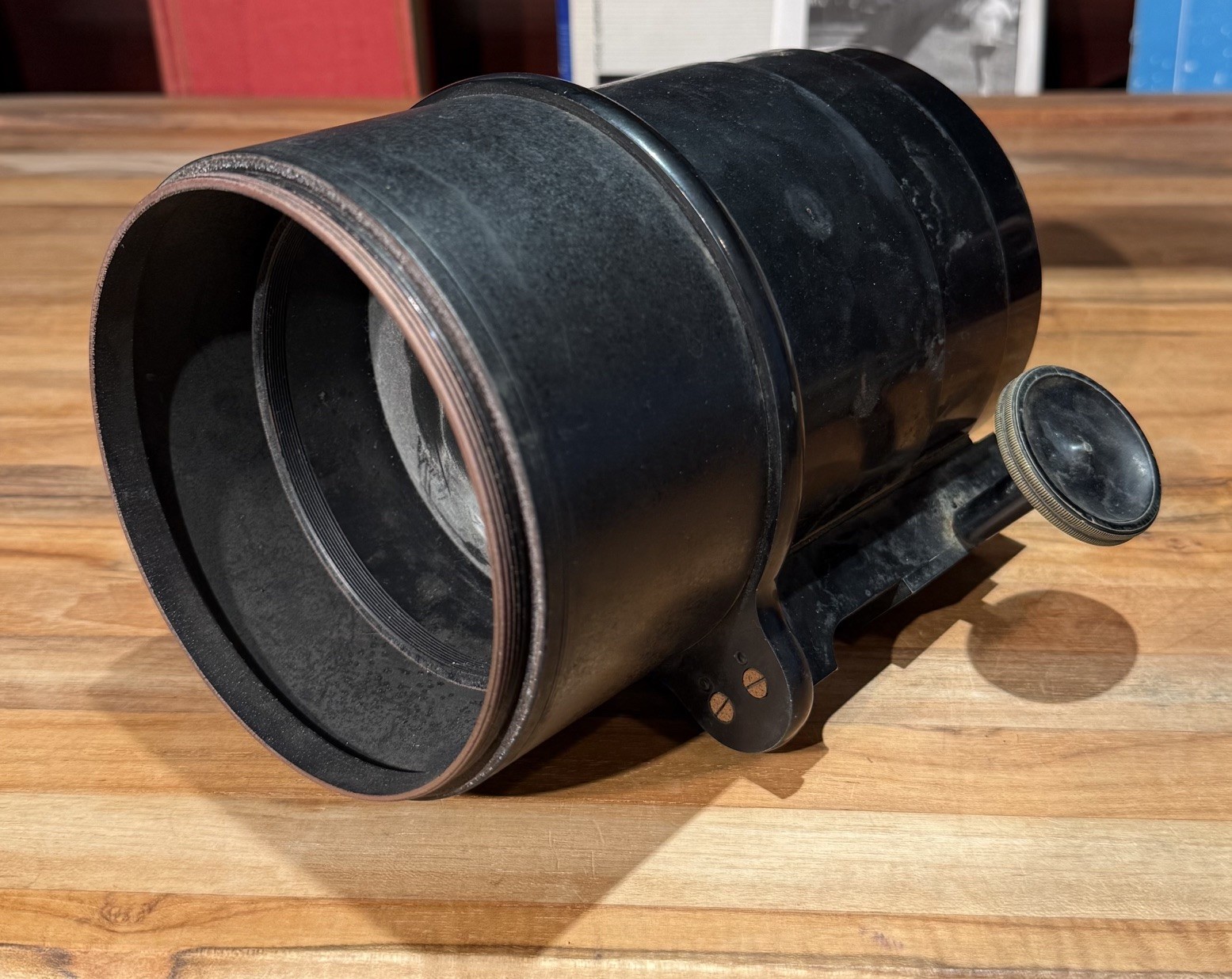
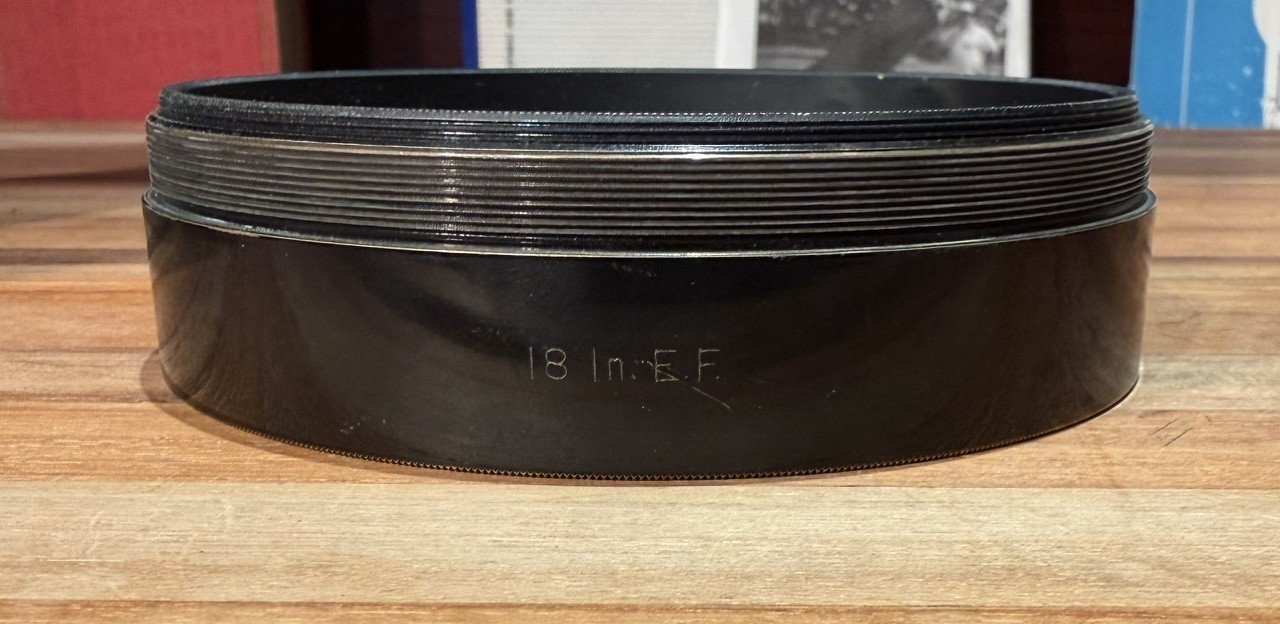
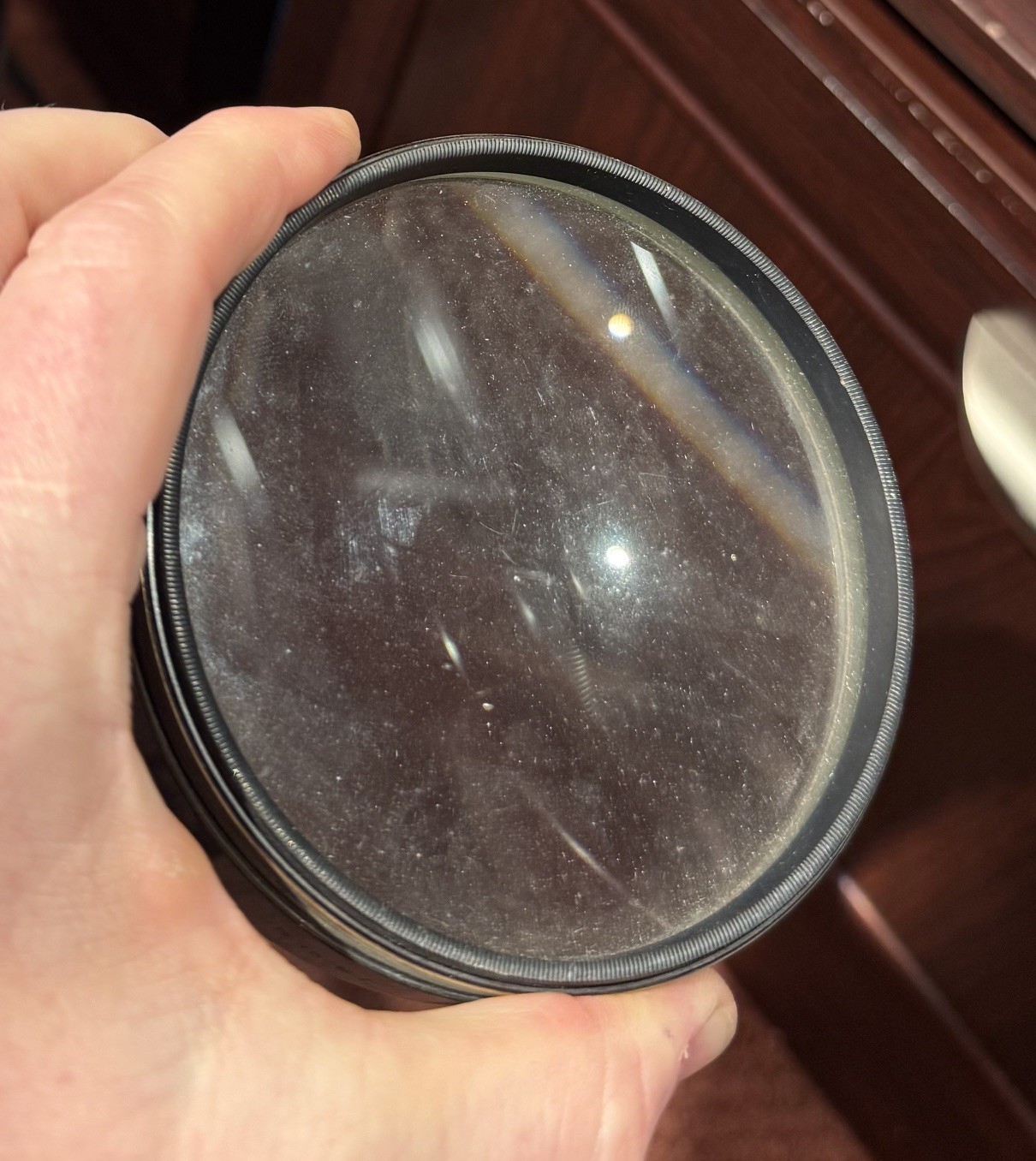
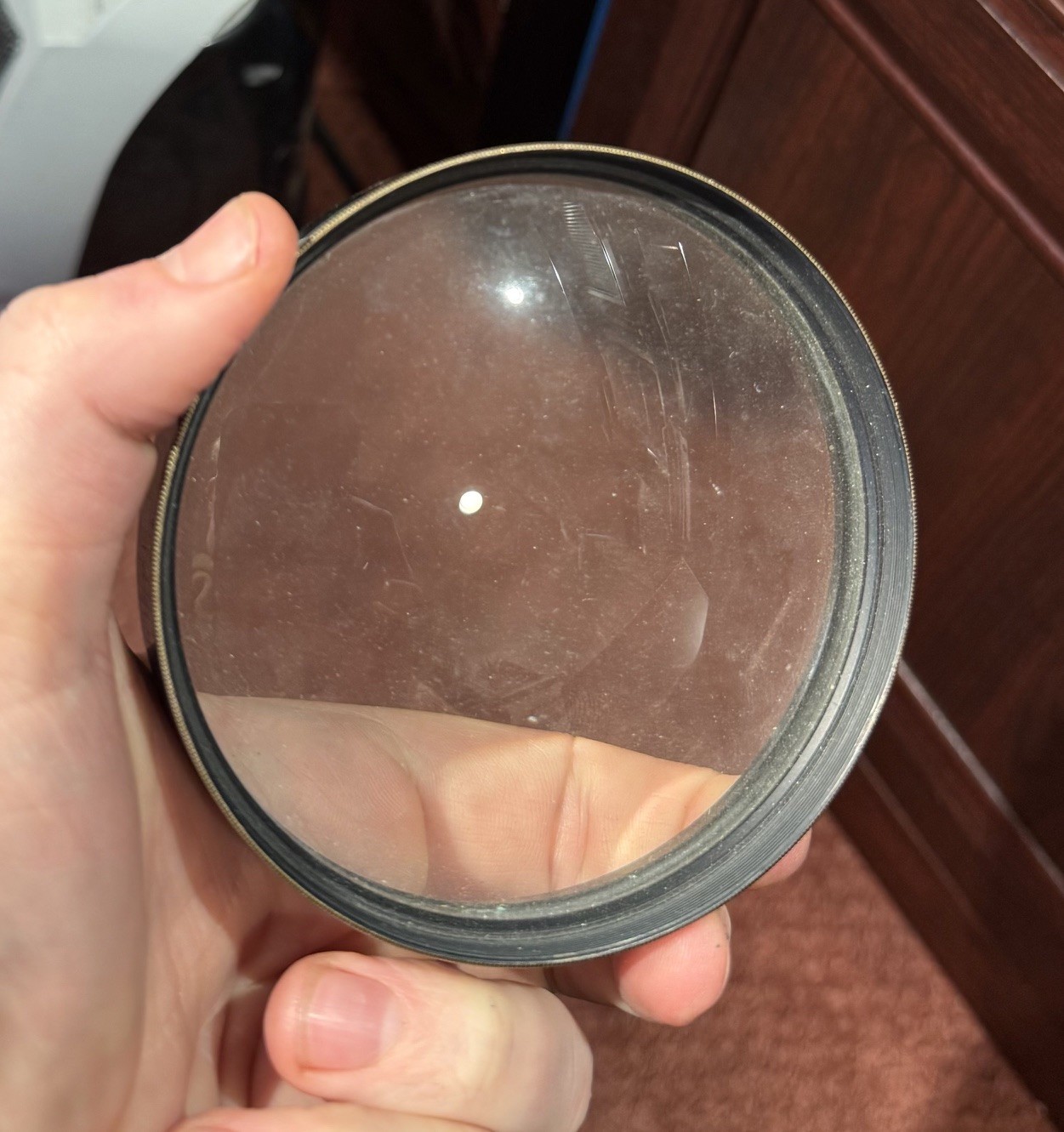
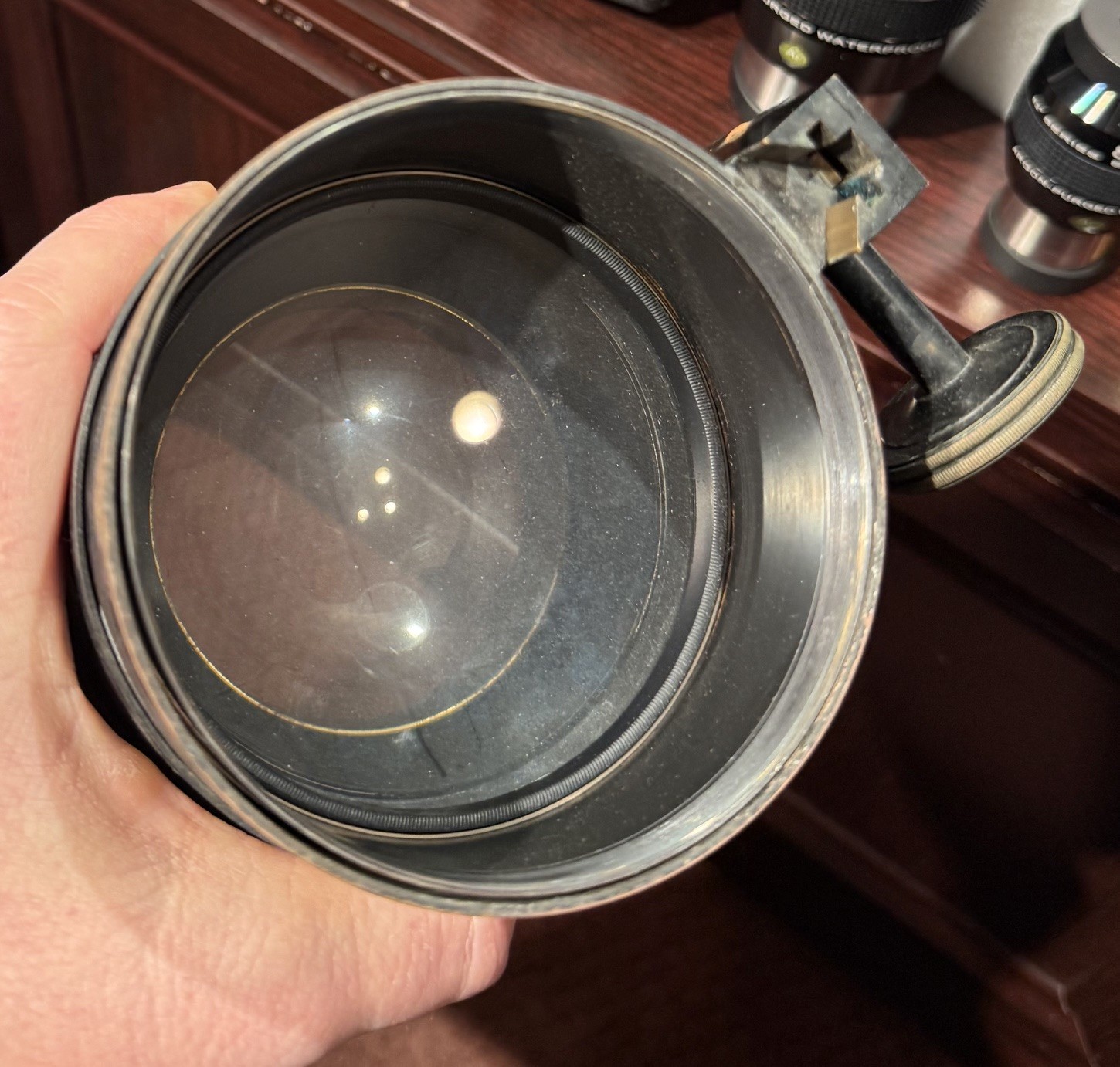
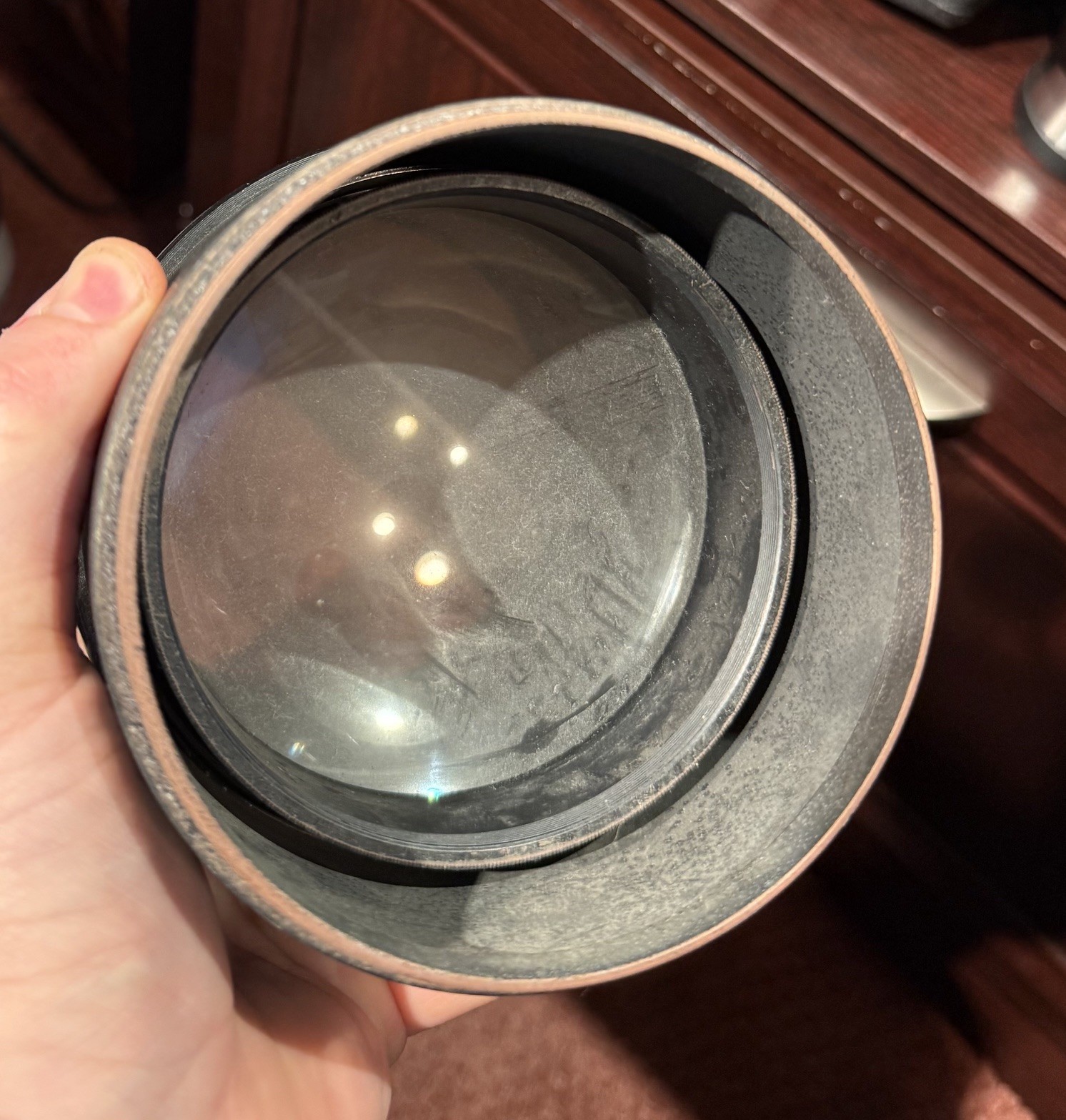
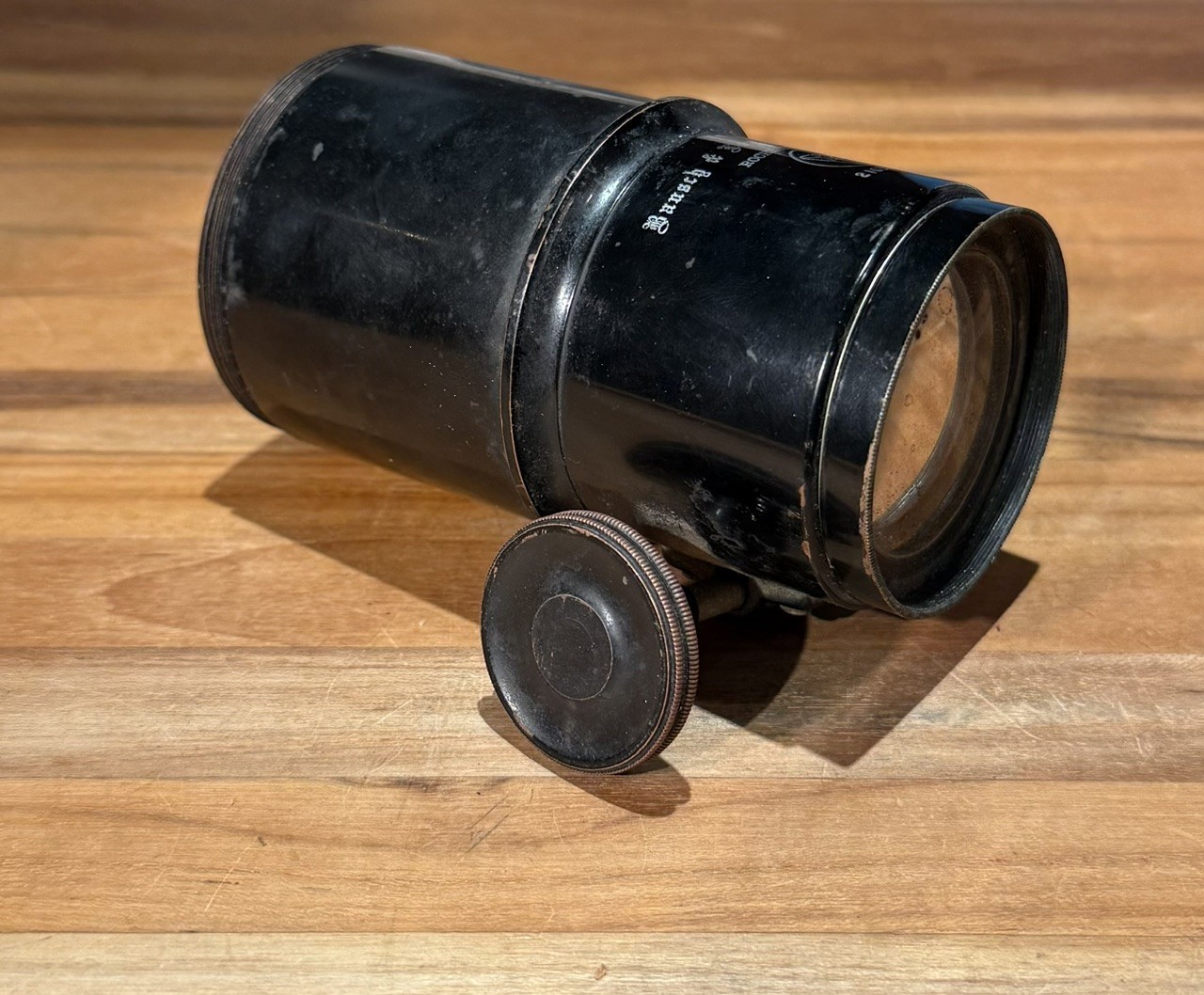
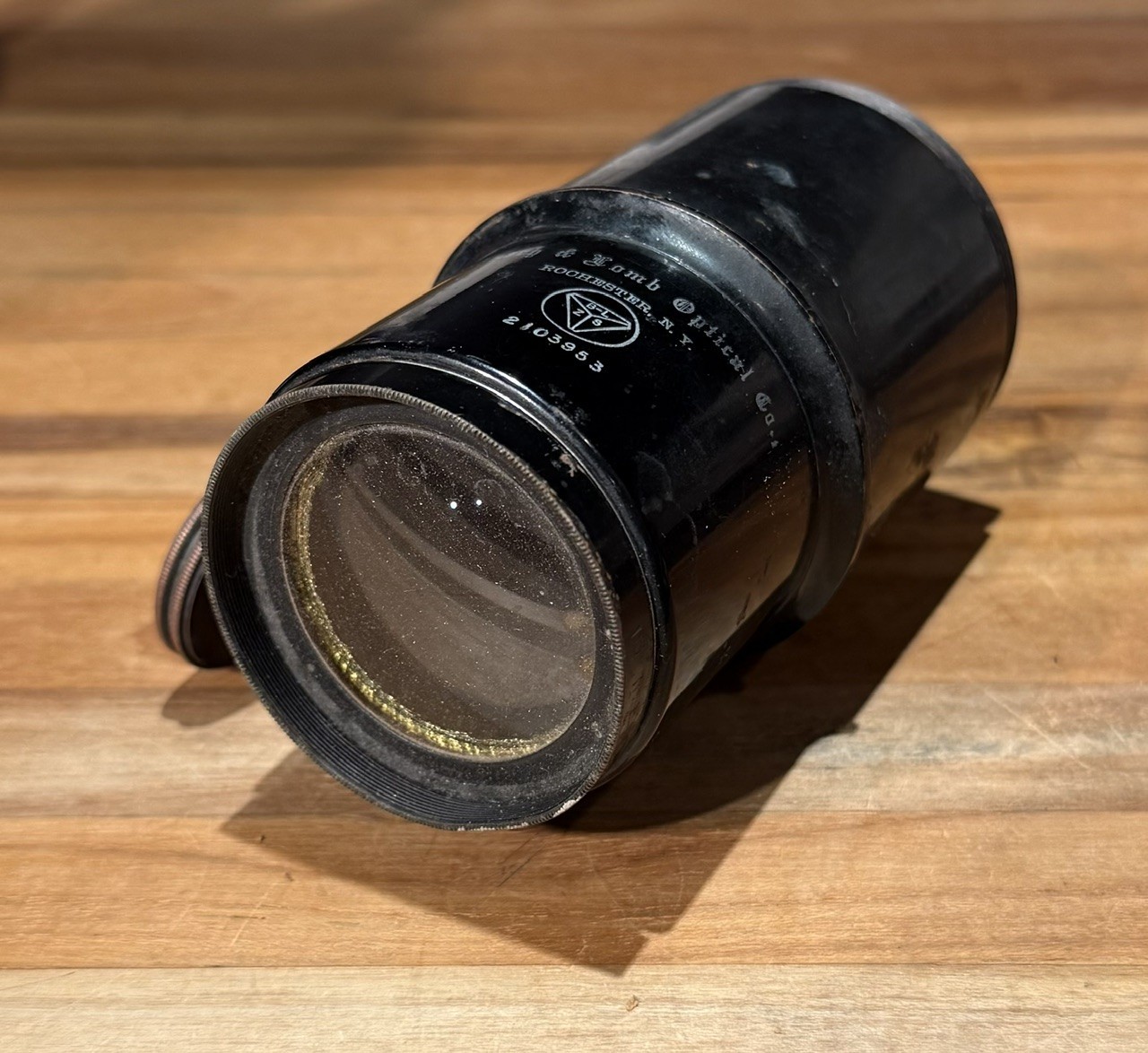
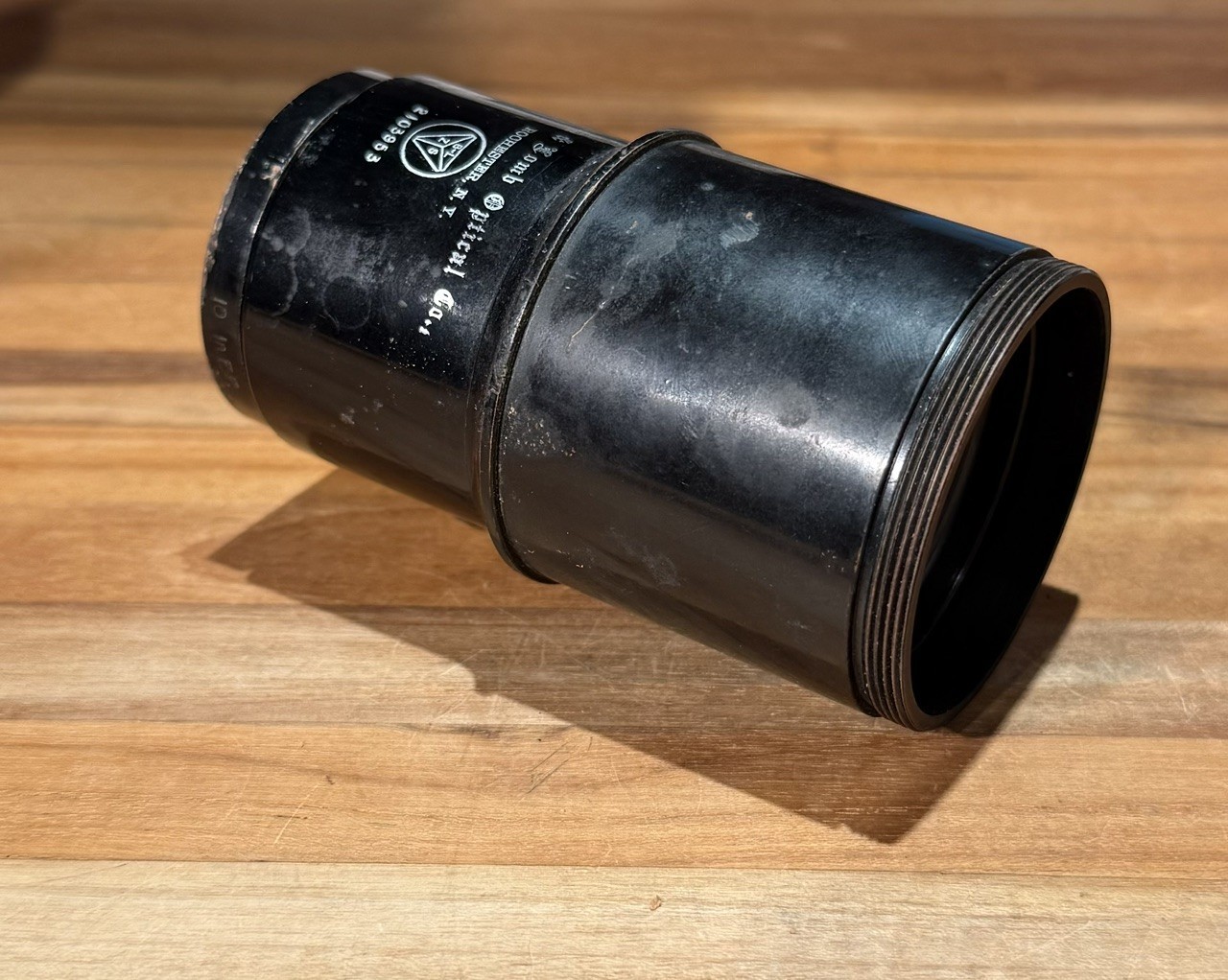
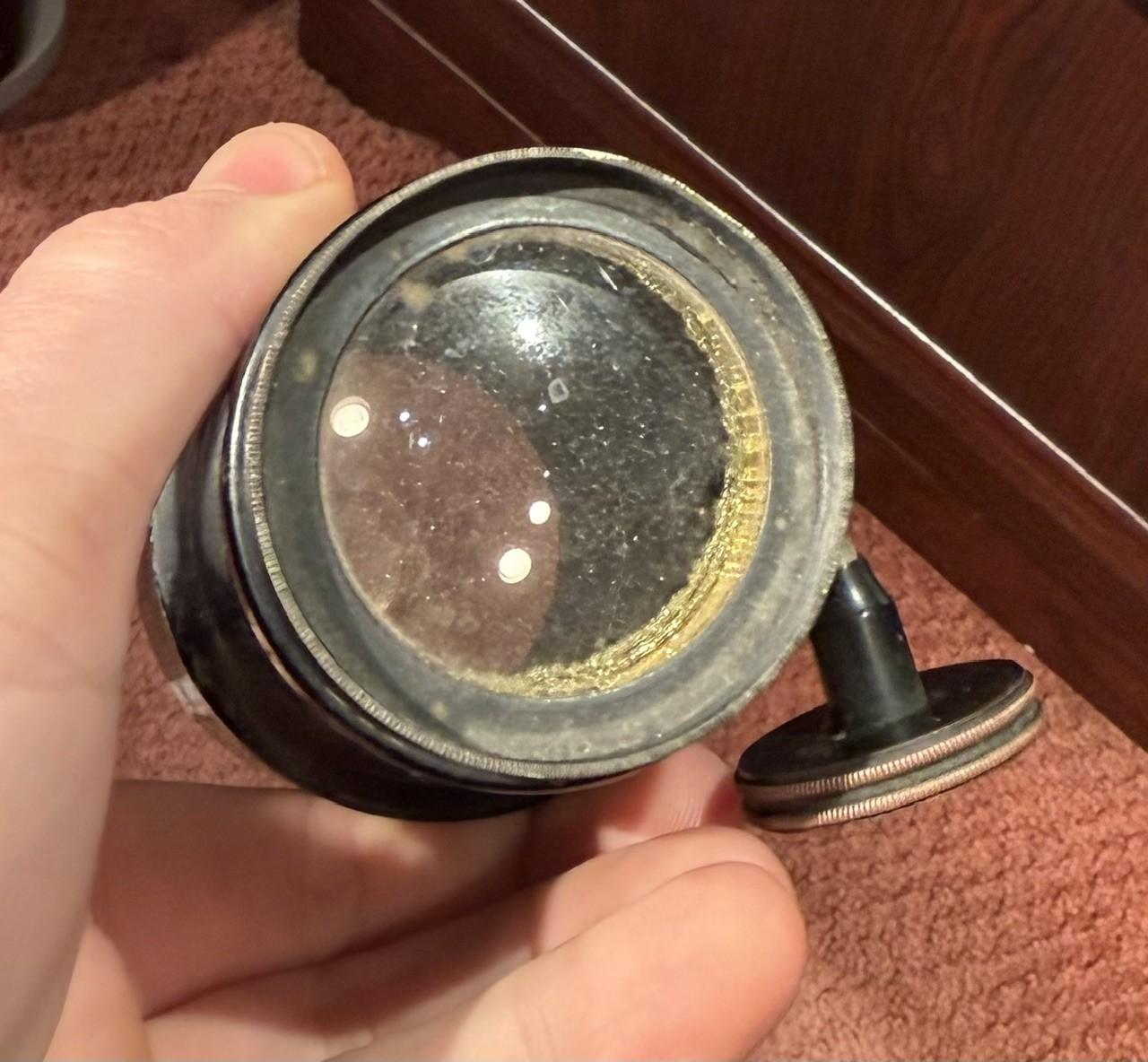
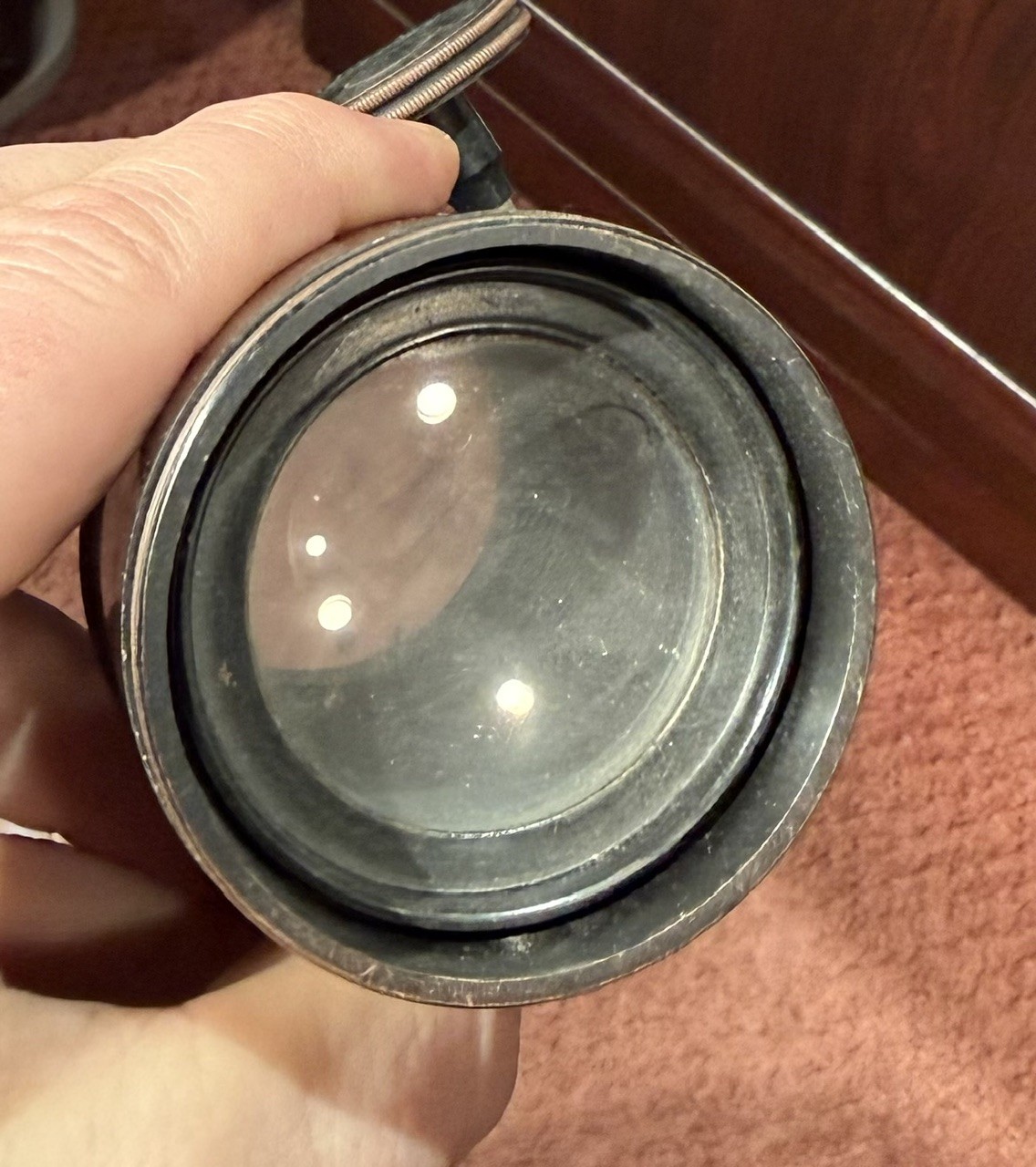
** Photo #2 shows a Telrad (not included) in the foreground for size reference. Photos #10 and #11 are of the detachable front lens of the large lens system. Photos #12 and #13 are of the large lens system without the detachable lens. Photos #19 and #20 are the smaller lens system. **
These are early pieces of Bausch And Lomb history; photographic focusers and lens arrangements for their Zeiss-partnered Tessars (lenses for those bulky, folding, accordion-looking cameras with glass plate negatives).
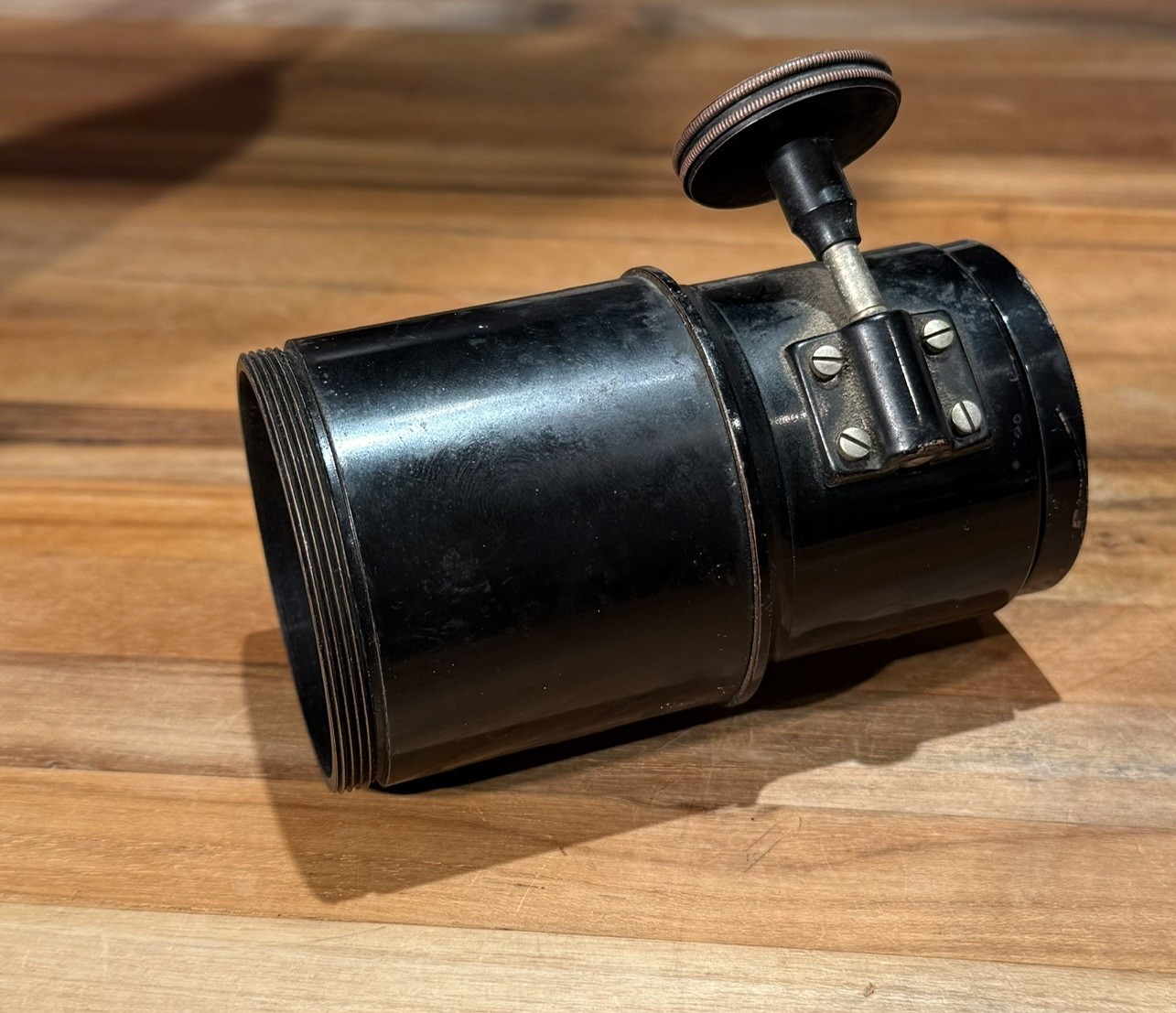
The pieces you see here are the actual camera lenses. The end that you see the rack-and-pinion focus knob on is the portion that faces your subject. It is this end that the light must enter. The wider part of the body that looks like the focuser base is actually where you attach the rear portion of your folding camera body, which houses the glass plate for exposure. When the camera was macro focused, the rods would extend the rear of the camera away from the lenses (this is where you see the billows stretch). Fine focus was then determined by turning the single focus knob. Then you placed the black shroud over your head and took the shot.
Tessars are the evolved optics of the Unar (Portrait Unar), which were 4-element unsymmetrical anastigmats that began production with Bausch And Lomb/Zeiss in 1900. When the Tessars surfaced in 1903, they were the more advanced system with their faster figure and peripherally better corrected, often 4-element 3-group optical orientation. They were the best features of the Unar and the Protar meshed into a single product.
The end result was both air-spaced and cemented lenses that could be adapted to a wide range of camera formats for both portrait or wide field landscape themes that produced fantastically-detailed photos.
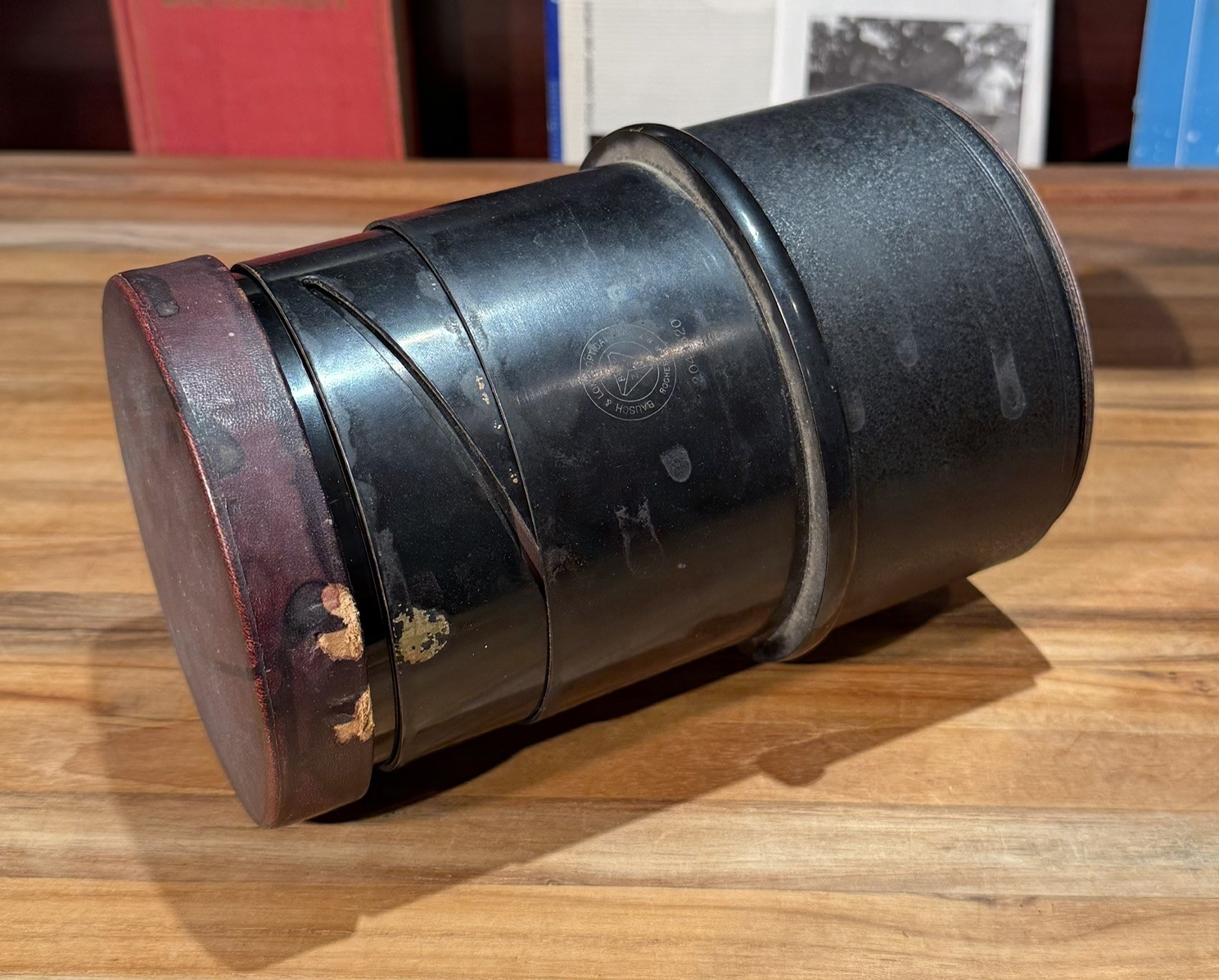
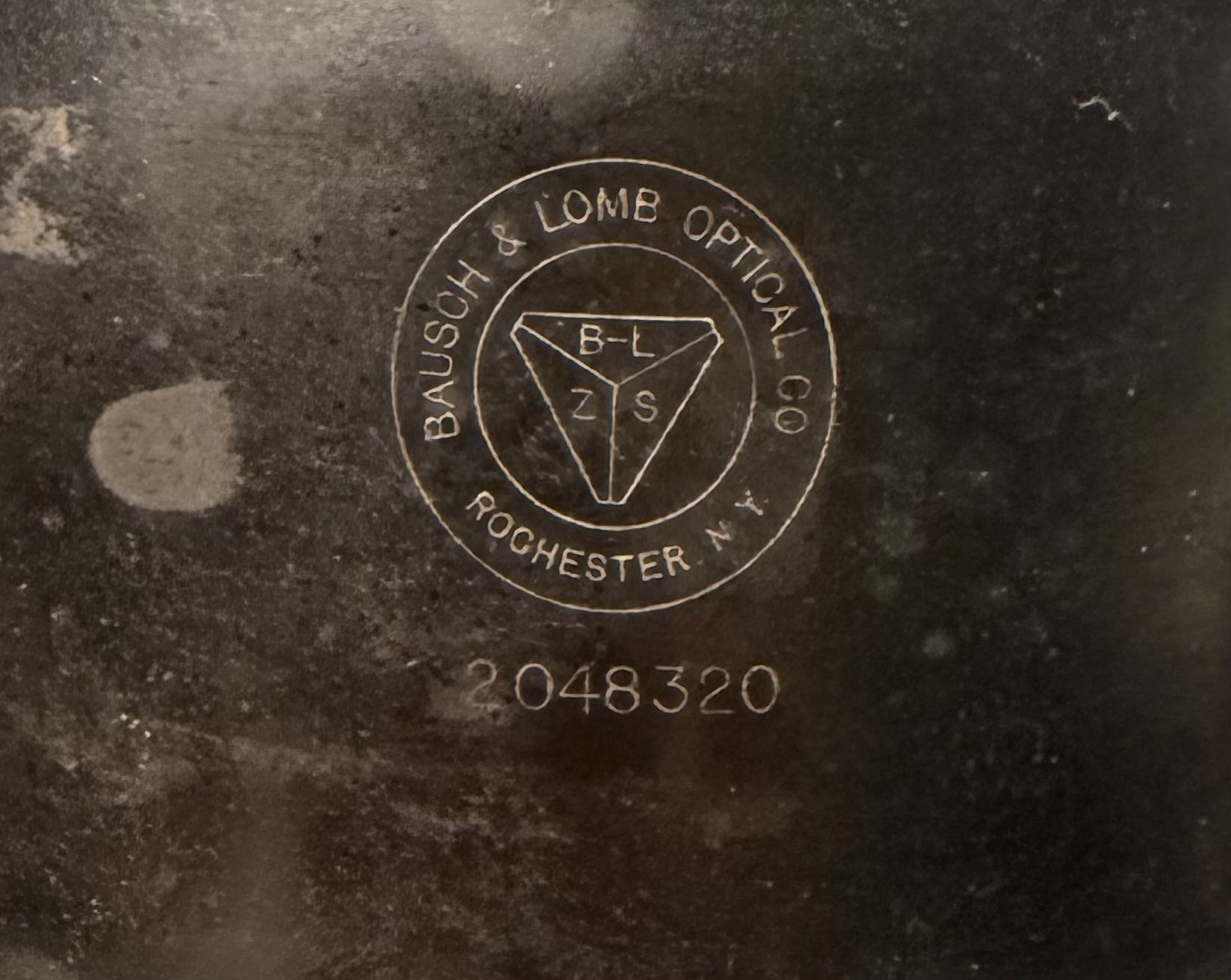
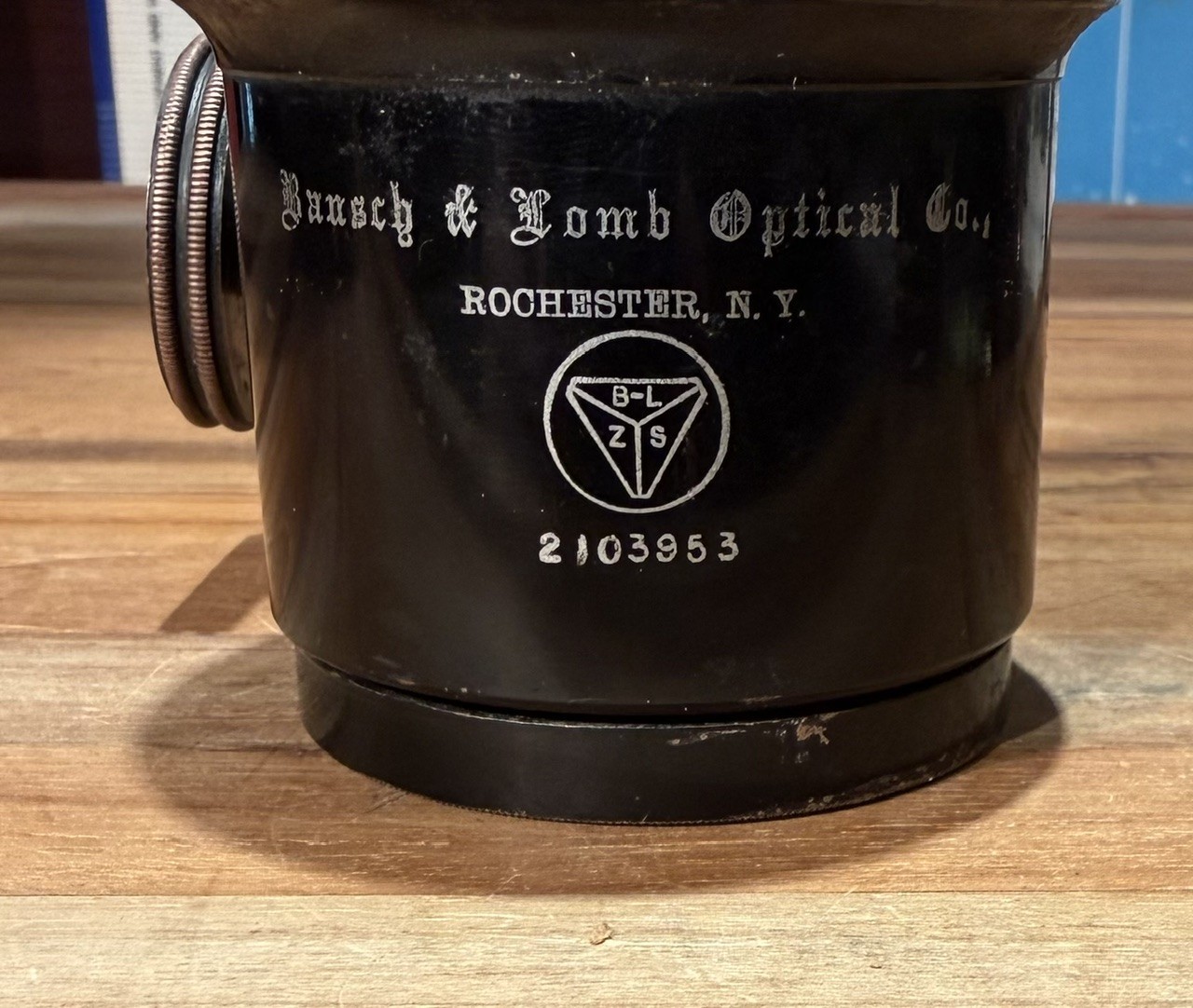
The units you see here before you are those earlier Tessar assemblies as both bodies feature the triangular prism logo with the etches:
B - L
Z S
This stands for Bausch And Lomb, Zeiss, Saegmuller.
It was, at its period of contract, which existed from 1905 until early 1915, the “Triple Alliance”; marking a period of nearly uncontestable optical excellence that almost no other manufacturers could challenge. Germany’s involvement as an axis power in World War 1 is the reason of B&L’s termination with Carl Zeiss, though by now, and since 1870, George Saegmuller had moved from Germany (then Bavaria) and was an American citizen who was mastering his own optical company, Fauth & Co..
His participation in the Triple Alliance was the result of his company, Fauth & Co., merging into B&L in 1905.
And though this trifecta was fully formed by 1905, Carl Zeiss further reinforced their business relationship with Bausch And Lomb by acquiring an impressive 20% stake in 1907 and then an additional 33% stake with their now-successful B-L Z S Company.
When this alliance disappears 1915 and Zeiss resells their shares back to Bausch And Lomb, the trademark B&L prism logo changes the letters to “USA”.
Thus, the age of these instruments can only exist in this time period.
It should be quickly noted that the engraved 7-digit code on these lens bodies are not the serial number. They are patent codes. These lenses long predate a serial code that could be so large. In fact, by 1941, Bausch And Lomb will exercise a Letter-And-Number system!
Now, the large photo lens is quite heavy and dense; weighing-in right at 6 pounds 10.6 ounces without the detachable front lens. With this field lens, it will add an additional 1 pound 0.3 ounces.
This removable lens has the engravings “18 In. E.F.”. It stands for 18-inches effective focal length.
It is not possible for me to determine whether this is the actual focal length of JUST the thread-on field lens or if it is the focal length of the entire lens arrangement.
The field lens is a fully coated doublet with an exact aperture of 96.9mm.
The large photo lens array has an aperture right at 96mm to 97mm (difficult to get an exact measurement due to the deep recess design) and appears to have 3-elements (2)(1); making it a 5-element system when the field lens is threaded to the front. It is definitely a Tessar assembly because none of these elements (as also with the removable lens) are cemented.
However, with the smaller photographic lens array, it does have both cemented and air-spaced elements; making it a very early Tessar, and the older of the (2) bodies offered in this auction. Part of this can also be seen in its silvery characters, which feature the older font I’ve seen on most B&L products predating 1910.
Based on the outer-facing elements and number of reflections I can gauge with a laser, this should be a Cooke Triplet system, which would make perfect sense in early photography applications.
As with the larger lens array, this unit also has a removable, thread-on front doublet (cemented), which has the engravings “10 In. E.F.”. Again, I cannot completely prove if this is the true focal length of the entire system OR if it is for just that doublet lens.
This smaller unit has a front aperture of 37.7mm.
Physical condition of the large lens system is quite good. The focuser immediately responds and racks in and out smoothly. Keep in mind that this focuser does not use tension screws or locks, so aiming it at the zenith won’t be feasible (it will droop from the weight of the glass). The body has no dents, flat spots (drop evidence) and no signs of any modifications. The male and female accessory threads are not stripped or worn.
Cosmetics are great given its age for sure. The Triple Alliance etching is in excellent condition as it is clearly legible and unworn. The same can be said of the patent numbers. Because there is patina in the paint and metal, these etched characters will look faint head-on, but are very clear at-edge. So, if you do a little deeper cleaning, they will be all the more visible.
Also, what you see as rust on the threads is not; that is patina on the bronze and brass. Nearly all of this assembly is solid brass, to include the focuser knob and rack. However, the (3) slotted screws on the focuser housing and the (2) slotted screws attaching it to the outer lens flange are steel and they are brown with mild surface rust.
Optics are in great condition for its age and excellent on the removable front lens assembly. Obviously, for those of you who wish to repurpose these elements into a working optical system will need to do some cleaning of the internals as there is a layer of dust on them. The good thing here is that I see no clamshells, chips, cracks, or heavy sleeks. There is dust haze, but I do not see any evidence of fugus.
As for the smaller lens array, it is in fair physical condition. The focuser is completely seized and the knob will not turn. The front lens, which should unthread as we see it happening in the large lens assembly, will not unthread. It also is seized in place. There are no flat spots, punctures, dents, or bad scratches, and definitely no signs of remodification; just seized parts.
Cosmetics are great and the silver-painted (or chemical dyed) characters are unusually crisp and uniform in color. The paint is all original and still in strong gloss on the front body. No rust is present because none of this has steel; it is solid brass and bronze in construction. So, what looks like rust is merely brass patina.
Optics are in great condition for its age on the rear. The front, “was removable” lens is in poor condition as the cement agent has crystalized and intruded into the light path. Whether the glass can be restored is an evaluation statement beyond my skill. So, for your sake as the bidder, I would state the elements can work, but will always have poor peripheral performance.
Aside from this, just mild dust and dust haze is present, which can be cleaned safely.
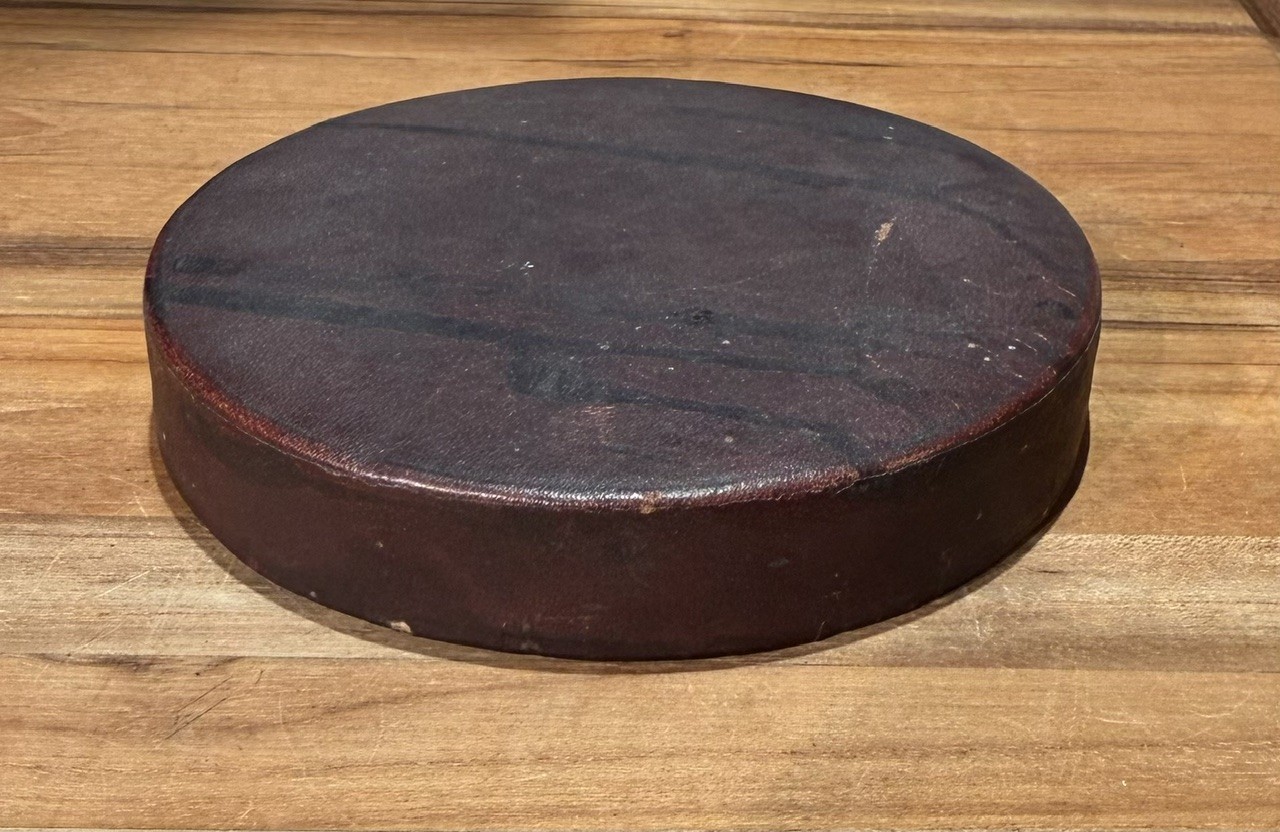
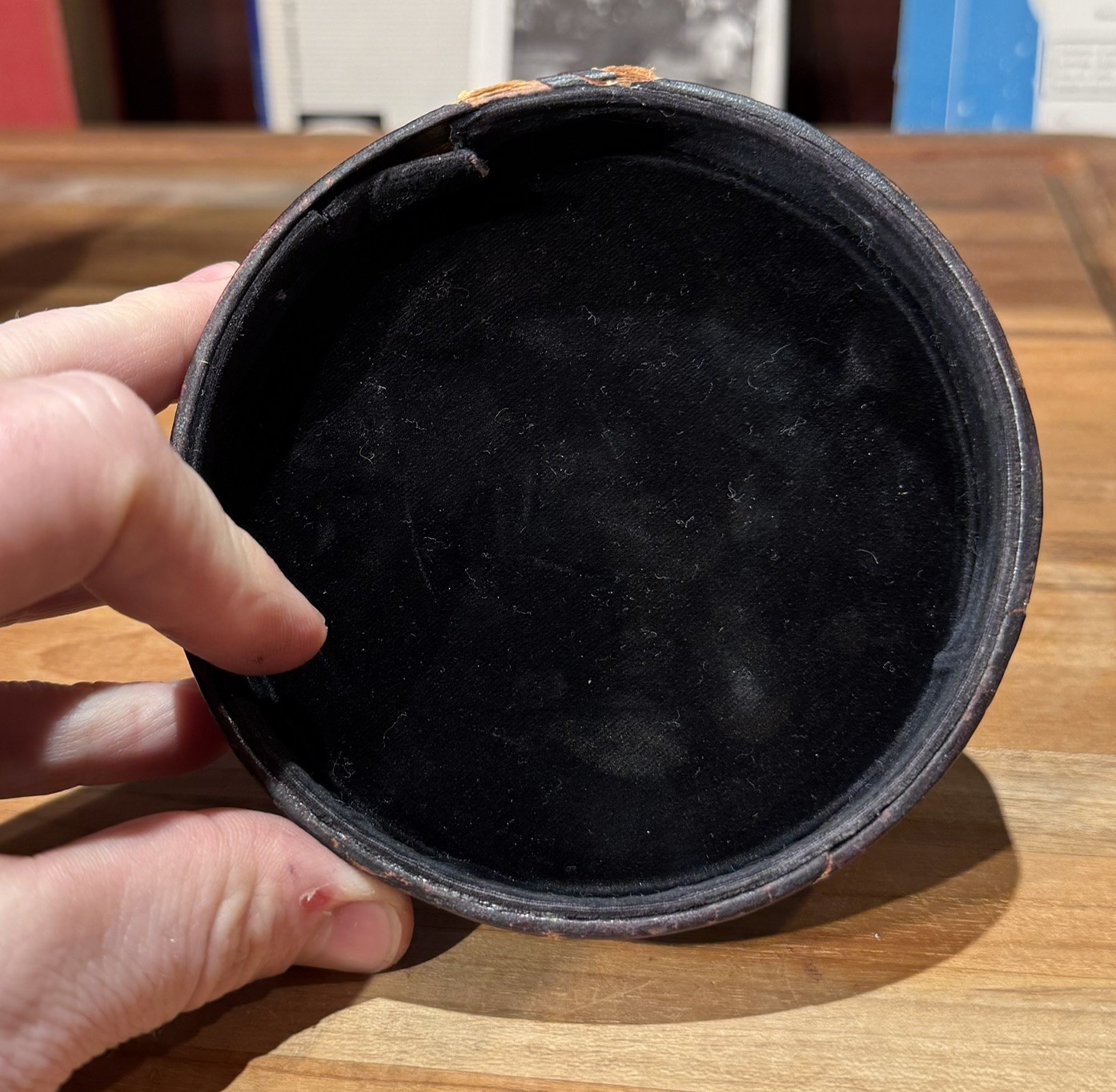
Finally, the often-missing, front dust cap is in excellent condition with perfect form. It fits securely over the front (removable) lens of the large photographic lens setup. The leather skin is perfectly intact, except on a small portion of the side where it received rough contact. The inner black velvet covering is complete with a tear.
And there you have it; a unique and rare piece of very early American optics history in which these lenses and their housings were crafted by some of the very best optical talents then-known. If you are one of the very few individuals here that have a mostly-working, early model Tessar, these may be the lenses you need to complete your system. On the other hand, those of you who are gifted in repurposing antique refractor elements to create a one-of-a-kind rich field telescope may see immediate uses present. It is now all up to you.
No "Aye Eye" was used in the writing of this ad. This gray-haired Gen-Xer is all about organic writing skills and hands-on experience!
All nations welcome to bid.
| Time Placed | User | Bid Amount |
|---|---|---|
| There aren't any bids recorded yet. | ||
Andy Sedlacek (fct-150)
Rating:
(1861)Funding Member
