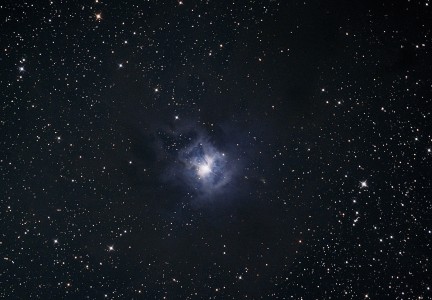
The Next-Step Set
Please Log In to view the details for this classified ad.
Don't have an Astromart account? Click here to create one
Tired of reading the same thing rehashed each month in the glossy astronomy magazines? Ready to take the next step? Then this three-volume set is for you. The first text is an introduction the space program of planetary exploration. The reader of the second two books will come away with the elements of a first-year college program in astronomy. If you are tired of the same old thing in the glossies every month, take the next step. Go beyond the basics. The complete three volume set is priced at $20.00.
EXPLORING SPACE: Voyages in the Solar System and Beyond
By William E. Burrows, Random House, 1990, Hardback, ISBN: 0-394-56983-0,
502 pages.
The exploration of the planets ranks among history’s noblest achievements and greatest adventures. “We’ve given the people of this planet the solar system,” says one of the participants. This is the story of the stunning technical and scientific accomplishments over vast reaches of space. But more than that, this is the profoundly human story of the courage and unprecedented creativity of scientist, engineers and administrators, most of them anonymous, who belong in the pantheon of space heroes no less than the astronauts and the cosmonauts. Exploring Space shows how relentless rivalry between the superpowers drove lunar and planetary exploration programs and the shuttle, and how the space science community was finally galvanized into action when it realized that the shuttle and Reagonomics were about to end planetary exploration. It tells why NASA’s very existence depends on the shuttle and a manned space station, and why most space scientists believe both of them are as wasteful as they are unnecessary.
Condition: Very Good.
EXPLORATION OF THE UNIVERSE, fifth edition,
By George O. Abell, David Morrison, and Sidney C. Wolff, Saunders College Publishing, 1987, Hardback, ISBN: 0-03-005143-6, 748 pages plus 12 page appendix of star chats.
This is a textbook in astronomy. It is a one-year course in astronomy for the liberal arts student or an intensive one-term course. If you want to delve deeper into the physics of the universe from a non-mathematical perspective, this is the text for you. The text is rather large for a one-year course for the non-science student, but the authors goal was to make it as comprehensive as possible. An additional goal of the authors was to make the text a broader instruction in the discipline of astronomy, incorporating a rational exploration of nature and a glimpse of the history and character of science and scientific thinking. This is a great volume for those interested in going a tad beyond the glossies.
Condition: Very Good.
UNIVERSE
By William J. Kaufmann, III, W. H. Freeman and Company, 1985, Hardback,
ISBN: 0-7167-1673-9, 594 pages.
This is an excellent follow-on to the above ‘Exploration of the Universe’ text. Kaufmann writes to meet the needs of instructors of either a one or two term course in astronomy. This is an early edition of the text used as the textbook for the first three modules of the Swinburne University M.S. in Astronomy program that I completed last December. Kaufmann is a wonderful author and his texts are second to none as tools to learn astronomy at the next level. The book’s twenty-nine chapters are easily divided into two nearly equal parts, the first half dealing with early models of the universe and planetary astronomy and the second half treating stars, galaxies and cosmology. The first five chapters introduce the foundations of astronomy, including descriptions of such naked-eye observations as eclipses and planetary motions and such basic tools as Kepler’s laws and the optics of telescopes. Chapter 6 prepares the reader for the next ten chapters, which cover the planets in outward order from the Sun. Chapter 17 leads into stellar astronomy with a detailed discussion of the properties of light, Chapter 18 is on the Sun and t introduces the reader to the general nature of a star. In Chapters 19-24 stellar evolution is described chronologically from birth to death. Molecular clouds, star clusters, nebulae, neutron stars, black holes and various other phenomena are presented in the sequence in which they naturally occur in the life of a star. A survey of the Milky Way introduces galactic astronomy in Chapter 25; this is followed by two chapters on galaxies and quasars. The final two chapters on cosmology emphasize the exciting physics of the early universe. In my opinion, no one tops Kaufmann in college-level astronomy instruction. He builds a solid foundation for the amateur.
Condition: Very Good.
Funding Member

Sponsors
- Vernonscope
- CarbonScopeTubes LLC
- Waite Research
- APM-Telescopes
- BBLABS LLC
- Matsumoto Company
- FocusKnobs
- Desert Sky Astro Products
- kwtelescope
- ASTROPHOTOGRAPHY BY MARTIN PUGH
- astronomy-shoppe
- AstroMart LLC
- Anacortes Telescope
- RemoteSkies.net
- SellTelescopes.com
- OMI OPTICS USA LLC
- BW
- Astromart Customer Service
View all sponsors