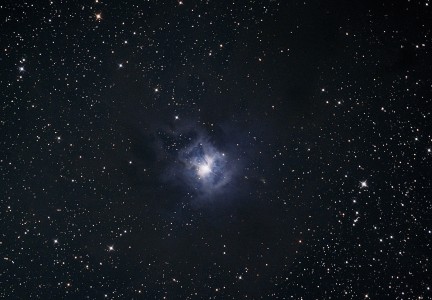
Image of the day

Captured by
Erwin Forbragd

Iris Nebula

My Account

New to Astromart?

Register an account...

Need Help?

Deep Sky Binocular Views at Mt Katahdin 1

Started by EdZ, 08/02/2003 12:51AM
Posted 08/02/2003 12:51AM Opening Post
Mt. Katahdin Maine trip July 2003

This was an annual backpacking trip with my two younger brothers. We’ve been doing trips like this for over 25 years. The mountains in Baxter State Park, Maine are considerably more inaccessible than the mountains on some previous trips we have taken in New Hampshire and New York.

Campground the first night was the furthest point that we could drive in to prepare for the trip that would begin the next morning. I was glad for the opportunity to test out gear before we actually started backpacking. Once you begin the backpacking trip, you carry what you take with you, even if it doesn’t work, and there is no going back for more.

At first I tried to mount my binoculars on a small folding tabletop camera mini-pod strapped to the top of my walking pole. When used like a monopod, it worked OK, but in this manner I could not show anyone else what I was looking at. With the pole securely stuck in the ground I could not completely stop shake and it made it very difficult to view.

I had my Bogen 3211 and had to carry the full weight of 7# for the 30-mile trip. This tripod pushed my pack load up over 60#, but several good nights of observing during this 6-day trip made it worth the effort to carry the equipment.

The most notable difference in the sky from a dark location is how readily the Milky Way stands out. On my first night I momentarily mistook the Milky Way for a cloudbank. From the Great Rift in Cygnus to the bright star clouds in Scutum and Sagitarius, the Milky Way shown like I have never seen it before. The varying intensities of brightly shining background stars that define the Milky Way gave the impression of seeing through the spiral arms that make up our galaxy.

When I finally did see my first cloudbank roll in, it also was like I have never seen before. The absence of ground light meant that clouds were not lit from below. Clouds could not be seen. Only the obscured section of sky hidden by the clouds allowed a hint that clouds were present.

Just recently at home in Rhode Island, I recorded one of the best nights of seeing I have written in my logbook. On that night around 2:00 A.M., I counted 11 stars down to mag5.6 in the Little Dipper, the most I had ever seen. On the first night of the Katahdin trip, viewing at Roaring Brook campground, at about 10:00-11:00 P.M., I counted and plotted 16 stars. I repeated the count again several nights later at Chimney Pond and plotted 18 stars. There were others nearby that I did not count, but they were off to the side and not the faintest. I have been trying to verify the mag limit of the 18 stars. 17 are shown in the mag6.5 Cambridge Star Atlas, so I assume I reached at least mag 6.6 naked eye. The undetermined star, the faintest of them all is just east of and about a half degree north of 21UMi.


continued

edz

Posted 08/02/2003 12:53AM #1
Mt. Katahdin Maine trip July 2003

As another indicator of naked eye limiting magnitude, I was able to see the straight line of the stars in Cr399, Brocchi’s cluster, the Coat Hanger. The stars in the line are labeled in the 6.3 to 6.9mag range except one mag7.1, which I doubt I saw. I can't be sure of which ones I saw, I didn't count, but I was probably seeing at least to mag 6.7.

With great ease I observed many of my favorite objects. I took only a few copies of charts with me, but did not need them. I was glad to know my way around the sky. Some objects that are difficult at home were readily found and observed.

M51 had a dark black space in the NW, between the spirals of the two galaxies.
M101 shining as a ghostly glow, easily stood out from the background sky.
M81-M82 with distinct shape and orientation both grew larger as it got darker.
M12 although fainter, was larger than M10, which had a brighter core.
M11 and the surrounding star cloud was so bright, I noted with the surrounding cloud it looked like a large version of M42.
M13 seemed slightly resolved at the edges.
M71 was clearly identifiable.
M27, the Dumbell nebula was exceptionally bright.

Very many clusters were observed, but not recorded.
Clusters like 6940 stood out with so many more faint stars visible.

Doubles in the range of 32” (Albierio) down to 13” were easy pickings, however I do remember noting that I could only identify yDel (9.8”) as elongated.

NGC6992-95, the eastern peanut shaped portion of the Veil Nebula was easily seen for the first time.
M16-M17-M18 clusters/nebula were all seen with so much Milky Way starshine that it was difficult to see the nebula apart from the faint star glow.
M24 became a vast area of dense star points.

Besides the sheer beauty of the naked eye Milky Way, I think the best of the trip was NGC7000, the North America nebula. This outstanding deep sky feature stood out like I have never seen it before in any optics. The entire Florida / Gulf of Mexico / Central America region was the brightest and most obvious. Although my sketch does not show a northern boundary, I sketched an area up the east coast well into Canada and up the west cost at least to Canada.

I debated which binoculars to take on this trip and eventually decided to take the new 2003 Oberwerk 15x70s. The improvements in the coatings over the older model in my opinion make these binoculars a much better tool for observing. At 3#2 for the Oberwerks, versus 2#0 for either my 10x50 Ultraviews or my 12x50 Pentax PCFIII, I decided the extra 1#2 was worth the weight for the added views and I was truly rewarded for the effort.

Did I mention on the third day that we crossed over the saddle of the mountain at 4900' in 60 mph wind driven horizontal rain. We carried a pair of 8x42 Swift Ultralites for use to observe wildlife. Didn't need them, we had three face-to-face encounters with moose. A trip I will never forget!

edz