Image of the day

Captured by
Lawrence Parchman

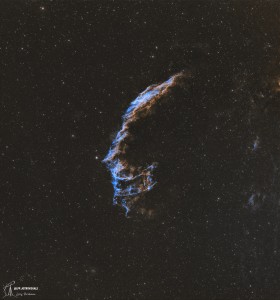
Eastern Veil Nebula (NGC 6992) - Wide View

My Account

New to Astromart?

Register an account...

Need Help?

Help with Binocular Purchase

Started by ronone6, 07/13/2005 05:30AM
Posted 07/13/2005 05:30AM Opening Post
I need a crash course on selecting a binocular for some casual stargazing. Live in Seattle (city limits) so the sky is light poluted. However, I can still see all of the stars in the big dipper (mag 4-5?, I think). Besides looking at the planets, I would like to be able to see some of the well known deep sky objects (Ring Nebula, Fussy Andromeda, etc).

I like the Canon IS 15x50 or 18x50. Is there much difference between the two magnifications? Is the Canon a good first choice or would you recommend a binocular and tripod combination to start off with?

Thanks...Ron M.

Posted 07/13/2005 06:17PM | Edited 07/14/2005 01:09AM #1
I've not used any of the IS binoculars. The Canons will certainly provide for a still image, but that won't reduce the weight of the binocular you've got to hold to get that image. So the advantage of IS may just quickly go away when your arms get so tired from holding a heavy binocular.

Binoculars are not the instrument of choice for looking at planets. At 15x you will barely be able to see the separation of the rings from the disk of Saturn. You would be able to see the two main equatoral bands on Jupiter and the 4 moons will be obvious. You would be able to see Venus as a partial phase disk. At 12x, other than the moons, all of those things would probably not be visible. You need a 20x80 or better yet 25x100 binocular to see M57, the Ring nebula and even at that it's so small you would only just notice it as something that is not starlike. But, M31 the Andromeda galaxy can be seen very well even in a 10x50. There are plenty of other objects that CAN be seen in a 10x50, but to see most of the faint extended objects like galaxies you'll need dark skies, at least mag 5.

For use in mag 4 skies, stick with binoculars that have exit pupils of 5mm or smaller. Larger exit pupils give a brighter image. But in the case of observing in brighter skies all that will do is wash out the images you might see. A 12x50 might be a good chioce with a 4.2mm exit pupil, or a 10x40 with a 4mm exit pupil.

There are other choices I would consider along with the Canon IS as good first choice. I would go for something like a 10x50 or 11x56 if you plan to handhold. Maximum power for handheld 12x. However if you think you might do most of your viewing from a mount, then a 15x70 for $150 could be ideal. You could put a $150 15x70 on a $125 tripod and it would work really well.

As a first binocular, I would not go with anything less than a 4° field of view and I think it would be better to stay with 5°-6°.

edz
Posted 07/14/2005 05:25AM #2
Hi Ron:

Here is my take on the binocular question. With regards to planetary observing, I'd like to reiterate that binoculars are not the thing to use. As for the Messier objects, it is more of an art than anything else with this instrumentation.

I own a two binoculars: Celestron Ultima 10x50's and Orion Little Giant 15x70's. I am in the process logging all of the Messier objects through the light polluted skies of Berkeley, CA with these. I am now able to consistently find the Ring Nebula even in the 10x50's. What you see however is a star-like object which on careful inspection shows a hint of a rounded apperance. In the 15x70's I believe I can tell it is doughnut shape object. The thrill of it is to be able to locate it with binoculars and to imprint in my memory the star hopping sequences to find the Messier objects. This is important because someday I would like to participate in a Messier marathon. Others objects are definitely more impressive, M44 (the Beehive Cluster) and M42 (the Orion Nebula) immediately come to mind. Beyond that, the Milky Way is absolutely wonderful through binoculars. The point is that you have to know the limits of this equipment, otherwise you could be dissapointed.

Back to your question of what to buy. I know that the Canon IS series is well regarded. Keep in mind however, that 50mm binoculars are still 50mm binoculars whether they have image stabilization or not. The amount of light that it they gather are at the lower end of what is considered useful for astronomy. The only benefit is that you won't need a tripod. However, I cannot see myself exchanging the advantage that 70mm lenses give you for sake of giving up the use of a tripod. I have compared my 10x50's and 15x70's side by side numerous times, and I am always impressed at how much more you can see through the larger binoculars even though the optics in the Celestron are better than the Orion's.

My recommendation is to buy non-IS 10x50's or if you don't mind working out your biceps, a pair of 9x63's. The latter can definitely be used in a handheld fashion and their light gathering capacity make them very appealing for looking at the sky. Have a tripod handy (they are not that expensive) so you can get a sense of their utility.

Finally, if you choose handheld bino's, you would do yourself a great favor by buying a folding recliner chair such as one from La Fuma brand. It eliminates neck strain and helps you stabilize the image. At this point I don't even want to use the bino's without it.

Most of all, have fun. That's the best part of the experience.

Clear Skies.

Rey
Posted 07/15/2005 03:13AM | Edited 07/15/2005 07:33AM #3
Everyone, all I can say is WOW, a wealth of information to digest. Thank you so much and yes, I read all of the above posts over and over.

Okay, how is this for a summary:

1) Try going with a non is for your first binoculars (price advantage)
2) Given the area I live in, consider a binocluar with exit pupils of 5mm or less
3) If I handhold mostly, go with a 10x50 or 11x56
4) For tripod use, consider 15x70
5) Consider a binocular with at least a 4 degree field of view

Now, I tried out an Canon IS for the first time yesterday. I was impressed but the weight is definitely an issue, especially if I want my child (11 yr old) and wife(45 yrs old plus...hehehe) to participate. I forgot to mention this so I think I am leaning toward a tripod and binocular setup. Actually, I may want to find a binocular that I can still handhold but put on a tripod for the family.

I still have more questions, specifically, which brand and model to select. What tripod should I consider. I don't expect you to do all of the work and I will start tonight to see what reviews are available.

Thank you all so much...Ron