Okay, so I knew that getting a larger scope would help a lot with globulars (going from 7" to 12.5")... and it really has. Even the smaller "guys" glitter, sparkle... the mid-range ones are bright and resolve nicely, and the superstars are a marvel (I mean 133x and no eye strain, no averted vision, just straight-forward real sparklers). M22 had its streamers and pinpoints everywhere; M13 was, well, globular in all its glory. I even toured the host of mini-globs in Sagitarrius. Wonderful with the bigger scope.
But I was totally unprepared for the impact of aperture on nebulae! We can sometimes get caught up in equipment details so much that we forget that the real point of it all is the views! I should have known something was going on when, even under moonlight the other night, I had my best views of the Ring Nebula ever. Large and bright, a major ring, simply glowing in spite of the moon drenched brighter skies. Then, last night, without the Moon, and with pretty good transparency, the views of nebulae were absolutely stunning.
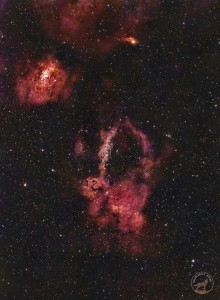
The Swan Nebula truly looked like an observatory photo... simply huge, bright, and awe-inspiring. The Dumbbell showed off its structure, large & luminescent. The Ring Nebula... well, I was ready to wake up the neighbors with shouts of joy.
And this was from small city suburbia with limiting mag prob about 4.5. (Maybe I will have to try dark skies some time!)
The incredible thing about the larger aperture is being able to use high power and have the images be bright and the objects huge... I'm sure that's because of the magnification being higher, but also because of greater light gathering. And I still haven't viewed many of the other major nebular showpieces, e.g., M8 and M42, nor looked at the large retinue of planetaries, the host of blue-green shells floating out there.
I can sum up my reaction with an overused 3-letter word: WOW!


