Image of the day

Captured by
Lawrence Parchman

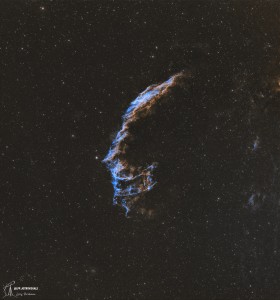
Eastern Veil Nebula (NGC 6992) - Wide View

My Account

New to Astromart?

Register an account...

Need Help?

Aperture, Refractor vs. Reflector

Started by fblue, 10/31/2003 06:33PM
Posted 10/31/2003 06:33PM Opening Post
Can someone explain why the unobstructed aperture of a refractor of say 6" would be better than the Aperture Masked Reflecor with a 6" hole. Both being 6" of unobstructed aperture, is the refractor just better at light gathering or better at passing the light through the glass than a reflector is at reflecting the light?
I have always wondered what the explanation for this is and never really understood. It seems to me they ought to be very similar!
Floyd

[SIZE="Large"][/SIZE][COLOR="Blue"][/COLOR] Floyd Blue grin
Amateur Imager
Posted 10/31/2003 07:07PM #1
Micheal,
Yes, I guess that a few % of light transmition could make for a better view.
Floyd

[SIZE="Large"][/SIZE][COLOR="Blue"][/COLOR] Floyd Blue grin
Amateur Imager
Posted 10/31/2003 07:14PM #2
The more economy reflectors are more in the .88 to .92 reflectivity range, so 2 mirrors could be as low as .77 reflectivity. Quite a bit of light loss.
--------

It is rare to use a reflector without a diagonal. Using a diagonal tends to level things out.

jon
Posted 10/31/2003 10:00PM #3
Reflective surfaces tend to scatter more light than refractive ones, and baffling a refractor is easier. Other than that, and thermal issues with larger optics, the views are very similar at medium and high magnification. Usually modern APOs have faster f-ratios than a stopped down reflector and so are capable of wider views. If you stop down your Newt and then use a 31mm Nagler, you'll probably see that illumination for wide true fields leaves something to be desired. But for higher magnifications on planetary targets, for example, the only difference you're likely to see if your mirrors are of the same quality as the APO you're comparing against is more diffuse glow around bright objects in the reflector. This diffuse glow is always present due to atmospheric scattering, but scattering from telescope and eyepiece optics add on top of that, and the reflector is most likely going to add noticeably more of it than a refractor. It may require averted vision to notice this, though.

Since my largest reflector is only 10", I just get a 4" off-axis aperture. I've always found that that planetary detail was much inferior in the 4" mode despite the very pleasant contrast and brightness balance of the 4" view at moderate planetary magnifications. Taking off the mask, the brightness often would seem to increase more than I wanted, but I could always see more, not less. I expect ones mileage may vary as one tries this experiment with larger and larger reflectors that permit larger unobstructed off-axis apertures that get closer and closer to offering the resolution that the atmosphere permits.
--
Mike
Posted 11/03/2003 10:14AM #4
I have always wondered why the obvious preference for "refractor-like" images is so persistent--and why it is so mysterious that nobody seems able to explain it.

Assuming that this phenomenon isn't just a case of mass delusion, I would suggest that one place to look might be the amount of scattered light produced by reflectors vs. refractors.

If we say that a very good reflector will focus 96% of the light in the image, and a similar quality refractor might focus 98%, it's easy to assume that must be a trivial difference. Who is going to see a 2% difference in light transmission?

But look at the same situation from the other side, and it looks different. The 96% scope has twice as much light unaccounted for as the 98% scope. Maybe twice as much scattered or otherwise unfocused light bouncing around in your scope does make a visible difference.

Anybody know about how to think about this systematically?

Steve
