Image of the day

Captured by
Douglas Rollain

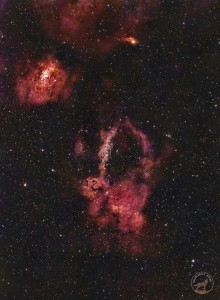
SH2-157_Seestar_S30_Pro

My Account

New to Astromart?

Register an account...

Need Help?

can any scopes view galaxies with detail

Started by astroshark, 09/03/2005 01:58PM
Posted 09/03/2005 01:58PM Opening Post
I’m relatively new to amateur astronomy and have never used a better instrument than the one I have, an Orion 120mm achromatic refractor f/8.4. It’s a decent instrument for a 120 achro, however, I know there are much better. It’s what I could afford for a first scope. What I’ve noticed is, on deep space objects like clusters and nebula, I get really nice views on clear nights with moderate light pollution. Galaxies, on the other hand are not so nice. Even M31 is your basic smudge of light on a dark background with no arms visible (actually one large one in the center and one smaller one off the starboard side). I’ve read/heard that galaxies are the most difficult objects to view and the first to go when viewing conditions degrade so I’ve accepted the fact that, until I can get to a decent viewing location, I’ll have to live with the galactic views I do get. What I was wondering is, are there any telescopes for retail purchase that will give detailed views such as arms and mini-clusters when I am viewing from a good location under excellent conditions? I realize this is somewhat subjective and apologize if the answer to this obvious for those who have been in this hobby for many years. The reason I’m interested is, I’m considering adding a 10-inch dobsonian to my equipment, however, I really don’t want to spend the money unless I’m confident I’ll get nice detail on galaxies and other faint DSOs when conditions allow. One thing I’ve learned from my own experience is - viewing conditions have more to do with the level of detail you observe regardless of what type of objects you’re viewing. It’s possible that, like many new to the hobby, my expectations exceed reality. Thanks for any help/info on this subject.

[SIZE="Large"][COLOR="Red"]E=hc[/COLOR][/SIZE]

Posted 09/03/2005 03:31PM | Edited 09/03/2005 03:32PM #1
I went through pretty much the same inquiry about really being able to see something in galaxies. I have used scopes from 3" to 28" under very good skies though my "home" viewing location is in Long Beach, CA which is pretty much Los Angeles as far as light pollution. Most of my viewing here is lunar and planetary though there are a few nights a year when DSOs, at least the brighter DSOs, are worth a shot visually. On those nights I set up a 12.5" Portaball. Even under these conditions, I can see a whole lot more in M13 say through the 12.5" than I can in a 6" APO. The 12.5" also beats the 6" APO on planetary detail but only on nights of excellent seeing.

Since you will need to travel to a truly dark location for deep sky, consider a scope that is easy to pack into your vehicle. I will bet money that what you will find once you get there is that a 10" or larger DOB will show much more on DSOs than your 120mm. It really is all about light gathering with excellent optics. I can easily see spiral structure in M51 in my 12.5" at dark sky locations. And one night I had my old 10" Portaball next to a 12.5" Starmaster. We turned both scopes on various DSO for comparison and I ended up seeing just enough difference to bring me to sell the 10" and order the 12.5" Portaball. It is my favorite scope by far!

You will hear this a lot, but get out to a dark location where other amateurs gather and look through their large DOBs. Since your scope will be right there under the same conditions, you will see the difference for yourself and can decide if it is worth the money you'd be spending.

I absolutely agree that learning to see is critical. I have been involved in amateur astronomhy for several decades and figure I have learned to see prety well. And while I love my 6" Takahashi and can see amazing detail with it, on DSOs the 12.5" Portaball is my choice.