Image of the day

Captured by
Byron Davies

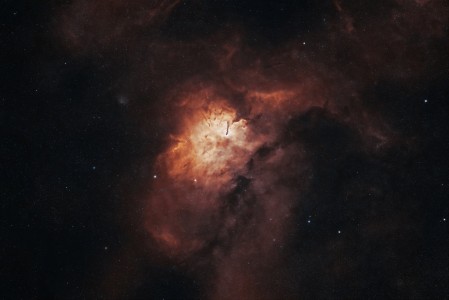
Sh2-86 (NGC-6820)

My Account

New to Astromart?

Register an account...

Need Help?

Filter advice.

Started by Tony Grigsby, 06/25/2004 12:20AM
Posted 06/25/2004 12:20AM Opening Post
After 7 years of the hobby, Ive finally decided to try a light pollution filter. I see theres broadband, and narrowband. Read a little on the two, but would like to hear personal opinions. I have a TV 85. Ill be using a 20mm nagler eyepiece. I want a 2" filter. I want quality. Now, which filter. I have access to pretty dark skies, and of course somewhat lit skies where I live. With the TV 85 set up, which filter would work best to cut out sky glow, and bring out nebula? Whats the difference between the two bandpasses? Also, I used an O111 filter once before with a large scope, would an O111 filter be too dark to use with such small aperature? Any advice would be appreciated.
Thanks,
Tony.
Posted 06/25/2004 12:51AM | Edited 06/25/2004 12:52AM #1
The O-III does make the sky very dark, and some object are darkened too. The Narrow Band darkens less and shows nebula's quite well. I found that the Narrow Band works OK in my 8" while the O-III tends to make things disappear. I would recommend that you try them before you buy them by going to a star party and get someone to let you test drive them. Most people would be glad to help.
Floyd

[SIZE="Large"][/SIZE][COLOR="Blue"][/COLOR] Floyd Blue grin
Amateur Imager
Posted 06/25/2004 01:29AM #2
Tony,
Having read this question on numerous sites the general consensus is a UHC filter from one of the major manufacturers is a good place to start. Here is a good article to read on filters.
http://www.cloudynights.com/howto/filters.htm
Stu
Posted 06/25/2004 01:49AM | Edited 06/25/2004 01:50AM #3
I used the following link that someone else supplied in a previous thread on filters to guide my purchase.

http://pages.sbcglobal.net/raycash/filters.htm

I'm very happy with what I bought for what I am trying to view.


Ed
Posted 06/25/2004 01:25PM #4
There are 4 types of filters: broadband, OIII, H-beta, and UHC (or narrowband).

The broadband ones just cut out a few wavelengths around where Sodium lamps emit in an attempt to reduce light pollution more than starlight. They don't do anything special for nebulas, and most people don't recommend them. They might be worth it if you live in an area which legislate the use of low-pressure sodium street lights (the yellow-orangeish streetlights).

An OIII filter is a line transmission filter that only lets in light right around the OIII emission lines, and blocks everything else. This tremendously improves contrast for nebulas that have OIII emission (most nebulas). It is not useful for H-beta only nebulas (like the Horsehead or California). It is the best filter for nebulas that only have OIII emission and no H-beta (like the Veil).

An H-beta emission is the same as an OIII fitler, but the wavelength is around the H-Beta emission line. The best for the Horsehead and California nebulas (and a few others if you are in the southren hemisphere), but useless for everything else.

A UHC filter has narrow transmission bands around both the OIII lines and the H-beta line. It is the most generally useful one, since it will work on both OIII and H-beta nebulas. It has the best contrast improvement for nebulas that have both emission lines (like Orion), but not quite as good contrast on pure OIII neb's or pure H-beta neb's as the others. I think if you are only going to get one, this would be the one to get. If you get 2, get an OIII and an H-beta.

Hope this helps,

Jarad
