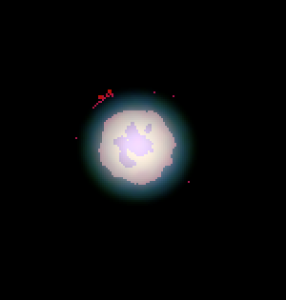
OK I recently got an Orion XT8. I believe i got it collimated OK (It looked like the picture in the manual  ), but some objects would not seem to come all the way into focus. Jupiter looked great, a bit fuzzy, but no more than I would expect. When I tried to split any stars however, they pretty much remained a fuzzy blotch in the eyepiece. The focuser had plenty of travel on both sides of the "optimal" focus, so I dont think anything there was going wrong.
My only ideas are these :
-First off, there were a few clouds in the sky on the horizon, but there didnt appear to be any where I was looking... But I suppose there could have been some haze I was unable to see with my eyes?
-Something out of collimation?
-I don't think any of the optics were dirty, but don't really have a clear idea of what parts might make an image look blurry if they are dirty.
-I'm an idiot, and was just doing something obvious wrong.
You can guess which I'm leaning twords. Any help is appreciated.
Thanks
), but some objects would not seem to come all the way into focus. Jupiter looked great, a bit fuzzy, but no more than I would expect. When I tried to split any stars however, they pretty much remained a fuzzy blotch in the eyepiece. The focuser had plenty of travel on both sides of the "optimal" focus, so I dont think anything there was going wrong.My only ideas are these :
-First off, there were a few clouds in the sky on the horizon, but there didnt appear to be any where I was looking... But I suppose there could have been some haze I was unable to see with my eyes?
-Something out of collimation?
-I don't think any of the optics were dirty, but don't really have a clear idea of what parts might make an image look blurry if they are dirty.
-I'm an idiot, and was just doing something obvious wrong.
You can guess which I'm leaning twords. Any help is appreciated.
Thanks

