Image of the day

Captured by
Erwin Forbragd

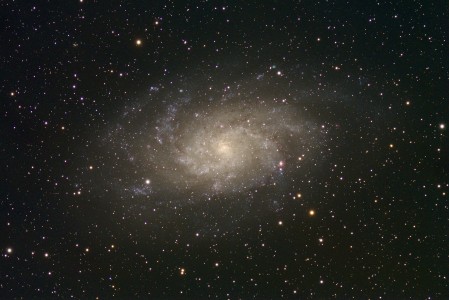
M33 in Triangulum

My Account

New to Astromart?

Register an account...

Need Help?

Good set-up to look for NEOs and comets?

Started by Aprill2002, 11/07/2002 10:47PM
Posted 11/07/2002 10:47PM Opening Post
Hi everyone,

What sort of set-up would one use to search for NEOs (Near Earth Objects). I'm imaging it would likely need to be done photographically, with long exposure periods which would show movement. What sort of scope might be appropriate? Would a fairly inexpensive 35mm camera be sufficient?
Does anyone here do this? And, does anyone hunt for comets?

Thanks,
Tony
Posted 11/08/2002 12:47AM #1
Humm - your questions are covering a LOT of territory there! Sat pixs and comet hunting are two very different things, and what equipment you use and how you use it will be vastly different.

Comet hunting can be photographic but I hear most comet hunters still use a their eyes with a fairly large scope or binoculars and a LOT of time and repetition to nail them down. There are LOTS of comet hunters and the competition can be keen if you want to be the first to see one (and get it named after you). I think maybe you could compare comet hunting to long distance running - a very solitary pursuit that requires both skill and long, long lonely hours. Dark skies and a very forgiving spouse (or none at all) for all those long cold nights out slowly scanning the skies are a must. My wife would kill me so I'm not a comet hunter (plus I don't think I have the tenacity to pull it off, anyway).

If you just want to take pictures of LEOs (Low Earth orbit) satellite trails they can be seen all the time with just your eyes under dark skies, so it should not be a big problem. I almost always run into these guys when I'm out, and think of them more as moving point light pollution when they invade the field of what I'm looking at. I would think a fairly fast lens on a 35mm camera and ASA 1600 or better film would do it fine. Even better, a good CCD camera (with adjustable shutter settings) so you can see what you're doing right away and play around a bit.

You might also want to get acquainted with one of the satellite tracking programs (like "Log Sat" or many others) and the NASA/NORAD satellite database to get the current orbital information for any specific targets you want to go after. Then you will know exactly where and when a satellite will pass over your location and can set up before hand. (BTW - the data must be current because satellites drift, so these data sets are being tweaked all the time).

On the other hand, if you want to take pictures that show what the bird itself looks like that is several strata above a simple light trail. A Meade LX-200 SCT and other "GOTO" scopes can be programmed to track (in theory) almost any satellite but actually getting a usable image would be a real challenge. I've seen the International Space Station taken with a 8 inch SCT but it's just an outline of the major modules (your not going to be looking into any port-holes!) Any geo-synchronous satellites (23000 mile away) will probably only show points of light to all but the biggest scopes. And then there are the high inclinations birds that come in fast and low and then go way out again. Lots of possibilities if you want to get into it. Any of these satellites will need the *current* orbital elements from a web database to be able to program the scope to track the chosen satellite correctly.

Sorry for the long post - hope this helps….

Tom Mengel

Tom Mengel
Moderator Equipment Talk

“Insanity: Trying the same thing over and over and expecting different results”.
Albert Einstein
