
Image of the day

Captured by
Philip Imbrogno

Jupiter

My Account

New to Astromart?

Register an account...

Need Help?

Help with Sticktation

Started by markp, 09/02/2005 01:51PM
Posted 09/02/2005 01:51PM Opening Post
I have a dob that has a slight problem with "sticktation" in the altitude axis.

Once moving, the feel and motion is smooth. The problem is that the initial force required is more than what is needed to move/track so when looking through the eyepiece, you launch past your target.

This is a Discovery PDHQ dob, so it has large altitude bearings with Ebony-Star on Teflon.

I have read suggestions from car wax and armoral on the Ebony-Star to sanding the Teflon.

I don't care for the car wax/armoral idea so I was going to start with sanding the Teflon but what grit do I use? 80 grit for a rough finish or something finer like 200?

Are there other ways besides the two mentioned above for getting rid of the sticktation?

Any help is appreciated.

Thanks,

Mark
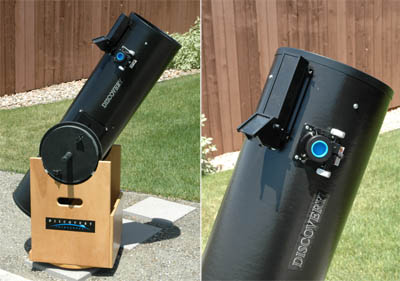
Attached Image:

markp's attachment for post 26496
Posted 09/02/2005 02:42PM #1
Mark,

You said: I don't care for the car wax/armoral idea so I was going to start with sanding the Teflon

Could you explain why you don't like the idea of waxing, and why you think sanding would help?

Alex
Posted 09/02/2005 06:29PM #2
Hi Mark,
I just went through a 15" Spilt-tube Discovery to make the bearings work better. There are a few things I can tell you.
First. the Alt bearings are not place in the proper spots for the movement to be smooth. They should form a 90° angle, so they need to be lowered in the saddle on both sides.
Second, the size of the Teflon pad is a bit too small and narrow. I found the 2" long by 3/4" wide worked very well. When I did this the Alt bearing needed no lubricants to move smoothly and without sticking.
Third, a clean surface works very well if the amount of Teflon is proper. But if more slip is required, you can use wax to lubricate it. I have found the Pledge Lemon Wax in the aerosol can is excellent. You put it on with a cloth and use it sparingly. It cleans too so it serves both purposes and it not oily and does not seem to attract dirt. It can be used right after you apply it too. just rub it until it is dry and shines. Of course, just apply it to the Formica and not the Teflon.
If you have any problems with Az bearing, just take a q-tip and soak it with Pledge and then insert it in between the ground board and the rocker right next to the Teflon pad and rub the q-tip on the Formica on both side of each Teflon pad and thin spin the rocker box a few times to spread it evenly. You will find this works well too. I also found the AZ bearing Teflon pads were undersized and had to be replaced.
Now, one thing about wax that I have found to be true. Any wax seems to cause a little sticking when you let it set a few minutes. This is especially true for the Az bearing. If you find this happening, then clean some of the wax off by rubbing it with a clean cloth. Too much wax appears to be the problem.
Teflon is also good and you can get it in a dry powder form. It is white and not dirty and has no oils or waxes and is quite slippery. There are other dry lubricants out there as well if you look, for those that do not like waxes.

[SIZE="Large"][/SIZE][COLOR="Blue"][/COLOR] Floyd Blue grin
Amateur Imager
Posted 09/07/2005 01:52PM #3
I found the existing telfon pad positions, were approximately 110 degress apart. Since moving them in to the prescribed 90 degrees was fast (and cheap), I decided to try that part of the solution first.

The result was a BIG improvement. I will have to wait until I get the scope outside and tracking through the eyepiece to know for sure but I can tell right away that it requires a lot less force to get it moving and it does not jerk like it used to.

Going by the loading formula, I do need larger pads which is what I will change next if I determine this step did not completely solve my problem.

Thanks again to everyone who responded.

Mark
Posted 09/19/2005 02:54PM #4
While moving the teflon pads to 90 degrees helped considerably, it was not enough. There was still that stickyness that had to be overcome which resulted in the scope 'jerking' before gliding.

The original pads were 3/4" square and according to the formula posted earlier in this thread, they should have been 1-3/8" x 3/4".

The difference is night and day after I installed the larger pads. Now when I go to nudge the scope, it just glides, no sticktation, and when I stop and let go, it stays where I put it.

Thanks again to everyone for their feedback.

Mark
