Image of the day

Captured by
Erwin Forbragd

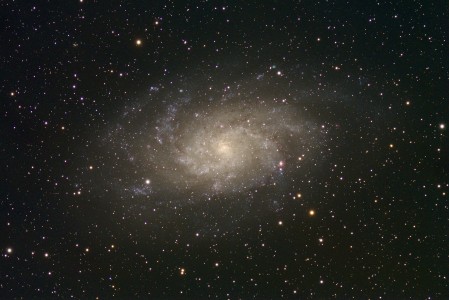
M33 in Triangulum

My Account

New to Astromart?

Register an account...

Need Help?

light scatter

Started by bbassett, 06/04/2008 03:00AM
Posted 06/04/2008 03:00AM Opening Post
I have not seen much talk about the causes of light scatter in telescopes. I find it one of the most distracting aspects of viewing brighter objects. Am I correct that the smoothness of the polish of the optics is the main factor in reducing scatter? So this would mean that higher quality, more expensive telescopes would likely be better in this regard?

Does anyone have the experience to say if there is any noticeable difference in various vintages of C8 SCT's in the visible light scatter? Is there a difference between the old uncoated, the Starbright and the XLT coated C8's?

Any other comments?

Thanks,
Brad
Posted 06/04/2008 03:57AM #1
Optics are one part of the equation, but not the final answer. One way to reduce scatter is to flock the inside of an OTA to reduce the chances of light reflections. The barrel on your EPs can also be a problem if they haven't been properly blackened to the end of the barrel. Orion's Expanse EPs have a retaining ring at the bottom that holds the final lens in place, and mine was actually shiny, which caused a light spike right acoss the EP as a bright object got closer to the edge of the visual field. Using a microscope and some flat black paint, I painted the retaining ring and the spikes have completely disappeared. Hope this helps. smile
Posted 06/04/2008 05:25PM #2
Interesting question. I agree with you. Also, all internal reflections should be eliminated. But mostly I'm writing to get you back on page 1 of this forum, since someone replied to a months old string, bumping you down to page 3.
Posted 06/05/2008 04:39PM #3
Another and much less understood source of light scatter in sealed tube catadioptrics are the internal thermal issues. I have noticed this phenomenon in my various Maksutovs, when these Maks are not thermally stabilized I can see considerable sky glow or brightening around the bright planets, when the system is in thermal equilibrium most of that glow goes away.
I initially attributed this effect to the fact that aluminized surfaces do in fact scatter light, but I have learned that this light scattering is much overstated.

Vahe
