Image of the day

Captured by
Gerald Elkin

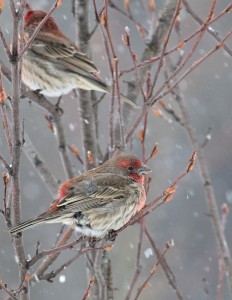
House Finch

My Account

New to Astromart?

Register an account...

Need Help?

Orion Apex 90 for Wildlife

Started by faillure, 09/12/2002 05:16AM
Posted 09/12/2002 05:16AM Opening Post
Alright, so now i have to get rid of my short tube becasue the camera must sit 10 inches back on the focuser for epp. So what about the Orion Apex 90 mak? Its marketed as a good terrestrial scope and most of the reviews I've seen confirm its an effective, portable piece of equipment. I know about the long cool down time at night which doesn't really bother me. My true concern is weither or not I can use this as a telephoto lens on my Canon EOS G with a t-adaptor? Would I even need epp, it's supposed to have a very long focal length...All advice is appreciated.

Trey
Posted 09/12/2002 02:57PM #1
Trey,

I have used a Meade maksutov spotting scope for wildlife photography with so- so results. I must admit that the optics in the one I had were not that good. The main problem with using it was the dim viewfinder image as it was a 90 mm F 11 (1000 mm f.l.) scope (accounting for light loss and the central obstruction it was more like the equivalent of an F14 lens). The Apex 90 has an even longer focal length (1250 mm f.l.) at F 13.9 so the actual transmission will be over an F 16 equivalent lens. The bottom line is that, even with a bright focusing screen, the image is going to be too dim to focus well. Astrophotographers are always looking for the fastest setup (lowest F-ratio) so they can use shorter exposures. The same is usually true of wildlife photographers. The practical limit for wildlife photography is F8 or so, and F5.6 is a lot better. Once you get past that, you get diminishing returns as the image will be larger but the overall quality will be lower for a variety of reasons.
If you must have more focal length than 400mm a 1.4x teleconverter would work well (and it won't change the focus point of the camera) as it would give you 560 mm at F 7. A 2x teleconverter would give you 800 mm at
F10 but then you will run into focusing issues and image quality issues.

Hope this helps,

Joplin
Posted 09/12/2002 09:29PM #2
I have the f5.6 version, which I use mostly as a spotting scope, a 500mm telephoto lens. I would occasionally use it as a grab-and-go astro scope but magnifications > 30X requires I mount it on a surveyors tripod, which hardly qualifies as grap-and-go, more grab-and heft.

It has a large central obstruction as you would expect from a f5.6 Mak... just over 40%. It star-tests nearly perfectly for a telescope with such a large obstruction, with almost perfect spherical correction and a slight astigmatism/pinch that is not apparent until 200x.

The upper limit for this scope for truly sharp views is about 150X, making it surprisingly good on the moon, but so-so with planets. Splitting doubles down to 1.5 seconds is possible.

With a 16mm eyepiece (31X) it is a wonderful spotting scope. Razor sharp and as bright as the high-end 80mm refractors.

Photographs appear as good as those from any 500mm telephoto I've seen... meaning that if there is any problem with the pictures I can't see it. But it does not transmit a true f5.6... more like f8.
