
I am new to astronomy and have been endeavoring to get good views of the planets, especially Saturn and Jupiter. Views of the Moon have been great, especially with a 13mm Televue plossl (118 power) but views of the planets have been underwhelming to say the least. I do not see any of the details or color I read about in reviews of this product or others and am wandering if I am doing something wrong - or maybe my expectations are too high. What is the minimum power for seeing planetary features in your instruments? I don't expect Hubble images, but thus far, I see only tiny featureless balls about the size of a small pea at arms lenght. Thanx, Mick.
Orion Starmax 127
Started by ekjs2000, 01/12/2004 10:04PM
Posted 01/12/2004 10:04PM
Opening Post
Posted 01/12/2004 10:30PM
#1

I get excellent images at 135X with a 14mm UWA Meade. This is not high magnificaion at all. I also use upto 500X at times with good results, but at the lower 135-250X the images are wonderful and full of detail.
I suspect that the conditions have been poor for you. If not then maybe you hae poor collomation on your scope of are not achieving proper focus. Focus can be difficult. With some focusers the movement is too big to get fine focus.
Tell us more about the scope you are using, the focal length if you know it. Then we can give better opinions.
Floyd
[SIZE="Large"][/SIZE][COLOR="Blue"][/COLOR] Floyd Blue

Amateur Imager
Posted 01/12/2004 10:57PM
#2
Milton,
I owned this same scope and had great views of Saturn and Jupiter. AT 118x you should see cloud bands on Jupiter and many of its moons. The image that you describe as a "featureless ball about the size of a pea" describes what I routinely would see without a good cool down. This scope will present excellent images. But, requires at least 1 hour, often more in winter, to cool down. What is happening is the air inside is warmer than the air outside and it refracts the light just like hot pavement on a summer day. The atmosphere can also ruin your image as well. Are the stars twinkling to your naked eye? If so, you won't see good detail on the planets. I was lucky in that my scope star-tested perfectly and didn't need collimation. Yours may not be collimated correctly. Finally, don't expect Hubble images. The Hubble mirror is almost 3 meters across and looks through zero atmosphere with zero light pollution.
rb
Posted 01/18/2004 04:54AM
#3

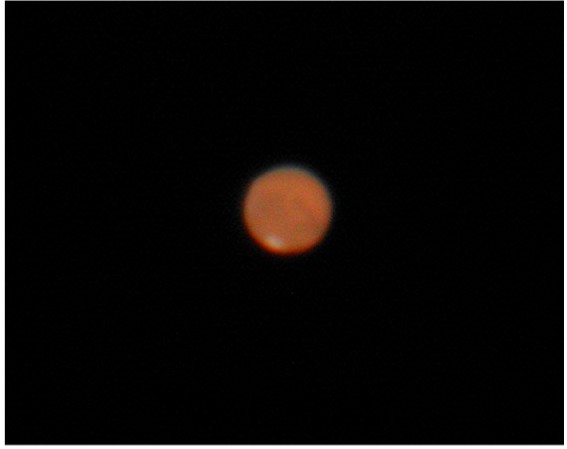
Keep the faith,Milton!!!I really enjoy my StarMax 127mm!I think the lunar and planetary images thru it are great!!I do like to use eyepieces in the 7.5mm to 12.5mm range on the planets.(around 200x). The Moon does well at most powers around 102x(15mm) to 166x(9.7mm). My first target this summer was Mars;and even with a decent sized image using a 7.5mm plossl(Orion),I was disappointed that I could barely see any surface details...they're low contrast anyway!!Saturn's Cassini division should be easily seen with 15mm to 9.7mm oculars.Patience is a must...and a good cool-down period as well!!Good luck and clear skies!!!(...oh yeah,and good seeing,too!).
Attached Image:
Funding Member

Sponsors
- CarbonScopeTubes LLC
- Desert Sky Astro Products
- FocusKnobs
- BBLABS LLC
- kwtelescope
- Vernonscope
- BW
- Astromart Customer Service
- APM-Telescopes
- Anacortes Telescope
- AstroMart LLC
- Waite Research
- SellTelescopes.com
- astronomy-shoppe
- Matsumoto Company
- OMI OPTICS USA LLC
- RemoteSkies.net
- ASTROPHOTOGRAPHY BY MARTIN PUGH
View all sponsors