Image of the day

Captured by
Lawrence Parchman

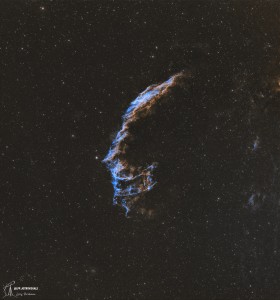
Eastern Veil Nebula (NGC 6992) - Wide View

My Account

New to Astromart?

Register an account...

Need Help?

Should I consider using a laser collimator? (HELP)

Started by jim.casarella, 11/21/2004 01:42PM
Posted 11/21/2004 01:42PM Opening Post
Let me start by saying that I am fairly new to astronomy.

Telescope:
Orion Sky Quest XT8, 8” dob
Focal length = 1200mm, f/5.9
Focuser: Rack and pinion that accepts 2” eyepieces and 1.25” eyepieces with adapter.

I have no problem collimating the telescope using a Cheshire eyepiece, although it did take countless hours of reading articles on collimating and a number of hours teaching myself the actual process.

I am considering purchasing a laser-collimating tool and I am looking for advice. I have read a lot of articles and I am at the point of information overload.

What type of laser collimation should I consider?
What is a good name brand?
Is a 2” collimator better than a 1.25” collimator?

Any advice would be greatly appreciated – THANK YOU.
Posted 11/21/2004 02:43PM #1
Hi Jim
I just passed though that stage a few months ago. I had the Hardin DSH 8" f/6 scope which is pretty much about the same as the Orion. If you are comfortable with the cheshire and get a good star test, I would save the money. I bought several types of collimating tools because I bought a larger and faster truss dob. This included Tectron set and the Kendrick 2" Laser with the 45* face (used with truss dob) and I found that I really couldn't improve the collimation process on the 8" f/6 scope. I also found out that a laser is only as good as the collimation of the laser and it ain't easy or quick to collimate a laser. If the laser isn't dead on, it's worthless (I did by buy it used off Amart and it was off when I got it). That's my $.02 however I'm sure others will disagree.
Buck
Posted 11/22/2004 04:53AM | Edited 11/22/2004 05:18AM #2
Jim,

I just finished up a test I have been meaning to do for a while. Using my proprietary scientific method, I compared the Orion collimation cap, Orion Cheshire/sight tube combo, Orion standard lasermate, Kendrick 2" laser, barlowed laser, Catseye 2" Black Cat cheshire and Catseye 2" Infinity autocollimator. Oh yeah, I tried out my Mk1-Mod0 eyeball as well. The results kinda surprised me a bit.


I will write up an article for Astromart, but here's a summary:

The best for primary tilt adjustment? Gosh darn it if that cheapo collimating cap that Orion provides didn't work as well as anything. It is precise and accurate. It wasn't so good at the secondary tilt, but good enough, I think (secondary tilt is not nearly as critical as primary tilt). All of the methods were accurate and precise enough that I would use them on my Starmaster. The lasers were prone to wobble, but careful insertion lead to repeatable and accurate results. Proper laser collimation is required.

The best for secondary tilt? The Catseye Infinity autocollimator, but the lasers did almost as well and, IMHO, certainly as well as required. The collimation cap and cheshire were not as accurate, but probably good enough.

The Mk1-Mod0 eyeball was good enough to get you close on the secondary and primary, but not for critical observing. Just too sensitive to eye placement.

What would I get? A cheapo laser for the secondary tilt and an Orion collimating cap for the primary tilt. Or just the collimation cap. Eeeghads! I have over $400 worth of collimation tools and I'm recommending a freebie (Orion doesn't even sell these things seperately). Actually, I recommend that you use whatever you like best. I like the Black Cat for the primary and a laser+autocollimator for the secondary. If you like the cap, feel free to continue its use as it works as well as anything else. If you like high tech lasers, they work, too (make sure they are collimated, themselves). If you like star collimation, well, I dunno about that as it's cloudy and I couldn't try that out.

For those that care about such things, the truth data was the Black Cat and Infinity. I have checked them against myriad star tests and they have proven themselves to be right on.

One note: I have a Catseye red triangle as a center spot for my primary. IMHO, this is a much better type of center spot for accurate collimation. Just easier to see very small deviations. Her's a pic:


Anyway, surprising how well the simple stuff works.

Tom
