Image of the day

Captured by
Erwin Forbragd

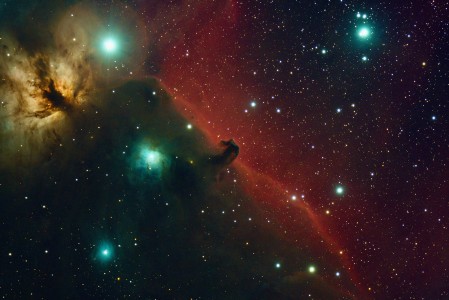
Horsehead Nebula

My Account

New to Astromart?

Register an account...

Need Help?

The color of Saturn

Started by gnowell, 03/22/2009 03:19PM
Posted 03/22/2009 03:19PM Opening Post
I have spent many years observing with friends and their scopes. I have noted several times that Saturn is whiter in Newtonians my friend's 15" obsession (Torus optics) and several other Newts. In my C14 Saturn is more creamy with brown bands. This appears to be a scope effect not an eyepiece effect. Take the Pentaxes over to the Obsession, same thing.

Now, Friday night I was out with the FS128 and had it at powers from 250 to 325x on Saturn and noted that the color was very similar to my C14. The Newts were, again, whiter.

So I guess the FS128 and the C14 are having a similar "coating effect"? Or perhaps the coatings of newt make for a whiter image?

regards
Greg N


"Scope will get you through times of no money better than money will get you through times of no scope." --Freewheelin' Franklin

Posted 03/23/2009 04:18AM | Edited 03/23/2009 03:54PM #1
In going up in aperture, this is not an uncommon observation: Saturn seeming whiter (and brighter).
In my cases, it was going from 4 - 6" refractors over to my 18" newt or between my 6.5" off axis newt
and my 18" newt. There's a big difference in light grasp and I've always figured that that was how my
eyes were responding to the significant change in brightness. The loss of some detail (brown bands)
could either be a collimation issue or too much light washing that detail out?

While the change may not seem too significant between a C14 and the 15" Obsession, my back of the
envelope calculations suggest a 1.24x increase at the focuser going from the C14 to the 15" Obsession.
(C14: 14.25" primary, 4.5" obstruction, one additional mirror [diagonal] that I'll assume to be giving 0.96
transmission; 15" Obsession: 15" primary, 2.6" obstruction; assume similar reflectivity of remaining two
mirrors in both scopes; ignore corrector plate.) So lets call it 20% more light grasp. [Of course, your
primary and secondary mirrors are likely cleaner and hence more reflective than those on a newt.] Question
is, is that enough to explain the difference? Searching around on the web, I've found reports of Saturn
appearing whiter going from 5 to 6 inch refractors (40% increase). Also ran across a review by Ed Ting
where he mentioned this as just a matter of fact consequence of going up in aperture (7" MakCass vs.
a FS102). Both of those cases are much more than 20% (or even 24%). So, while my knee jerk reaction
is that it's the light grasp, I have to wonder if there may not be some secondary effect also.

However, this doesn't explain why it seems more pronounced to you from your C14 to the 15" newt
vs. from the FS128 to your C14. Would be interesting for you to try it with the FS128 and C14
on the same night. Or, to go from your C14 to a smaller newt (e.g., 12.5, 10, 8 ) and see if your
C14 now seems whiter.

Dan

Posted 03/23/2009 03:46PM #2
Some years ago, when Saturn and Jupiter were both well placed int he evening skies, I spent several nights with Sue's 14.5" f/6 Newtonian. I used it with a 6.5" off-axis mask and at full aperture, comparing views using the same eyepiece.

The color rendition on both planets was far better at full aperture, with both more vivid and more varied colors.

At WSP long ago, a gentleman with a Tak was claiming the slightly more yellowish view of Jupiter was the "correct" rendition of the planet. I noticed that the AP apochromats and the Newtonians did not reveal great Jove as having such a yellowish tint.

Clear skies, Alan

BTW, although the 14.5" was certainly seeing limited at full aperture, the view was never inferior to the view with the off-axis mask, and there were moments when more detail was visible without the mask.

Posted 03/23/2009 03:54PM #3
Most people know that seeing all that a telescope can show takes time and experience behind the eyepiece. In his "A Portfolio of Lunar Drawings," author Harold Hill makes some comments that suggest that experience with a particular aperture may make us accustomed to working at a certain brightness level, and that such training may make us less effective when using other apertures and working at different brightness levels.

Perhaps our aperture comparisons are somewhat biased by our experience and the instrument we use most often. And maybe we are better off concentrating our observing efforts with one instrument, at least when it comes to the finest lunar and planetary detail.

Clear skies, Alan
Posted 03/23/2009 04:31PM #4
Your C14 does not focus violet very well. The lack of violet focus causes the image to take on a very slight yellow hue. The same thing is happening in your Fluorite doublet, i.e. the violet being out of focus.

Rolando
