Image of the day

Captured by
John Roach

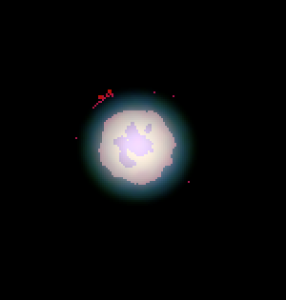
Enhanced Uranus showing Polar Cap and possible Aurora

My Account

New to Astromart?

Register an account...

Need Help?

Wedge needed?

Started by oceanbear, 09/25/2004 11:28AM
Posted 09/25/2004 11:28AM | Edited 09/25/2004 11:28AM Opening Post
I've got a 10" Meade LX200 GPS. I'm planning some CCD photography with it. Any need for a wedge?

I've heard local comments both ways but many I've heard from have a vested interest in selling a wedge.

Comments please.

Thanks,
Darrell

"They that can give up essential liberty to obtain a little temporary safety deserve neither liberty nor safety."
Posted 09/25/2004 12:15PM #1
You can take exposures at prime focus up to about 30 seconds without a wedge. Beyond that, field rotation will ruin your images. This means you can do some DSLR imaging or webcam imaging and get decent results without a wedge (stacking lots of short exposures). However, if you want to do long exposure imaging (beyond 30 sec) with a cooled CCD camera or film camera with a fork mounted scope, you will definitely need a wedge. Alternately, you could use a field derotator, but they are fairly expensive and frankly, I prefer the results from a wedge.

Best wishes with your imaging.

Randy

Randy Roy
Posted 09/25/2004 12:19PM #2
Yes, you need a wedge. The alt-az mount on your LX200 does not match the equatorial motion of the stars in the sky. Without a wedge, or some other means of getting equatorial motion, objects will rotate around the tracking point in your field of view.
-Guy

"I know engineers. They love to change things."

- Leonard McCoy (Star Trek: The Motion Picture)
Posted 09/25/2004 01:05PM #3
Good question. I had the same one recently. I'll let you know in a few weeks if I made the right decision. I recently ordered a field de-rotator for our 16" LX-200. It seemed like a less unwieldy solution than a wedge for that scope. I figured it should work, since all of the new huge telescopes (Keck etc.) are alt-az with some sort of field de-rotator. A wedge is the "classical" solution, however, and for a 10" scope that may indeed be the easy way to go.

Charlie

Fort Lewis Observatory: (37.238, -108.052) ~2360m (7744 ft.) elevation.
Darkness - typically 6.5+
Scope - Meade 16" LX200; f6.3 focal reducer
Focus - JMI Smart focus
Camera - SBIG ST-10XE; (~.5"/pixel)
Guiding - AO-8 and/or Meade 5"/DSI/PHD
http://www.fortlewis.edu/observatory
Posted 09/25/2004 04:42PM #4
Boy there's nothing like the forum to get some GREAT information.

Any other comments are truly appreciated.

Darrell

"They that can give up essential liberty to obtain a little temporary safety deserve neither liberty nor safety."
Posted 09/25/2004 07:55PM | Edited 09/25/2004 07:56PM #5
Hi Darrell,

Like Randy said, you can get some short captures images in Alt/Az. Depending on the sensitivity of the device you are using and your local sky glow, this may be all you need to put together some nice images. You can stack several "short" exposure's together to effectively increase the depth of your image.

I have a few images on my website of images captured in Alt/Az, and they are not limited to the moon and planets. I have been able to get mag11 galaxies in alt/az. If you are interested you can check-out my website and look on the "SAC8 Deepsky" page.

John Theodossy
http://geocities.com/myastrostuff/


John Theodossy
http://geocities.com/myastrostuff/
Posted 09/26/2004 01:04PM #6
It is my understanding that Field-Derotators are inferior to a wedge. Several issues but the rate of rotation must be calculated from the position and as one approaches the zenith, the rate for the slewing of the scope (probably the azimuth), becomes large. I have been told that the large scopes such as the Keck avoid imaging near the zenith for this reason.

Given the cost of a derotator and a wedge, it seems a wedge is a more robust solution.

Jon
