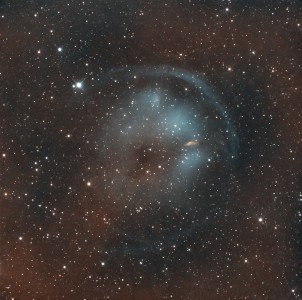
Symptoms: excessive star flaring throughout much of the field of view.
Patient: Astroscan f/4.2 with an intake of a 14mm Epic.
Tests so far: Gave patient 22mm Epic, symptoms largely vanished. Tried a regimen of Televue Radians... 1 dose of 18mm, no symptoms to speak of. Switched dosage to 12mm... better than when on 14mm Epic, but still some problems. Tried 2nd round with different 14mm Epic (in case there was a problem with that batch of medicine), but symptoms returned.
Consulting physician Dr. Rank suggested combining his known patent med cure with Dr. Barlow's home remedy. Gave patient mixture of 1 part 28mm RKE and 1 part #126 Meade barlow. (Which is roughly equivalent to 14mm Epic). Symptoms largely vanished except in outer extremities. Main torso in better condition by a bit than with 12mm Radian. Similar findings with 22mn Epic and barlow.
Instrument calibration: switched eyeglasses to see if problems were being caused by new prescription. Similar findings.
Observations: What gives here? I always thought that coma (an obvious issue at f/4.2) is more of a problem with longer focal length, wider field eyepieces. And that because the fov would be larger. Here the reverse is happening. The 22mm is excellent, the 14mm is where the flaring appears. (Does this have something to do with star images being larger? The effects are most noticeable on brightest stars.)
Questions for residents: The barlow cure suggests that astigmatism is what is showing up in the 14mm Epic (yet it looks decidedly like comet flares pointing away from the center of the fov). If so, then what is showing up in the 12mm Radian? Some coma?
Can seeing issues bring out the coma more? (Mars looked like the Olympic rings).
Overall diagnosis: The 14mm seems to be a pretty good eyepiece otherwise, with good contrast and shows DSOs well even at f/4.2. The 14mm is also better at f/5.4, quite acceptable, but still shows some flaring away from central area.
Notes: Any insights from attending physicians would be appreciated!


