Paul Neesam said:
I recently completed a project, a 12.5-inch OMI mirror (Newton). After collimation (laser) it worked great on the moon but marginal on planets. While looking at Jupiter and it's moons they were just blurry, stars are just slightly blurry,(which may be normal). I could barley make out the color bands on Jupiter, i'm expecting much more performance. I was using 15mm & 23mm 1.25 FMC eyepieces, a binoviewer with an adapter.
What are the best eyepieces to use with an F/5? I like planets and faint fuzzes. Thanks in advance.
This is my thinking about your issues based on the experience of owning a variety of Newtonians...
The on-axis performance of just about any decent eyepiece should be reasonable in an 12.5 inch F/5 so I suspect that your problems are not related to the eyepieces but rather the issues that face any larger telescope, collimation, thermal equilibrium and seeing.
Seeing- I see that you are located in Wisconsin so seeing is likely the problem when viewing Jupiter. Here in San Diego, Jupiter never rises more than 35 degrees so up north where you are it will be less that 25 degrees at best, that's a lot of atmosphere to look through, to get a good view of Jupiter the air will have to be super stable. Seeing is always a big factor in the performance of a larger scope.
Thermal Equilibrium: One can think of thermal issues as "seeing" inside the scope. It is important for the scope to be very close to the ambient temperature. Otherwise, the air inside the scope will not be stable, there will be a variety of convection currents and pockets of air of differing temperatures. Cooling the scope with a fan really helps but it can still take a couple of hours to become rock stable...
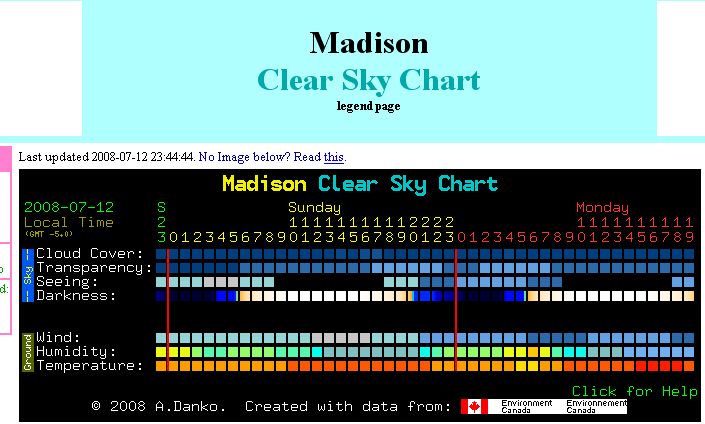
I suspect that if the stars are blurry for the entire night, the seeing is less than perfect. A quick look at the Clear Sky Chart (www.cleardarksky.com) for Madison, Wi indicates that seeing was horrible last night but that it should be much better tonight...

So, as far as your original question goes, there are many choices for eyepieces, it all depends on how much your are willing to spend. The BO/TMB Planetaries work quite nicely at F/5 and are very affordable, Naglers are nice too but quite expensive. Lots of choices.
But give things a try to night and see if everything is much better.
Jon
Attached Image: