Image of the day

Captured by
Ralph Ford

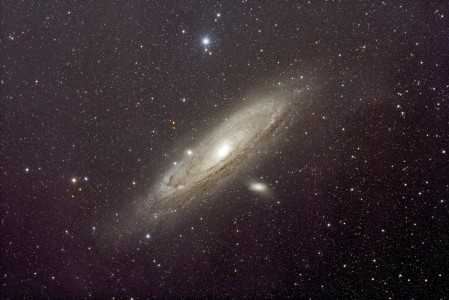
M31 with Redcat 51

My Account

New to Astromart?

Register an account...

Need Help?

What causes eyepieces to blackout?

Started by Bill in Ballard, 10/18/2003 02:42PM
Posted 10/18/2003 02:42PM Opening Post
I have a few eyepieces which seem to black out with my 80mm F6 scope. I believe this only happens when the eye is too close.

What is the casuing the black out. Will the same eyepiece do it in all scopes? thank you, Bill
Posted 10/18/2003 07:50PM #1
Bill,

Suppose you're standing at home plate and at first second and third base there is a person shining a laser pointer at the strike zone. Now suppose you want all three beams to strike one target, e.g. a catcher's mit. Now if all three beams come close enough to intersecting the same point, you can get all three to hit the mit, but I didn't say they all had to intersect--they're just all passing through the strike zone. Some eyepieces have "spherical aberration of the exit pupil", which is like when the beams don't all intersect the same point and so it is difficult to make them strike one target. In the analogy it's laser pointers and and catcher's mit, and with the eyepiece it is the exiting columns of light from the eyepiece and the human eye is the target.

If the catcher moves halfway towards the pitcher's mound, he has no chance of catching the beams from first and third. What happens with the eyepiece is you see the view in the center and you lose the edges. Note that the same thing happens if the catcher backs up by the same amount.

So some eyepieces are prone to blacking out because the exit pupil is not formed precisely (like the beams all passing through the strike zone but one is high right, another down the middle, and the other low left, for example). Obviously this can happen to varying degrees, and when you can catch all the light from the eyepiece it may be necessary to hold a very particular position to do it.

Another reason eyepieces black out is because the eye is too close or too far from where the exit pupil is being formed. If the exit pupil is formed precisely, as in all beams intersecting, then there is some leeway in positioning that will still catch all the light and allow it into the eye, but it is always possible to move back far enough to lose the light from the edges, and if there is enough eye relief it is possible to lose the light from the edges by moving too close as well.
--
Mike
