Image of the day

Captured by
Lawrence Parchman

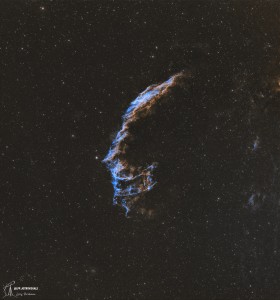
Eastern Veil Nebula (NGC 6992) - Wide View

My Account

New to Astromart?

Register an account...

Need Help?

Dall Kirkham Cassegrain collimation

Started by 3dart1, 05/23/2007 02:46PM
Posted 05/23/2007 02:46PM Opening Post
Can anyone help me with advice on the best way to collimate a dall Kirkham Cassegrainian and the best tools to do it with, our sky is very dark and clear but tends to be turbulent, so star testing is tricky. I have just purchased one from an older gentleman who is moving from Santa Fe to Tuscon. He was kind enough to collimate the scope for me but I think it may have gone out a bit in transit. in any case I will need to know how to do it soon enough so any help would be appreciated, thank you.

john boyce
Posted 06/01/2007 04:17PM #1
I would like to second John's request. I am new to SCTs and just recieved one that was so knocked about that the secondary was completely loose in its mount. The scope is back together again, but whatever collamination it may have would be a product of pure chance.
Posted 06/02/2007 08:41AM #2
Hello:

For the SCT owner, collimation is simple. Point to a bright star at high power and a little out of focus, and collimate the secondary mirror until you see the secondary mirror shadow in the center of the out-of-focus image of the star. In other words, the hole in the donut should be exactly in the center of the donut.

For the Dall-Kirkham, if it's only a little out of collimation, then adjusting the secondary mirror collimation (see above) should work fine. In order to check the primary mirror collimation, I do the following:

1) remove the secondary mirror from the spider
2) Put a collimating eyepiece/Cheshire into the focuser
3) Stand a few feet back from the front of the scope. Look into the scope, and move your head until you can see the center of the Cheshire through the center of the spider. With your head in this position, the reflection of the spider vanes should lie behind the spider vanes. If they do, then the primary mirror collimation is OK. If not, tilt the primary mirror until the reflection of the spider aligns with the spider.
4) Put the secondary mirror back in.
5) Look through the Cheshire at the secondary mirror. The reflection of the Cheshire should be in the middle of the secondary. If not, tilt the secondary until it's centered. Try not to get confused with reflections from the primary mirror.
6) Point the scope at a bright star, and collimate the secondary mirror on an out-of-focus star as described above.

Cheers
Mike Connelley
