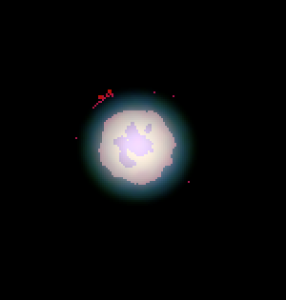
Does a paracorr help or hurt if the telescope is moderately mis-collimated?
As I understand it, one of the important goals of Newtonian collimation is to aim the optical axis of the primary along the center of the focuser, so the part of the image with minimal coma is centered under the eyepiece.
According to the paracorr instructions, with an F/4.5 primary, only the central 3mm of the image has less distortion from coma than from diffraction. With the paracorr installed, this "sweet spot" enlarges from 3mm to 18mm.
But what if the telescope is miscollimated so the sweet spot is a few millimeters from the optical axis of the paracorr? Could that make the image be even worse than without the paracorr?
I'm sure my scope is never perfectly collimated, even if it is close. How close does it have to be for the paracorr to help?
Perhaps an optical designer with knowledge of the paracorr's design can give us some guidance.
Allen


