Image of the day

Captured by
james carter

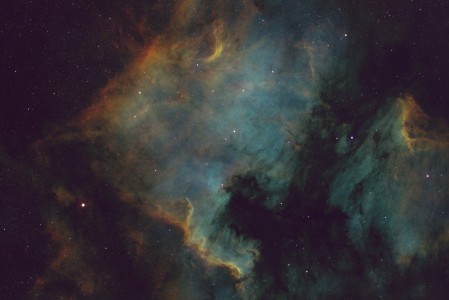
North American Nebula NGC7000

My Account

New to Astromart?

Register an account...

Need Help?

Chromatic Aberration in TV 85

Started by heliophile, 11/21/2006 06:56AM
Posted 11/21/2006 06:56AM Opening Post
Hello:

A reviewer in a popular website compared a TV 85 to a Celestron 80ED. As expected, the workmanship and feel of the TV 85 was a quantum leap (or two) above the Celestron's. However, he was vociferous in his disappointment of the 85 performace on bright objects, in particular the moon because of color halos, which he went on to say were also seen around Jupiter. None of these issues, according to him, were noted in the Celestron. I am an avid Tele Vue fan and was taken aback by (Gasp!) his use of the term obsolete to describe the optics on the 85.

It's cloudy over here and, it's a new moon anyway, so I won't be able to go out and see for myself.

What are other people's experiences with the 85 on bright objects? Furthermore, is the Celestron 80ED really that good? And finally, has anybody compared a TV 85 to a Williams Optics. If not, I am sure Floyd Blue won't mind someone showing up at his door next week with an invitation to take his new baby out.

Rey
Posted 11/21/2006 07:26AM #1
Hey Rey,
I think that Linton has the TV 85. If he does we can check it out compared to the WO 80mm. I have looked through the TV, but not at the Moon. But I do not remember any color on brighter stars. However, I don't think we looked at Vega or something of that magnitude.
I will let you know how the WO performs when I get the chance to try it out.


[SIZE="Large"][/SIZE][COLOR="Blue"][/COLOR] Floyd Blue grin
Amateur Imager
Posted 11/21/2006 07:42AM | Edited 11/21/2006 07:52AM #2
I would not call the TV85 "obsolete" but certainly the
optics in the Orion ED80 are superb. I believe it is
the same lens as the Celestron 80ED. I will attach below
some review I did a long time ago comparing it to the TV85.
I had made measurements of the color correction using
filters and measuring the focus shift. The color shift
for the ED80 was 0.12mm or about half that of the TV85
which came in at 0.22mm. So yes, the color correction
is a bit better in the ED80.

I later tested the Strehl numbers in these scopes using
a Roddier test in green light. Both ED80 and TV85 came out
the 96% - 98% Strehl ratio range. The optical quality of the
ED80 is extremely high for the price.

Floyd's new William Optics Fluorite Triplet, I believe, uses
the lens from LOMO. I've tested the 80mm F7.5 version of
this lens, and it has significantly less false color than
either the ED80 or the TV85. It is very hard to see any
false color at all. It is really in another league, as you
would expect for triplet vs. doublet. But I am not sure if
maybe Floyd has the 80mm F6 version -- in any case it should
be better than these other models.

===================

Orion ED-80 Color Correction
John Biretta 11/1/2003

My Orion ED-80 arrived Thursday. I tried to make some
quantitative measurements of the color correction, since
many people are interested in this. Here's some numbers. These
are the change in focal length relative to green light. I used
red, green, and violet filters since thats what I have. Filters
were placed between the eyepiece and eye. A Nagler 3.5mm Type 6
eyepiece was used with a TeleVue 2" diagonal and focused by eye.
Each measurement done three times; averaged numbers given below.
Judging from repeated measurements the uncertainty on color numbers
is about 0.02mm.

Chromatic focal shifts in some 500mm - 600mm refractors:

Scope / Focal Length / Red (#25) / Green (#56+#58) / Violet (#47)

Orion ED80 _ / 600mm / +0.12mm / 0.00 / +0.03mm
TV85 _____ / 585mm / +0.08mm / 0.00 / +0.22mm
AP105 EDT _ / 620mm / +0.09mm / 0.00 / -0.11mm
UltraScan 80 / 500mm / +0.04mm / 0.00 / +0.70mm

Numbers for TV85 and AP105 are given for comparison. The
color correction of the Orion ED-80 is certainly in the same
league as these other respected scopes. Maybe even somewhat
better if you consider the spread from highest to lowest numbers.
Posted 11/21/2006 05:06PM #3
The Moon is a very nice test for lateral color, which is common in many eyepieces.

Clear skies, Alan
Posted 11/21/2006 08:49PM #4
Hi Bill,
Quite true! Plus, some EPs will add color, so what EPs were used? Many things can effect the view.

[SIZE="Large"][/SIZE][COLOR="Blue"][/COLOR] Floyd Blue grin
Amateur Imager
Posted 11/23/2006 11:27PM #5
Hello all:

Thank you all for your posts. It helps a novice like me gain perspective and, of course, learn more. In particular, I was fascinated by John Biretta's post showing the color specific focus shift for different refractors. If I can only really understand what how he came up with those numbers (John, how about plain English for simple folk like me?)

I was expecting to find that the hype around the ED 80 was just that hype, but it seems that if you get a well collimated sample, it will compete with more expensive refractors without breaking the bank, albeit while sacrificing the quality of materials used and tolerances in the manufacturing process. Like Jon Isaacs said, it is remarkable that a Chinese lens company can in fact offer such a good triple lens for so little money, but then again that's the positive side of globalization (please, I don't mean to start an argument on this topic).

Then, it is equally remarkable that a doublet apo can still hold its own when compared to triple lens designs, and that the differences in color correction are so small, if at all, that you have to look so hard to tell the difference. The use of the term "obsolete" to describe the TV 85 is hogwash.

This thread was indeed about color correction in popular apo's, but user experience will always be more than just about color halos around the moon.

By analogy, a Pontiac GTO LS2 will spank a Porsche Boxster S on a 0-60 mph sprint, and the Pontiac sells for 20 Grand less! But I know which one I want to see in my driveway. Besides, in every day driving, the difference in their 0-60 sprints mean very little.

So enough yacking about equipment. Get out there and take advantage of the moonless (relatively so) nights and let your retinas soak up some photons.

Clear Skies to all, and Happy Thanksgiving!

Rey
