Well...this is the slower system, but for reasons other than Sky Quality concerns expressed. With more than 2 years of data taken every 10 minutes on clear nights there is little doubt as to the quality of the site. And yes I have more than 35,000 allsky images. Average seeing is <1.5 arc seconds. Average Sky Quality on clear moonless nights is better than 21.9 mag/arc seconds toward Polaris. The prior 6 years I was imaging in the So Cal area and most dark sky sites in the south west, including New Mexico and Arizona.
The reason it is only F/3.2 instead of F/2.6, like the 8" it is replacing, is the physics of narrow band filters. 5nm BPF's don't work so well at cone angles faster than F/3, and F/3 is a real stretch for them. The only filters I've measured that perform at those angles are from Astrodon, because of the way they are centered "slightly long" at near 0°angle. I've only measured the 3 sets I own.
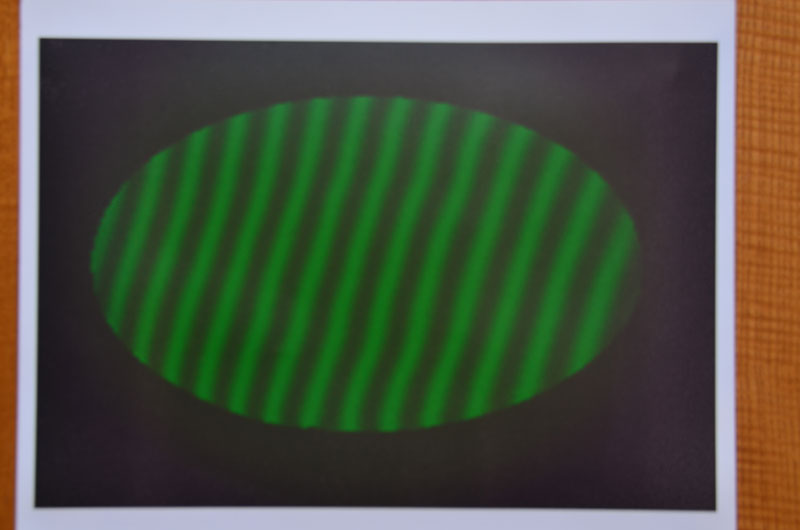
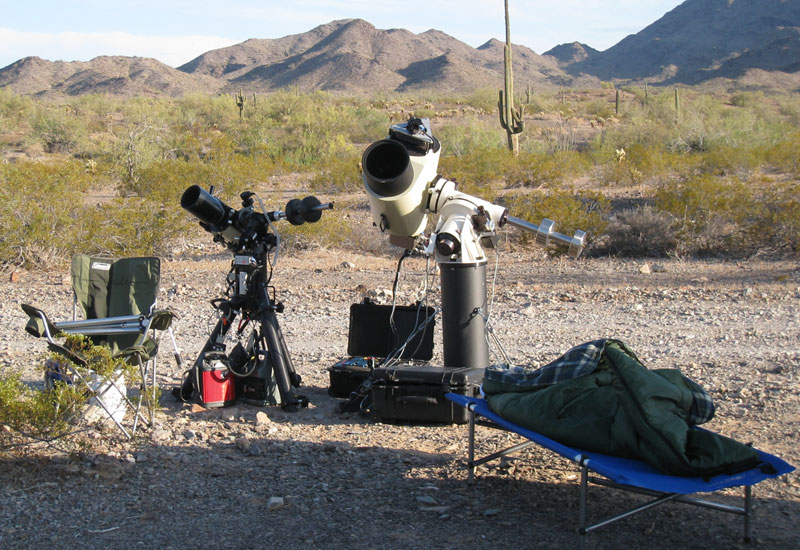
In the 8 years the prior 8" F.2.6, image attached, has been operational it’s only been collimated once after I dropped it on the 10" secondary mirror mount...
So with the slower system I am not concerned with collimation, and with another passive a thermal design, focus with temperature is not a concern either...
Why a fast system...As much aperture as possible at a given image scale... The 45" focal length image scale almost takes advantage of the 1.5 arc second seeing, when the 5.4 micron pixel camera is used. I'd planned a larger 16" - 18" system but neither will fit in the 6' dome....Dave
Attached Image: