Image of the day

Captured by
Lawrence Parchman

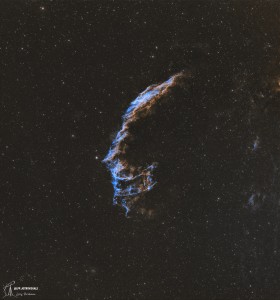
Eastern Veil Nebula (NGC 6992) - Wide View

My Account

New to Astromart?

Register an account...

Need Help?

Re: Cooler than ambient?

Started by djscobel, 08/09/2004 04:50PM
Posted 08/09/2004 04:50PM | Edited 08/09/2004 05:01PM Opening Post
Dan, I'm no expert but my understanding is that it radiates its heat to the open sky, which has a much lower effective temperature. The only way dew can form on an object when the air is warmer than the dew point is for that object to cool below ambient.

Others who are more knowledgeable than me can elaborate.

Best regards,
Doug

Posted 08/09/2004 11:47PM | Edited 08/09/2004 11:51PM #1
Doug is exactly right. And if I could elaborate...

What was so frustrating about some of the earlier threads that I was participating in was my inability to explain the seemingly magic ability of radiative transfer to leap into space, whereas convection (air movement) and conduction (direct contact) occur on much smaller length scales. The radiation (IR) is not affected much by the air itself, although water vapor and carbon dioxide absorb and reradiate some IR energy.

Radiative cooling to outer space still meets the requirements of physics: energy transfer from higher temps (earth) to lower temps (space). So with radiation transfer, the system has to be expanded to include outer space.

Radiative cooling is the primary means that the earth's surface and our lower atmosphere we live in cools off at night. Convection and conduction just try to even things out on a local scale between things that radiate strongly and things that don't.

Mike Ratcliff