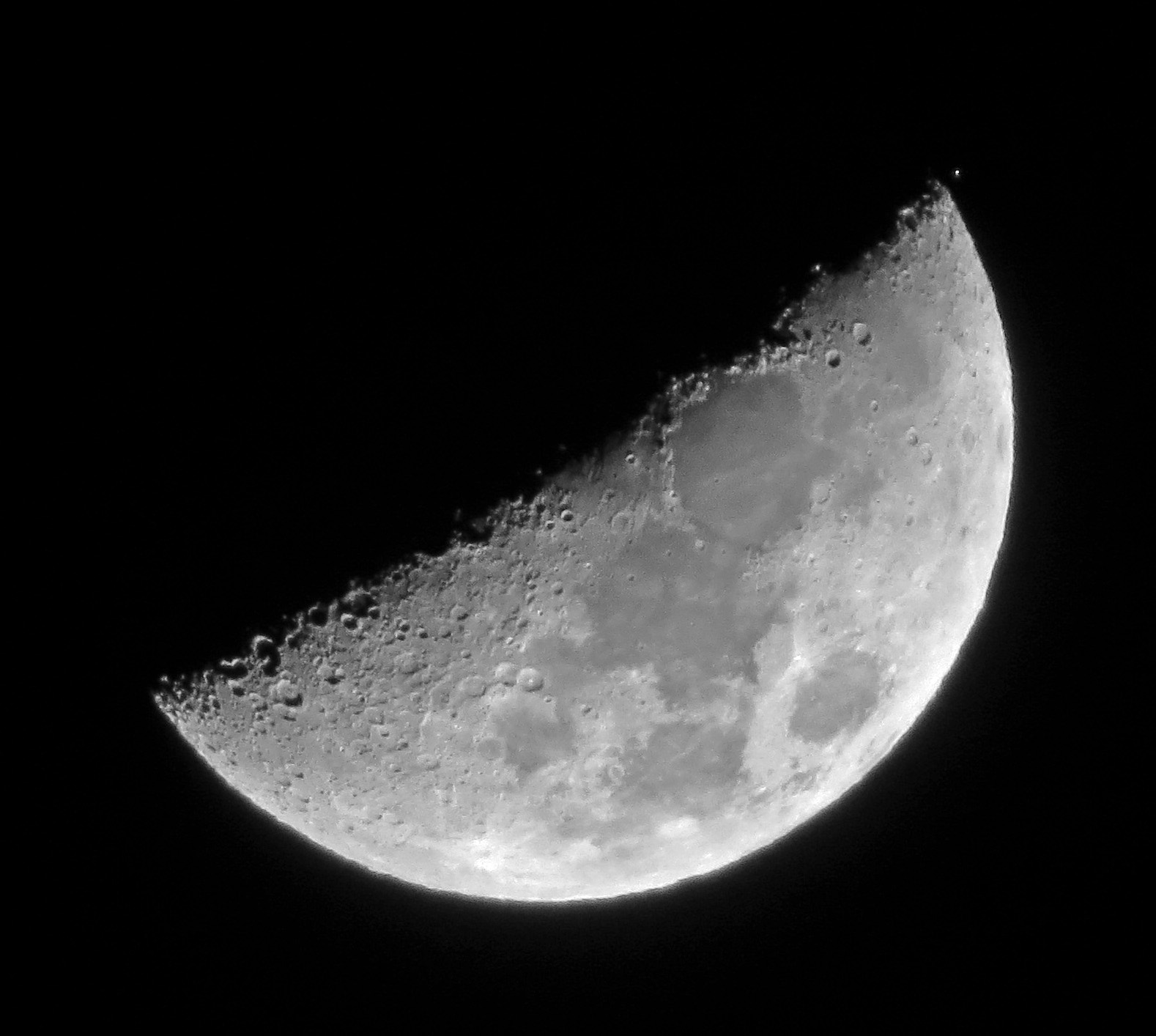
Two obeservation reports: One (mine) yawn ho-hum. Second (friend's) quite exciting! First mine: Was last night, so sorta timely ~After Dark~ Here, near Rochester, NY ideal location and clear. But it was 8F outside, so I just watched it with binos (Zeiss 8x20) thru the living room window and saw Aldebaran "snap off" at 11:12:13 p.m. EST 20170304. That's a scientifically useless data point... but fun nevertheless = satisfying Amateur Astronomy. I was about 30 miles south of the Ideal Grazing Trajectory. Computed that 0.020 arc-sec star should take approx 0.13 sec to wink out = too fast to notice visually, but plenty slow enough for a few frames on a cam-corder to witness. A fast-response photometer on a good scope would nail it magnificently. Second friend's observation: Carl intentionally placed himself about 700 feet south of the "ideal mean" trajectory, else risk seeing no occultation whatsoever. Result? He saw Aldebaran wink off and on NINE TIMES over a period of [about a minute?] Scope was a 5-inch refractor at 21X. Lat 43d21m00.21s Long 78d38m07.11s Ele 91m. Very cool, indeed! He didn't log the time(s) else miss watching it! For both of us, it is reminiscent of that time a pretty bright start cut right thru Saturn's Rings a couple decades ago, winking on/off/on many dozens of times. I had observed that event, mesmerized, using my 12-inch Cave Astrola from my dome here. Has anyone seen a grazing occultation blink more than nine times? I'm thinking Carl may well have set a (visual) record? Tom Dey
29-inch Dob in a dome
36-inch upgrade soon
LUNT 80/80 solar scope
FLI 6803 cam
APM 100mm APO Binos
JMI RB-16 Night Vision Binos
Zeiss 20x60 IS binos