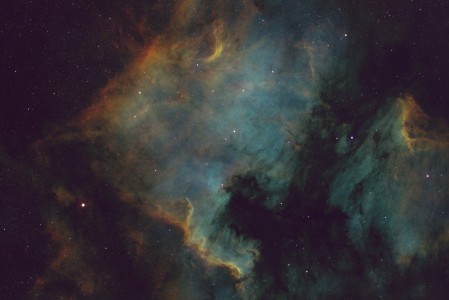

From http://www.cometchasing.skyhound.com/index.html
C/2007 F1 (LONEOS) has reappeared and is bright.
A far-northern morning comet visible in binoculars. This comet was observed for the first time in many months in mid-September. It was seen at magnitude 9.8, with a 4' coma. It may continue to brighten rapidly, moving into Coma Berenices by month's end.
Finder chart at
http://www.cometchasing.skyhound.com/comets/2007_F1.gif
Recent Comet Brightness Estimates at
http://cfa-www.harvard.edu/icq/CometMags.html
has no recent reported magnitudes. However the Spaceweather page for Oct. 2, 2007 says:
---------
"Comet LONEOS (C/2007 F1) is here!" reports Tony Cook of Leeds, UK, who took this picture on Sept. 30th:
"Over the next month this comet is predicted to increase in brightness to 4th magnitude--barely visible to the naked eye but an easy target for backyard telescopes," he says.
Comet LONEOS is not a frequent visitor to the inner solar system. One analysis suggests it was last in the neighborhood 42,000 years ago. It's equally possible, however, that the comet has never been close to the sun before; this could be its first plunge. The uncertainty adds suspense to Oct. 29th when LONEOS will approach the sun almost as close as Mercury. Will fresh veins of ice newly heated by sunlight burst forth to produce surprisingly bright jets and clouds? Stay tuned!
Cook's Sept. 30th image "was taken under bright moonlight just before dawn," he adds. "Even under these difficult conditions a fine but faint linear tail can be seen. As the moon departs and the comet gets closer to the sun, the view can only get better and brighter!"
---------
Orbital elements & Ephemeris at
http://cfa-www.harvard.edu/iau/Ephemerides/Comets/2007F1.html
Pics at http://www.aerith.net/comet/catalog/2007F1/pictures.html and
http://www.aerith.net/comet/catalog/2007F1/2007F1.html
