Image of the day

Captured by
Gary Taylor

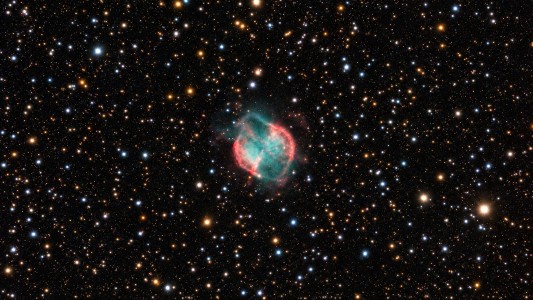
M27 - Dumbell Nebula

My Account

New to Astromart?

Register an account...

Need Help?

A 2" eyepiece?

Started by pern009, 08/04/2006 03:20PM
Posted 08/04/2006 03:20PM Opening Post
After just receiving my Skyquest xt6 (dob), i'm pretty happy with it but i'd like to be able to get the most out of my new scope. I'm looking at adding to my eyepiece collection, my xt6 came with 2 eyepieces (both 1.25") 25mm and 10mm pieces. I'd realy like to be able to see some deep space objects..sounds like my xt6 is somewhat limited (to 6 mag stars at the most?) but what about messier objects. I guess my question is what eyepieces should I invest in? From what I understand a lower MM is good for planetary viewing and a higher MM is good for deep space. Can someone point me in the right direction here? Funny how after I get my scope I have a lot more questions than before I had it, hehe.

Wanna be Astronomer since August 3rd, 2006!
Skyquest xt12i
Celestron 1.25" plossl set
Posted 08/04/2006 03:44PM #1
Casey Whalen said:

After just receiving my Skyquest xt6 (dob), i'm pretty happy with it but i'd like to be able to get the most out of my new scope. I'm looking at adding to my eyepiece collection, my xt6 came with 2 eyepieces (both 1.25") 25mm and 10mm pieces. I'd realy like to be able to see some deep space objects..sounds like my xt6 is somewhat limited (to 6 mag stars at the most?) but what about messier objects. I guess my question is what eyepieces should I invest in? From what I understand a lower MM is good for planetary viewing and a higher MM is good for deep space. Can someone point me in the right direction here? Funny how after I get my scope I have a lot more questions than before I had it, hehe.

You should wind up with a lot of advice here, most of probably quite good. I'm assuming that the Sky Quest is f/8 and 1200 mm focal length, and the 25 mm is a plossl. At 48x and a 1 degree true field of view, that eyepiece is great for looking at Messier Objects. Given time and exoerience, you should be able to identify all 109 of the Messier objects with it. With that 1 degree field of view, finding them may be quite a bit harder.

Assuming that the scope has a 2 inch focuser something like the B&W 300 mm 80 degree eyepiece for less than $100 (maybe $60 used) would be a very good finding eyepiece, there are also GSO's and Proximas that should be very serviceable at f8. I use a 36 mm Siebert ($200) which holds up much better at shorter focal ratios, but it costs more too. Any of these will give about 2 degree field, which is very helpful for a beginner, and provides spectacular views of extended objects for anyone.

If your scope has 1.25 inch focuser, then a 32 mm plossl will give you as much true field as you are going to get, and is the obvious choice. This should give you excellent image quality across the entire field.

Best wishes
Lorne Johnson
Posted 08/04/2006 04:06PM #2
Thanks for all the good info thus far. So what is a 2x barlow? Is it something that attaches to the eyepieces?

Wanna be Astronomer since August 3rd, 2006!
Skyquest xt12i
Celestron 1.25" plossl set

Posted 08/04/2006 04:07PM #3
You're limited to 1.25 inch eyepieces with this scope, so DON'T buy any 2inch eyepieces! A 32mm Plossl is as wide of a field as you'll get. I recommend one.

For planetary viewing, getting something that will give you somewhere between 150 to 200x is a good idea. I find this is about as high as is normally worthwhile under typical seeing conditions, and is low enough that hand-tracking isn't too difficult with a little practice. I recommend a good 2x barlow (the Orion Shorty-Plus) paired with a 12 to 16mm Plossl (or Ultrascopic) to get to this range. You can also use the barlow with your 10mm eyepiece to get about 240x, which is probably higher than ideal but still useful on good nights.

Of course, you can live with only the provided eyepieces for a time; you'll get a feel for what you really want with time. Then, if you follow my suggestions and end up with a 32mm, 25mm, 15mm(ish) and 10mm eyepieces, with a 2x barlow, you'll have more than enough magnification options for just about any use.

The dimmest stars one can see with the naked eye from a decently dark site are around 6th magnitude; it's possible to go far deeper (probably approx. 13th magnitude, but this depends on many factors - your vision as well as sky conditions) with your scope. It's possible to see all of the Messier objects with an XT6, although they vary in difficulty. Some will require fairly dark skies and be quite dim (m74 and m101 in particular are killed by light pollution); others are naked eye objects under appropriate skies (M45, M44, M31 being the easiest naked-eye Messier objects).
Posted 08/04/2006 04:15PM #4
Casey,

Forgive this if you already know---but just to be sure:

A "2 inch" or a "1.25 inch" eyepiece refers to the size of the barrel that fits your telescope. Do not compare these to 9mm, or 25 mm, or whatever you see listed as the focal length of the eyepiece. They are two completely different measurements. If you have a 1.25 inch focuser, you have to use 1.25 inch eyepeices. If you have a 2 incher, you can use either 2 inch eyepieces, or 1.25 with adapter.

And yes, the shorter the focal length of the eyepiece, the more maxnification you will get. Therefore a 9 mm eyepiece will give you magnification than a 25 mm. This is good to get magnification on small, bright objects, like the planets, but the 25 mm will be preferred on larger objects.

Alex
Posted 08/04/2006 04:17PM #5
Casey, your 6 inch Dob will see much deeper than mag 6.

And as for Messier, you have a higher quality scope, and one with about four times the light gathering ability than Messier and Mechain had. So, you will be able to see and even study all of the Messier Objects.

Alex