Image of the day

Captured by
John Roach

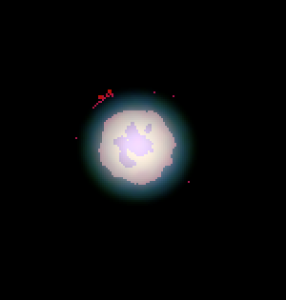
Enhanced Uranus showing Polar Cap and possible Aurora

My Account

New to Astromart?

Register an account...

Need Help?

Best power for DSO's

Started by Inge_S, 11/25/2003 02:27PM
Posted 11/25/2003 02:27PM Opening Post
Deep-sky experts, your opinions please!

Here is a list of 10 highly different DSO's. Which powers would you select for each of them? Please state minimum, maximum and optimum, and also state your aperture. If there are objects you don't know, just skip them.

Here's the list:

M31
M33
M42
Veil nebula
M57
M13
NGC4236 (Large, faint galaxy in Draco)
NGC3190 (Member of group of small galaxies in Leo)
NGC6210 (Small planetary in Hercules)
NGC7662 (Moderately small planetary in Andromeda)


Posted 11/25/2003 04:08PM #1
In my 8" f/5.7 dob is use:

M31: 36 mm Siebert for about 35x or panoptic 55x (widest field counts)

M33: 20 mm plossl 58x, or 13 mm Nagler T6, 90x

M42: 22mm panoptic or 13 mm Nagler often with UHC filter. 145x for the trapezium.

Veil: usually the 36 mm Siebert with a UHC or 20mm Plossl (UHC)for detail of the filament structure.

M57: 145x with the 8 mm Monocentric has been my favorite thanks to Albert Bellq's review.

M13: 130 with the 9mm Nagler T6 is my personal favorite, it's fairly 3 dimensional quite well resolved in a nebulous cloud (so it not completely resolved). At 260 it is fully resolved with many more stars, but it's more a two-dimensional diagram of itself. The best view I've had of M13 was at 70x in a 16 inch dob.

(I do not claim expertise at deep-sky or anything else astronomic.)
Posted 11/25/2003 09:13PM #2
In my 13.1" f/4.5:

M31 - 53x (28mm UO Pretoria) - use as low power as exit pupil will allow. But use higher power on the companions, especially M32 which has a nearly stellar core.
M33 - 53x - look for HII regions in arms
M42 - 53x for full extent, 117x (14mm Radian) or higher for examining the Trapezium and other intermingled stars. UHC filter brings out more nebulosity.
Veil nebula - 53x + OIII + dark sky - spectacular!
M57 - 117x and up. Hard to go too high it has such a high surface brightness
M13 - 213x (7mm Nagler) - fully resolved across the entire thing
NGC4236 (Large, faint galaxy in Draco) - 53x - 117x
NGC3190 (Member of group of small galaxies in Leo) - 117x lets you see all four at once
NGC6210 (Small planetary in Hercules) - 117x and up - also high surface brightness
NGC7662 (Moderately small planetary in Andromeda) - 117x and up. Over 200x can see "overlapping" ellipses. AKA the "Blue Snowball"

My personal rule of thumb is to increase the magnification until the object starts looking no better or worse (too faint, too fuzzy, less detail seen, etc.), then go back to the next previous EP.

Doug Scobel