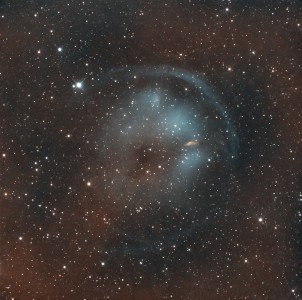
As astronomers, we have our usual suspects to observe at nights. Saturn, Jupiter, the moon, M31, M13, M42, etc. However, if you think about it, there aren't a lot of objects in our sky that really are worth looking at unless you have a huge telescope. Which begs the question, how good are our galactic genes?
I mean, wouldn't it be great if we had:
3 or 4 moons around the Earth
20 planets in our solar system(with about 5 or 6 that are like Jupiter/Saturn and can easily be seen in a small scope and show great detail)
20+ M31 type galaxies up in the night sky
10 or so M42's
etc etc.
All of these objects would be different shapes and colors. As astronomers this would be total bliss. Can you just imagine having 10 or so M42's up in the night sky? All 10 would fill up a medium powered ep and still be totally unique in shape and color.
Please, for the moment suspend your disbelief. In other words no comments like "Well, if we had 3-4 moons this would cause too much light blah blah blah.....
Just look up in the night sky and think to yourself "What if?".
Of course the irony behind this is the simple expression "Thank your lucky stars for what you have now". How true, how true.


