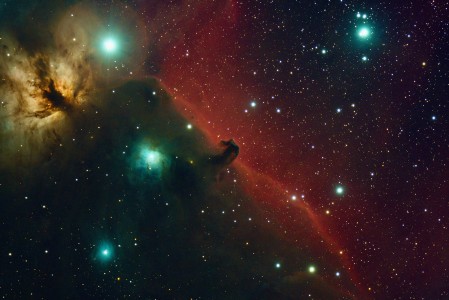
Coming back to stargazing has been a lesson in frustration and patience. I've out of the picture for the past 7 years. With the seemingly ever-present nightly overcast, city light pollution, and now smoke-filled skies from the burning of Mexico fields, I'm about to burst wide open. One night I packed up my gear and started to drive in search of clear skies. I made it 170 miles before giving up. In February I bought a used dobsonian light bucket with no eps from a very nice man, Ben Hugens. I quickly bought a 32mm plossl and 2x barlow from Telescope Warehouse, lets say quite inexpensive, but not cheap. I picked up a Telrad and was ready to spend my nights under the stars. If it sounds to good to be true, watch out. Since February, I've spent maybe 6 or 7 decent sessions observing, and I guess I'm lucky, considering some of the posts I've read lately.
But instead of being depressed, having a new toy, with nothing to see, I decided to get ready for summer. I purchased a 13.8 and 18mm swa Meade from the Astromart classifieds and a Meade 4000 26mm, and a Cheshire collimator. I purchased Brent Watson's two volume 'Finder Charts of the Messier Objects' for Telrad users, Nightwatch by Terence Dickerson, The Star Guide by Robin Kerrod, SkyAtlas 2000.0 by Wil Tirion, and the National Audubon Society Field Guide - Night Sky. I've printed most of what is offered on the SEDs website, which equates to a stack of paper about 1 foot thick. I had forgotten much more than I remembered. I hear that happens to old people!
I've made lists of what to look at, where to look, and when to look, marked pages, drawn in the constallation lines on the SkyAtlas, underlined the M and several NGC objects, joined the local astronomy club, and have volunteered with the telescopes on wheels group. Most of my successful sessions have been volunteering, so much of my time, at least until 10:00 was spent keeping Jupiter and Saturn in the ep for the young and old alike. The oohs and aaahs are worth it. One kid pulled out my ep out of the focuser thinking I had drawn Saturn on it. Both ep and child are safe now. I've been really frustrated as I started astronomy in the desert of southern California. No humidity, no clouds, not much light pollution. I was spoiled rotten. I thought that was the way it was most places. Living now on the Gulf coast is a challenge, but I guess seeing in most of the US is a problem nowadays. All I can say is if its overcast during the upcoming new moon, I'm headed west as far as I can drive in 10 hours and make it back for work Monday.
May clear skies be with you
David Roberts
