
Things were not looking very good last night in south central Pennsylvania for a successful observation of the NEA 2002 NY40. However, I was fortunate enough to have a hole in the overcast develop on Sunday morning around 6:00 UT. Using the ASH 17" f/15 classical Cassegrain, which is not the easiest instrument to do this sort of observing with by the way, I located 2002 NY40 in the constellation of Hercules at 6:18 UT and tracked it for over 20 minutes. Magnifications of 162 (40mm University Optics MK-70), 259 (25mm U.O. MK-70), 324 (20mm Meade Wide Angle), 381 (17mm Pro-Optics Ploessl), and 498x (13mm Tele Vue Ploessl) were employed. At 498x it was quite difficult to keep the asteroid in view for very long. :-)
I'd observed the rapid moving NEA 1996 JA1 with the same telescope 6 years ago but 2002 NY40 was much swifter, the fastest natural object that I've ever seen through a telescope other than the occasional meteor.
Afterwards a fellow ASH member put C/2002 O4 (Hoenig) into view using coordinates that I supplied to him. The transparency was not very good but the comet was nevertheless visible. At 118x (55mm U.O. Ploessl), 202 (32mm U.O. Koenig-II), and 259x Comet Hoenig did not appear to be appreciably different than my last view of it a week before at Stellafane. The coma was diffuse and poorly condensed.
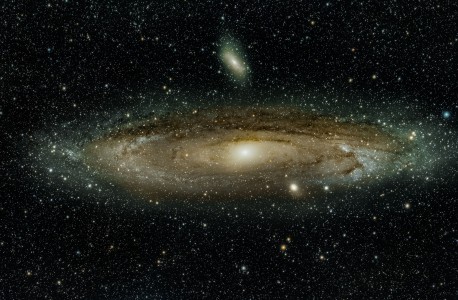
I also was able to observe a number of denizens of the deep-sky through the 17" and its 5" f/5 finder - M57, M92, Stock 2, the Double Cluster, the Alpha Persei Association, Almach, M34, M15, M31, and Gamma Arietis - before the clouds returned.
Dave Mitsky
Chance favors the prepared mind.
De gustibus non est disputandum.
