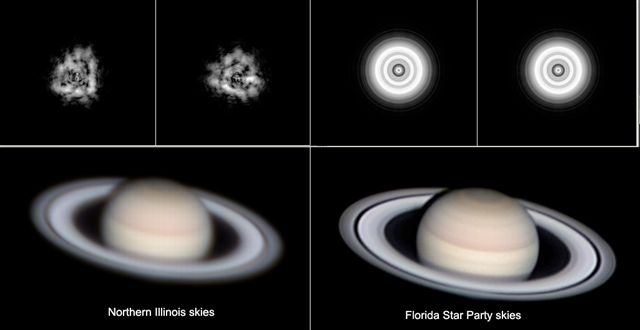
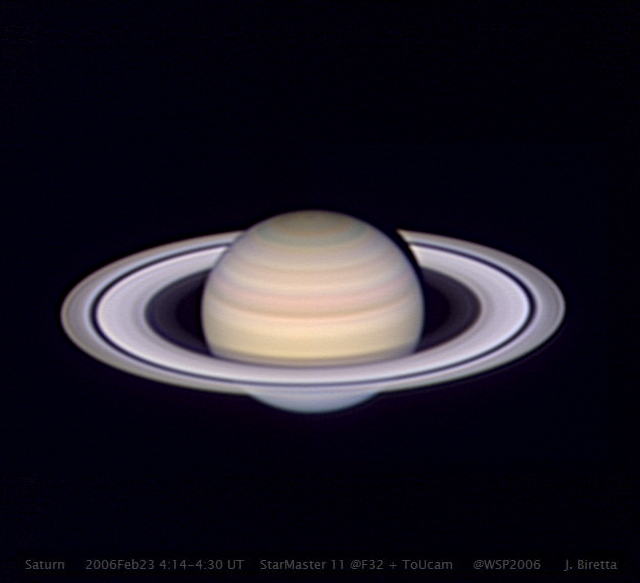
The Winter Star Party in the Florida Keys is coming next month. From past trips to WSP I know that the seeing there is legendary--for deep sky observing and planetary observing as well. I have heard some veteran amateur astronomers attribute this legendary seeing to "the laminar air flow off the Caribbean" and other characteristics of the atmosphere. The other day I saw a graphic display of the month by month temperatures in the Florida Keys. The difference between the high and low temps for the day in all months is 10 or 11 degrees. It makes me wonder how much of the legendary seeing is due to stable atmosphere, and how much can be attributed to a thermal environment in which it is possible to get the delta in temp between one's primary mirror or refractor objective reduced to a very small difference. It may be that such environments create thermal stability within the atmosphere and small deltas between glass and air and that both are major factors in the legendary seeing. I continue to find that the pre-dawn hours in the American Midwest give me the best looks at deep sky and planetary targets. Those hours are the ones when ambient temperature drop is slowing down compared to the hours just after sunset and seem to be the hours when there is less twinkling of bright stars.
I suppose that astronomers who are monitoring the delta between their primaries and ambient temperature and doing active/passive cooling can dissect out the portion of seeing that is due to thermal/boundary layer issues compared to that portion that is atmospheric.
I suppose that astronomers who are monitoring the delta between their primaries and ambient temperature and doing active/passive cooling can dissect out the portion of seeing that is due to thermal/boundary layer issues compared to that portion that is atmospheric.