Image of the day

Captured by
John Roach

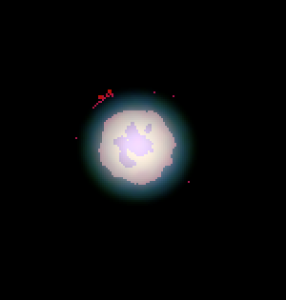
Enhanced Uranus showing Polar Cap and possible Aurora

My Account

New to Astromart?

Register an account...

Need Help?

Top 5 or 6 city viewable objects right now?

Started by toml, 08/29/2003 02:52AM
Posted 08/29/2003 02:52AM Opening Post
Hey kids. I am having a few people over Friday all of whom know I have a telescope and want to look at Mars....and some other things while they are at it.

Now, my 6" Intes MK67 Mak Newt gives some crisp views especially under dark skies, but from my urban location, it's hardly a light bucket, so showing M81/M82 is too suble for the uninitiate I think. Though it does shine my shoes, it's mostly for intellectual reasons, not visual...not from the city anyway. So I want to focus on a few other purely visual and not so subtle objects

So....Let me show you the list I have in my head at the moment....


1. Mars.
2. M13
3. M92
4. Ring
5. Alberio - for sure
6. Dumbell - too shapeless maybe?

I guess open clusters or dramatic red/blue doubles would be nice and easy to see and/or appreciate for my newbie guests.

Nothing beats the one two punch available in a few months of the giants...I just LOVE newbie reactions to that! But other than those, what is my best shot(s) at knocking their socks off on Friday night?

Thanks for any tips.

Tom.
Posted 08/29/2003 03:32AM #1
If you have a pair of binocs out with you, make sure you show them CR399 the coathanger. And right next door is Sagitta the arrow. Looking at Sagitta, some will see M71. The tip of the arrow is a good guidepost to get to the Dumbell, 3° perfectly north.

Swing over to Albireo for the colorful double, in scope or even with binocs. Then move 3° south to land on Stock 1, a broad loose faint cluster, a very different kind of cluster than CR399.

Then move over a bit and show them Delphinus the dolphin. The tip of the dolphin gamma Del is an easy 9.6" scope Double.

Two binocular constellations
Two very different clusters
two doubles, a planetary nebula
and a very faint globular.

edz
Posted 08/29/2003 05:42AM #2
Hmmm...I'd probably pick the same objects myself! Alpha Herc and Gamma Delphinus are other nice bright colorful summer doubles; I often show people Mizar and Polaris; Most people can identify the big dipper, and many can identify Polaris - showing them the double nature of stars they actually know is neat. Too many doubles may wear thin on newbies, but it's a good thing to do while waiting for darker skies.

The ring and dumbbell do work well together, as they're the same class of object but very different shapes. A little speech on planetary nebulae might even be welcome with the right group.

You should mix in some open clusters. M11 should hold up to light pollution well and is often a winner with newbies. If Cassiopeia is up high enough, NGC457 (E.T/Owl/Dragonfly cluster) is fun. M6 and M7 are pleasers, but if there's a lot of glow for you in Scorpius then they'll probably be greatly diminished.
Posted 08/29/2003 01:32PM #3
M17, the Swan, should definitely be on the list. It impresses everybody I show it to, at all magnifications. It's usually everyone's favorite object. It's plenty bright enough to punch through most light pollution/
Posted 08/29/2003 03:04PM #4
That's a good list. I would add the Double Cluster between Perseus and Cassiopea, and M11 (The Wild Duck) around the head of the Eagle--they are about my two favorite open clusters. If you get out fairly early the Saggitarius Nebulae (Swan, and Lagoon) should be nice in good transparency.
Posted 08/30/2003 03:05PM #5
First of all, thank you for all the input. Last night was a great success, not because of the quality of the views (the city really does suck doesn't it), but because of the quality of the people. We had fun hanging out, having an outdoor party from about 8 to midnight. We saw doubles: albireo (that got wows, people seemed especially interested..nobody knew there WERE double stars...all saw color in them, though at first people see white, then they allow themselves to see the subtlety and then they see the colors if they don't off the bat) and polaris (people liked the challenge of it), constellations: cass, ursa maj. lyra (telling them that vega is the star that Jodi Foster went to in Contact is good for a laugh!), cygnus, saggitarius, nebulae: ring , dumbell, globular: hercules.

We spent a lot of time on this as I explained what happend there, but also how to see it: first i left in a low power EP as everyone took their turn to see other stars in the field to contrast the soft smudgy thing from the stars around it. Two of the 9 people actually said, I can see it's a smoke ring already. That was at 60x and I was amazed as I could see that, but didn't tell them they would see that just wanted everyone to see a nebula...you know that something in this frame was askew, then we would zoom in on that something to see what it is. So then we wen up to 128x at which point you don't really see many other stars just 2 mag 9s or so are in there, so it's hard to know IF you are even focused looking just at the ring. I would tell them see that star in the upper left? is it a pinpoint or a blur? they would say pinpoint when it was focused, and then they'd go, OH WOW! I SEE IT, IT'S LIKE A SMOKE RING...then it would kind of be harder to see, but as they checked that mag 9 star out to see it happen again, they discovered averted vision, "hey, when I look away from it i can see it as a donut." I was as delighted by that as they were.

I showed them M13 and explained that though it looked like a nebula (secretly wishing I had a big dob with me at that point, in which case I wouldn't be making apologies, but rather picking up socks from the neighbor's trees wink that it was a tightly packed ball of about 800,000 stars...no nebula, just stars like our sun, packed up in a globular ball held together by their mutual gravity. One person saw mottling which I told them was due to all the stars in there, not smooth like a hydrogen cloud would be, that was as good as that was going to get after all. One was really interested in how or why it doesn't collapse to a mother of all black holes?

Hmmmm...continued in next message....