Hello:
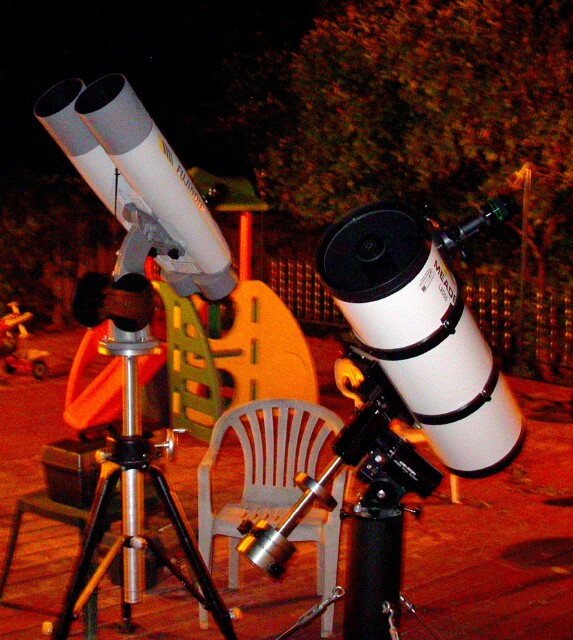
Last night a number of us observed the NEA starting around 11:40 pm HST (9:40 UT) from 9,300 ft on Mauna Kea. It was quite easy to see in a 12.5", but it couldn't be found in a 80mm refractor. At the time, it was about 20 degrees above the horizon. The speed with which it was moving was quite remarkable. When I was trying to find it, if I couldn't find it after looking around its field, I had to check the S&T chart to see where it should be now, and then look there. Eventually, I found a bright star it was going to pass in a few minutes and waited. Right on que, it came by and after that I was able to follow the asteroid. You know how, when you have a dobsonian at a star party, you need to recenter the target after each person looks? That's what I had to do, even though the scope was tracking! Its motion was quite apparent, especially when it passed by another star, which frequently happened. It was expected to get as bright as 11th magnitude, and I'd say that it looked a bit fainter than that. Given that we saw it after closest approach, and at high airmass, it makes sense. I don't know how long we were following it, but by time we moved on to other targets, the scope had moved about 2 degrees from where I first saw it. Overall, about half a dozen of us saw the asteroid moving. Having an equatorial mount with motor control of both axes was definately a big help in following the asteroid. I just had to offset the scope to the NW, then figure out which faint "star" in the field was moving again, for the next person to take a look. Later on, we determined that the limiting magnitudes of the 12.5" was around 15.3, and for the 80mm around 13.5 near zenith. We're not quite sure why it wasn't found in the refractor. At such low elevations, there is more extinction and the sky is brighter, which would make it harder to find. Also, I believe the refractor was using lower magnification than I was with the 12.5".
Did anyone else attempt to see this NEA? Any success?
Cheers
Mike Connelley