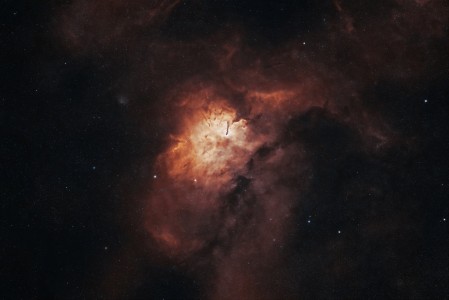
Image of the day

Captured by
Byron Davies

Sh2-86 (NGC-6820)

My Account

New to Astromart?

Register an account...

Need Help?

Planetary Trivia Quiz

Started by curtrenz, 06/25/2005 05:44AM
Posted 06/25/2005 05:44AM | Edited 06/25/2005 07:12AM Opening Post
Here is a planetary trivia quiz. It's open-book - research is allowed. Don’t be afraid to guess - bonus points will be given for bravery. The first one to answer all five questions correctly earns the right to pose the next question or pass that right to someone else. Good Luck. wink


1) How many years are there between inferior conjunctions of Venus?
--A. 0.6
--B. 1.6
--C. 3.6
--D. 8.6
--E. 121.6

2) When is the earliest year in which Mars will approach closer to Earth than in 2003?
--A. 2005
--B. 2082
--C. 2287
--D. 7233
--E. 62101

3) Which of these is a triple conjunction?
--A. 3 planets sharing the same right ascension
--B. 3 planets sharing the same ecliptical longitude
--C. 2 planets and a fixed star sharing the same right ascension
--D. 2 planets and the Sun sharing the same ecliptical longitude
--E. 2 planets sharing the same ecliptical longitude thrice in less than a year

4) How many times during 1900-1999 did Mercury transit the Sun?
--A. 0
--B. 2
--C. 5
--D. 14
--E. 46

5) When is the last time that there was a transit or occultation between two planets?
--A. 1818
--B. 1940
--C. 1959
--D. 1984
--E. 2003

For astronomical graphics, including
monthly wallpaper calendar, visit:
CurtRenz.com/astronomical

Curt Renz

Posted 06/29/2005 04:37PM | Edited 06/29/2005 04:55PM #1
How embarrassing. Is no one here ambitious enough to attempt to provide answers? On two other astronomical message boards members actually participated until someone answered all questions correctly. Everyone had a good time. A more difficult bonus question was added, but folks applied logic and figured out the solution. I suppose that those here simply want the answers. :S

OK, here they are with commentary:


1) How many years are there between inferior conjunctions of Venus?
--B. 1.6

This is the synodic period of Venus – the time it takes to lap the Earth in its race around the Sun. Venus' last inferior conjunction was the much heralded transit of 2004 JUN 08. The next IC will be on 2006 JAN 13. In the meantime there will be a greatest eastern elongation of 47°06' on 2005 NOV 03. During 8 years, Venus orbits the Sun approximately 13 times producing about 5 synodic periods. That is the famous 8-year cycle during which the dates of conjunctions and greatest elongations nearly repeat.


2) When is the earliest year in which Mars will approach closer to Earth than in 2003?
--C. 2287

It may have been more than 60,000 years since Mars was closer than in 2003, but it will take only 284 years to get even nearer. Actually, it was only slightly further in 1924 than in 2003. As Mars’ orbital eccentricity experiences a cyclical increase, it will periodically make even closer approaches until around the year 25000.

3) Which of these is a triple conjunction?
--E. 2 planets sharing the same ecliptical longitude thrice in less than a year

Occasionally one planet will appear to pass another - turn retrograde moving by the second planet again in the reverse direction - then resume direct motion for a third passage. The probability of any of the other four choices ever occurring is zero if the conjunctions must be precise.

4) How many times during 1900-1999 did Mercury transit the Sun?
--D. 14

That’s close to the average of about 13 per century. The last one occurred on 2003 MAY 07. The next one will occur on 2006 NOV 08.

5) When is the last time that there was a transit or occultation between two planets?
--A. 1818

On 1818 JAN 03 Venus transited across Jupiter. There is no record of an observation. The only recorded event since the invention of the telescope was the occultation of Mercury by Venus on 1737 MAY 28 witnessed by a lone English amateur astronomer. The next event will be a partial transit of Venus over Jupiter on 2065 NOV 22, but it will occur only 8° from the Sun making it difficult to observe.

For astronomical graphics, including
monthly wallpaper calendar, visit:
CurtRenz.com/astronomical

Curt Renz