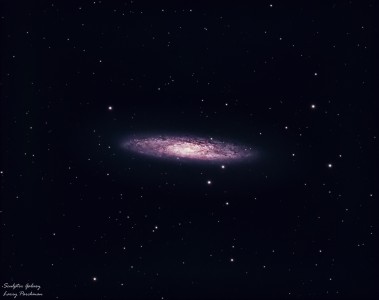

This one is really up close and personal. So add another ~24 images in a mozaic and the whole thing might fit.  And then it would still take a bit of imagination/wishful thinking to get to that Tony Hallas version.
A couple of students using the observatory last month got this one - but it was actually a miss. They were intending to get NGC604, the large emission cloud on the edge, but that one is outside the field of view. Easy to do if you just center the bright thing, which is what you usually want. I think the total exposure was LRGB 38:28:34:30 and I am not convinced that the flat was the best. I stretched and played with their tiff for this version. There is some more L data available, but it really just needs more time and better flats.
Thanks for looking. And please let me know if you have any suggestions.
Charlie
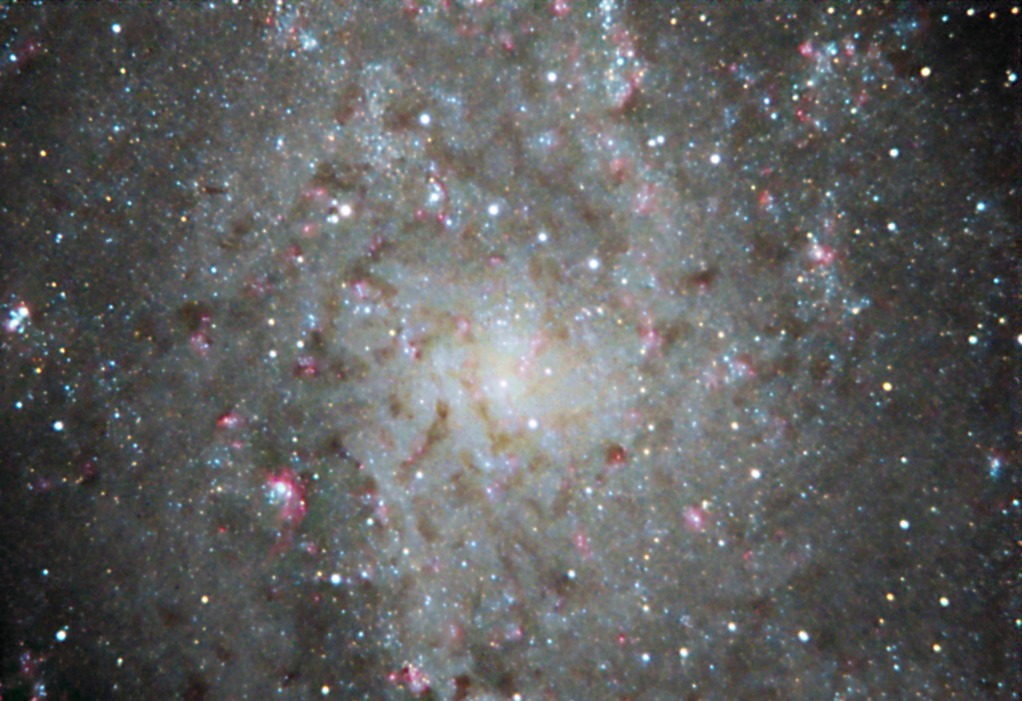
And then it would still take a bit of imagination/wishful thinking to get to that Tony Hallas version.A couple of students using the observatory last month got this one - but it was actually a miss. They were intending to get NGC604, the large emission cloud on the edge, but that one is outside the field of view. Easy to do if you just center the bright thing, which is what you usually want. I think the total exposure was LRGB 38:28:34:30 and I am not convinced that the flat was the best. I stretched and played with their tiff for this version. There is some more L data available, but it really just needs more time and better flats.
Thanks for looking. And please let me know if you have any suggestions.
Charlie
Attached Image:
Fort Lewis Observatory: (37.238, -108.052) ~2360m (7744 ft.) elevation.
Darkness - typically 6.5+
Scope - Meade 16" LX200; f6.3 focal reducer
Focus - JMI Smart focus
Camera - SBIG ST-10XE; (~.5"/pixel)
Guiding - AO-8 and/or Meade 5"/DSI/PHD
http://www.fortlewis.edu/observatory

