These are some of the first images that I have processed from my recent trip to several Chile observatories. I spent time at Cerro Tololo and Las Campanas doing service work on a number of remote observatories, including mounts and scopes from 12" to 24" apertures.
I also spent 6 days at Daniel Verchatse's Hacienda Los Andes, where he has set up a number of imaging scopes for visitors to use. These include a 175EDF refractor, a 14" RC Optical astrograph, a 20" Tec astrograph and a number of visual scopes from 6" to 12" aperture. These scopes are in roll-off roof and clamshell domes, and come complete with cameras, computers and software, ready to image. All you need bring is a thumb drive to take home the data. And I did bring many gigabytes home with me.
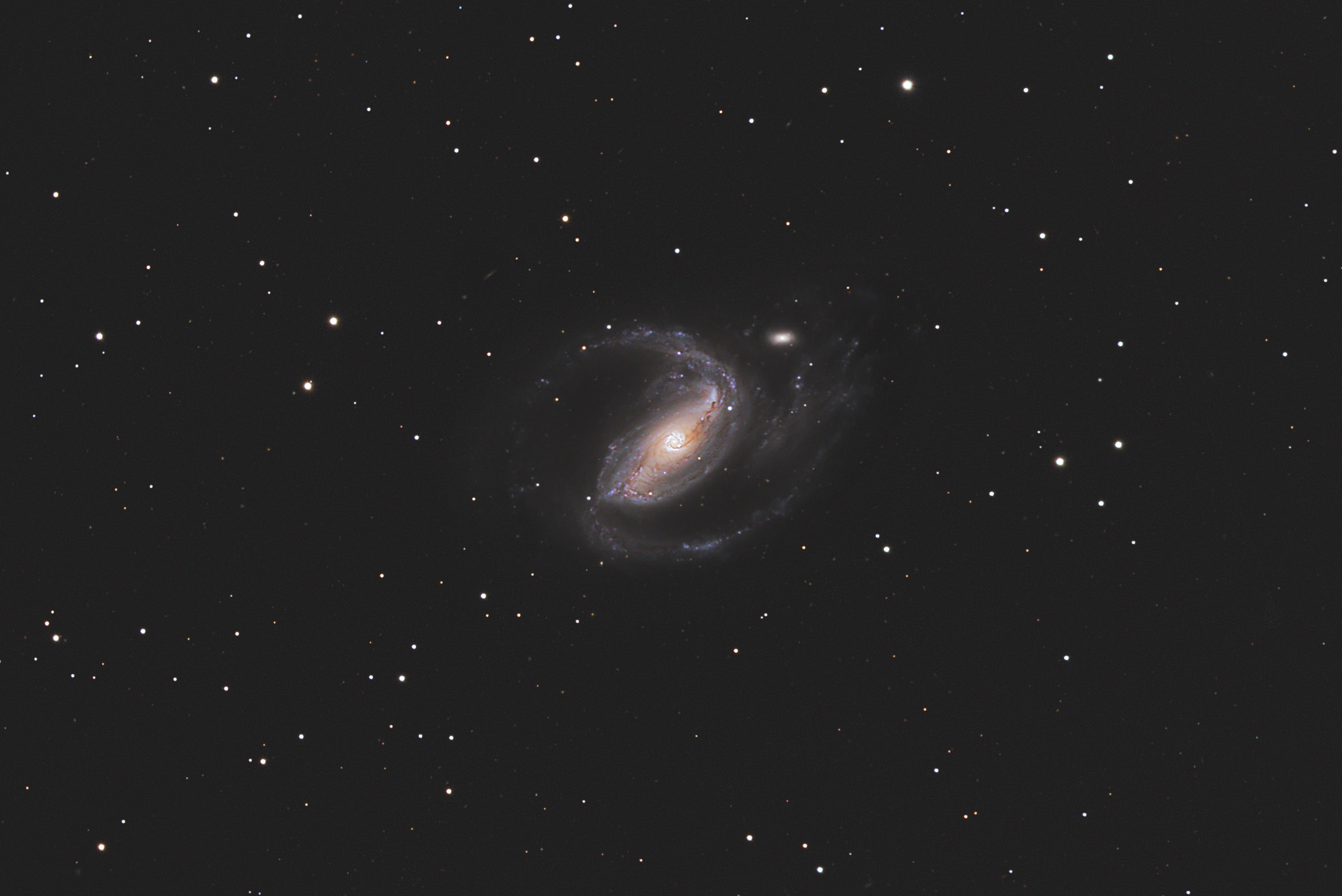
These first images were taken with the 175EDF (the color image) and the 20" Tec astrograph (the black&white one). While the 175EDF refractor provided a fine shot of a small galaxy, it took a large number of individual exposures to show all the features of this object (NGC1097). All in all there were 24 x 600 seconds of L and 10 x 600 seconds of RGB binned 2x2 in the refractor image. The 20" Tec, on the other hand slammed so much light down in a short time that it recorded more faint detail in only 4 x 600 second exposures. Some of that has to do with the camera which had 9 micron pixels versus the 7.4 micron used on the refractor. However, the main reason is that the 20" gathers some 8 times the light that the 175 does in the same amount of time. So for small galaxies, the large aperture is the way to go. For wide field deep sky, the smaller refractor is king (will post a cool wide field later).
One comment about the TEC astrograph. I worked with a number of large scopes from various manufacturers from 16" to 24" aperture. While impressive in size, they did not impress me in their mechanical and optical performance. The TEC in my opinion was the cleanest and nicest design that I had the pleasure to use. The images were crisp even in not-so-great seeing at times, and produced outstanding resolution when the seeing really got good. It was a pleasure to use, but unfortunately Yuri at TEC has decided to not make any more of them. And that is really a shame.
Rolando
I also spent 6 days at Daniel Verchatse's Hacienda Los Andes, where he has set up a number of imaging scopes for visitors to use. These include a 175EDF refractor, a 14" RC Optical astrograph, a 20" Tec astrograph and a number of visual scopes from 6" to 12" aperture. These scopes are in roll-off roof and clamshell domes, and come complete with cameras, computers and software, ready to image. All you need bring is a thumb drive to take home the data. And I did bring many gigabytes home with me.
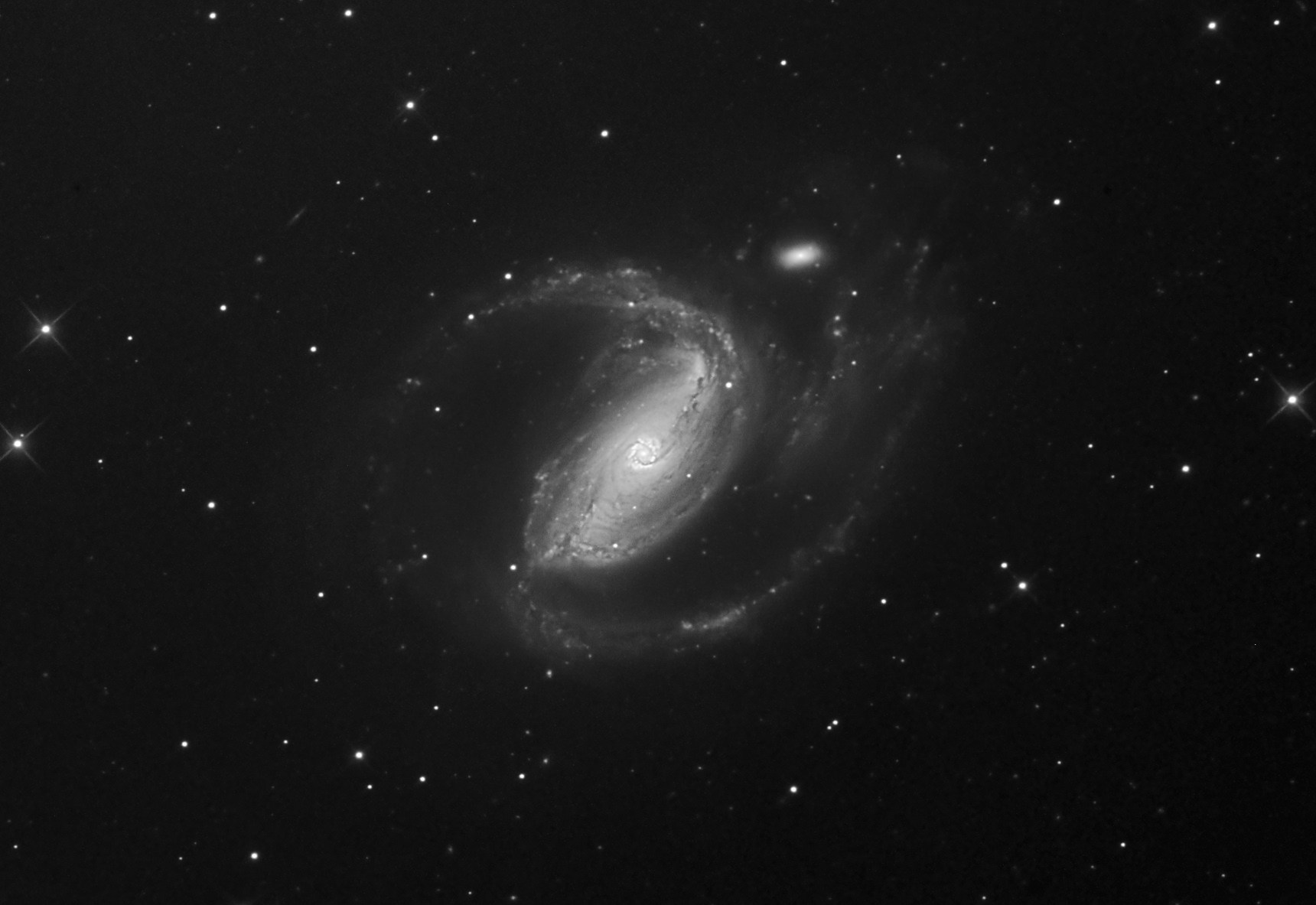
These first images were taken with the 175EDF (the color image) and the 20" Tec astrograph (the black&white one). While the 175EDF refractor provided a fine shot of a small galaxy, it took a large number of individual exposures to show all the features of this object (NGC1097). All in all there were 24 x 600 seconds of L and 10 x 600 seconds of RGB binned 2x2 in the refractor image. The 20" Tec, on the other hand slammed so much light down in a short time that it recorded more faint detail in only 4 x 600 second exposures. Some of that has to do with the camera which had 9 micron pixels versus the 7.4 micron used on the refractor. However, the main reason is that the 20" gathers some 8 times the light that the 175 does in the same amount of time. So for small galaxies, the large aperture is the way to go. For wide field deep sky, the smaller refractor is king (will post a cool wide field later).
One comment about the TEC astrograph. I worked with a number of large scopes from various manufacturers from 16" to 24" aperture. While impressive in size, they did not impress me in their mechanical and optical performance. The TEC in my opinion was the cleanest and nicest design that I had the pleasure to use. The images were crisp even in not-so-great seeing at times, and produced outstanding resolution when the seeing really got good. It was a pleasure to use, but unfortunately Yuri at TEC has decided to not make any more of them. And that is really a shame.
Rolando
Attached Image: