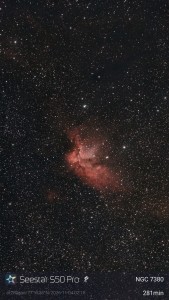
Here is my first attempt at using an SBig camera.
2000XM with CFW8a filter wheel. Chip at -15C to -25C (started to frost slightly at -25 after a little while).
Halpha 5 x 45 secs, red 3 x 30 secs, green 3 x 30 secs, blue 3 x 30 secs. 1x1 binning. Standard Sbig filters. No clear shots for luminance though as when I combined them the image went really red for some unknown reason.
Aligned and combined in CCDSoft and final levels in Nikon Capture Editor.
William Optics 80/480 fluorite, unguided, piggybacked on a Nexstar 11 GPS. F6 no reducer. Shot was cropped to get rid of some coma. Reducer/flattener on the way hopefully will handle that.
In my backyard, fairly clear night, some moon
(1/3rd moon) Sydney.
Turned out not too bad. Any suggestions?
I figure I start autoguiding in a week or two so longer exposures will be possible but this camera is pretty sensitive and these short exposures were quite bright.
Greg.
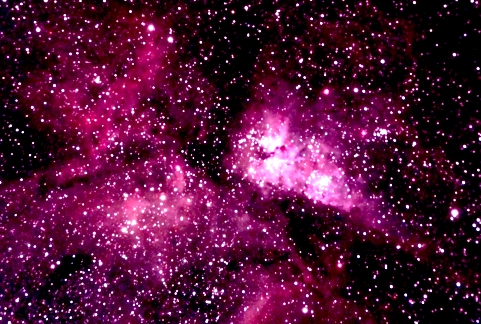
2000XM with CFW8a filter wheel. Chip at -15C to -25C (started to frost slightly at -25 after a little while).
Halpha 5 x 45 secs, red 3 x 30 secs, green 3 x 30 secs, blue 3 x 30 secs. 1x1 binning. Standard Sbig filters. No clear shots for luminance though as when I combined them the image went really red for some unknown reason.
Aligned and combined in CCDSoft and final levels in Nikon Capture Editor.
William Optics 80/480 fluorite, unguided, piggybacked on a Nexstar 11 GPS. F6 no reducer. Shot was cropped to get rid of some coma. Reducer/flattener on the way hopefully will handle that.
In my backyard, fairly clear night, some moon
(1/3rd moon) Sydney.
Turned out not too bad. Any suggestions?
I figure I start autoguiding in a week or two so longer exposures will be possible but this camera is pretty sensitive and these short exposures were quite bright.
Greg.
Attached Image:

