Image of the day

Captured by
Shane Yarnall

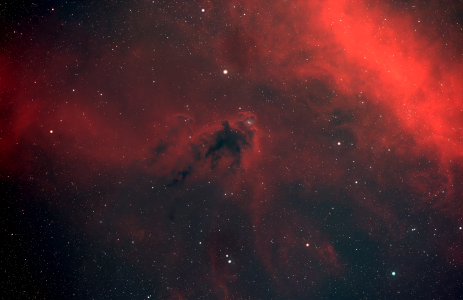
LDN 1622

My Account

New to Astromart?

Register an account...

Need Help?

focal reducer field flatness question

Started by hakescl, 04/30/2008 01:02PM
Posted 04/30/2008 01:02PM Opening Post
Here is a question for anyone who uses focal reducers (Jim Thommes are you there?) I don't want to completely re-invent the wheel. I guess I know that increasing the distance between the reducer and your camera gives you much wider fields, but at the expense of some really wacky light distribution. So I put my f6.3 reducer rather close to the camera, thinking that would be better. And after having it in that location for over a year (thinking I was operating ~f6.3) I figure out it is really ~f7.8. So here is the question - how much better do those focal reducers work if they are "tuned" in to the correct distance? (I assume they are designed with a diagonal in mind.) Would adding that spacer actually give me a more even field illumination? Thanks for any comments on this.

Charlie

Fort Lewis Observatory: (37.238, -108.052) ~2360m (7744 ft.) elevation.
Darkness - typically 6.5+
Scope - Meade 16" LX200; f6.3 focal reducer
Focus - JMI Smart focus
Camera - SBIG ST-10XE; (~.5"/pixel)
Guiding - AO-8 and/or Meade 5"/DSI/PHD
http://www.fortlewis.edu/observatory
Posted 04/30/2008 06:07PM #1
Hi Charles,
Well, I use a Televue .8 FR and they specifically state that the distance must be within 2-3mm of the design distance.
So, I would think that yours will work the best at its designed distance too.
Does it vignette or cause any distortions now?

[SIZE="Large"][/SIZE][COLOR="Blue"][/COLOR] Floyd Blue grin
Amateur Imager
Posted 05/01/2008 04:59AM #2
A few months back I asked the question--just how far shoulr the Reducer/Corrector be from the focal plane. Nobody on the forum gave me a solid answer, and there was not much interest in the question.

I was later told by an astroimager I respect that the ideal length (for the standard Meade/Celestron Reducer/Corrector) is about 85 mm. So that is where I put it.

Anybody have better ideas? More discussion?

Alex
Posted 05/02/2008 03:57AM #3
Hi Charles,
I'm here and I have scanned this thread a bit. Some answers are well provided. Here is my 2 cents worth...

I believe the best image comes from the recommended. In the case of the 0.63 x designs I belive that distance is 85 mm. These reducer focal lengths are about 230 mm. You could actually check this by holding your reducer in one hand and a ruler in the other over a flat matte surface on a moon lit night. Move the reducer up and down until you see the moon focus on the flat surface - use the ruler to measure the distance from the reducer to the surface.

The reduction you get when you use a reducer is:

reduction = 1 - (D / FL)

D is the distance to the focal plane, FL is the reducer's focal length.

So 1 - (85 / 230) = .63

What makes this distance optimal is the flatness correction at different wavelengths. My opinion is you will get best shaped stars at this distance. When you stray from this distance, you degrad from the optimum. My observation is that this degradation is gradual as you shorten the distance and more extreme as you lengthen the distance. Thus your f/7.8 may not be too discernable from the f/6.3. However, take it to f/5.0 or so and I think you will start to see bloated stars and poor shaped edge stars.


Jim Thommes

Mak-Newt 152 mm
C8
Megrez II APO
Zenithstar 66 mm APO
G11/Gemini
ST8300M
Artemis285 Camera
Canon 350D DSLR

http://jthommes.com/Astro/
