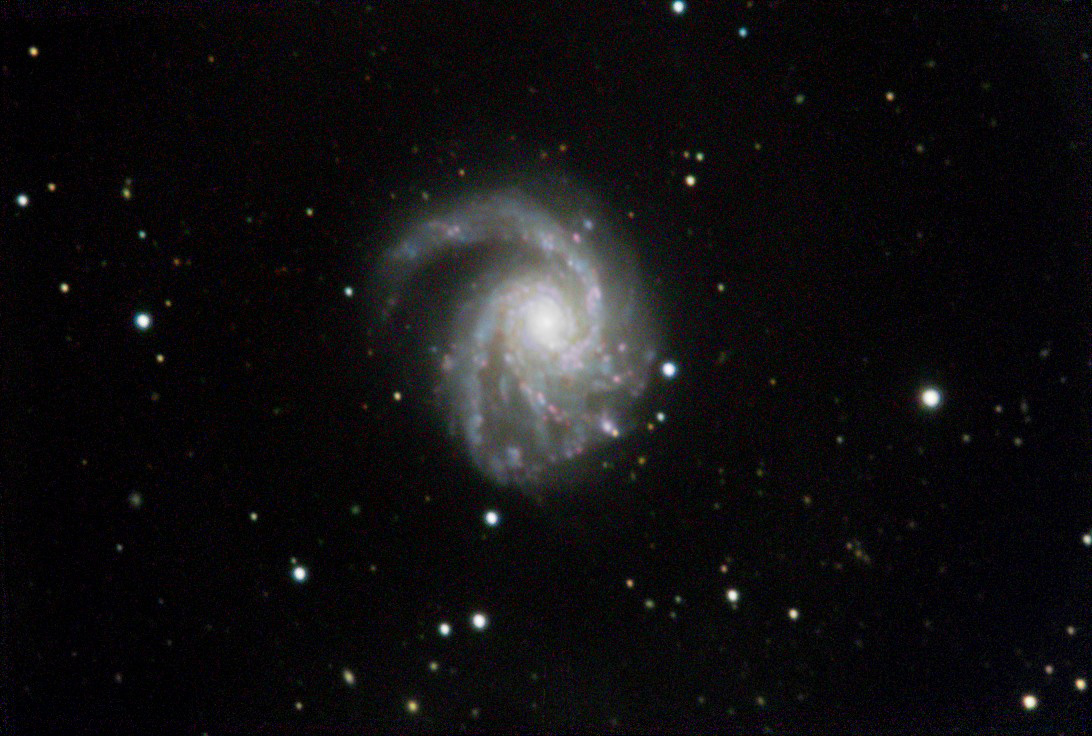

This is a couple of hours worth a from a few days ago before the moon moved into the region - another image with the re-installed 16" scope. The seeing was typical (i.e. bad) as you can likely tell, but I think this turned out alright considering the flat/rotation issue we have in this configuration.
In the mean time, we have hosted two star parties at the observatory totaling about 40 middle school kids. Their favorite part was watching 10 second "real time" images of M104 come in. (Nothing saved from that though.)
Any suggestions for removing the color "noise" from the background here? I have tried various lowpass filtering options, but am still fumbling around for a semi-consistent processing algorithm. Here I just did a "DDP" on the L channel. Maybe one of these days I will have the time for this.
Charlie
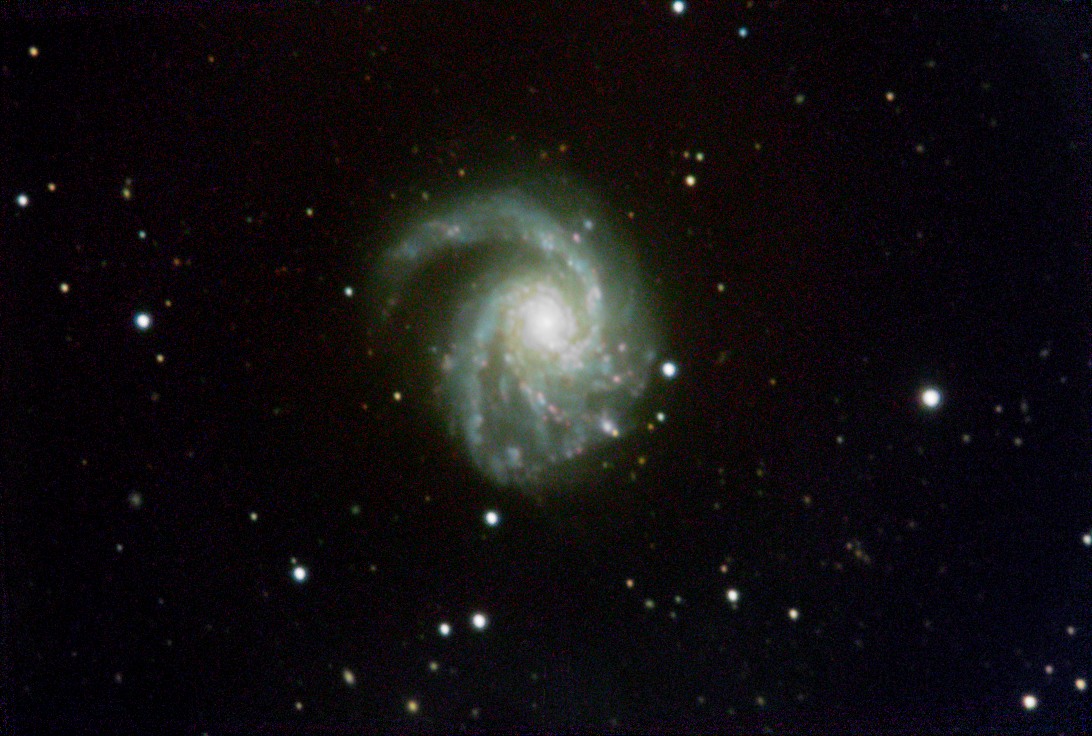
In the mean time, we have hosted two star parties at the observatory totaling about 40 middle school kids. Their favorite part was watching 10 second "real time" images of M104 come in. (Nothing saved from that though.)
Any suggestions for removing the color "noise" from the background here? I have tried various lowpass filtering options, but am still fumbling around for a semi-consistent processing algorithm. Here I just did a "DDP" on the L channel. Maybe one of these days I will have the time for this.
Charlie
Attached Image:
Fort Lewis Observatory: (37.238, -108.052) ~2360m (7744 ft.) elevation.
Darkness - typically 6.5+
Scope - Meade 16" LX200; f6.3 focal reducer
Focus - JMI Smart focus
Camera - SBIG ST-10XE; (~.5"/pixel)
Guiding - AO-8 and/or Meade 5"/DSI/PHD
http://www.fortlewis.edu/observatory