
Hi all,
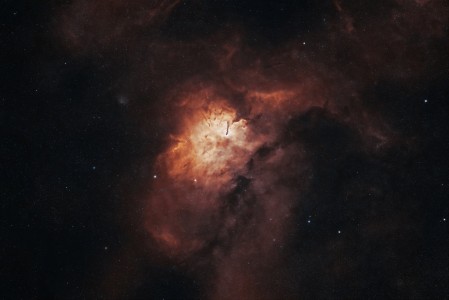
Most narrowband images we obtain are displayed using false color mapping, with the Hubble palette (SII=red, Ha=green, OIII=blue) being the most common and familiar. I have also tried mapping using the Canadian-France-Hawaii Team palette (Ha=red, OIII=green, SII=blue) and to CMYK for fun. What I have not been able to get quite right is mapping to the actual narrowband wavelengths (SII 673nm etc) to create an image that is more of a "true color" of the wavelengths captured with these filters. I've tried various techniques in Photoshop without much success. I do realize both the SII and Ha are in the red, and perhaps they are too close to make this kind of thing work.
Curious as to whether anyone else has tried this and if so, what did you do.
Thanks
John
Below "Pacman" narrowband mapped to CMY (OIII, SII, Ha)
Most narrowband images we obtain are displayed using false color mapping, with the Hubble palette (SII=red, Ha=green, OIII=blue) being the most common and familiar. I have also tried mapping using the Canadian-France-Hawaii Team palette (Ha=red, OIII=green, SII=blue) and to CMYK for fun. What I have not been able to get quite right is mapping to the actual narrowband wavelengths (SII 673nm etc) to create an image that is more of a "true color" of the wavelengths captured with these filters. I've tried various techniques in Photoshop without much success. I do realize both the SII and Ha are in the red, and perhaps they are too close to make this kind of thing work.
Curious as to whether anyone else has tried this and if so, what did you do.
Thanks
John
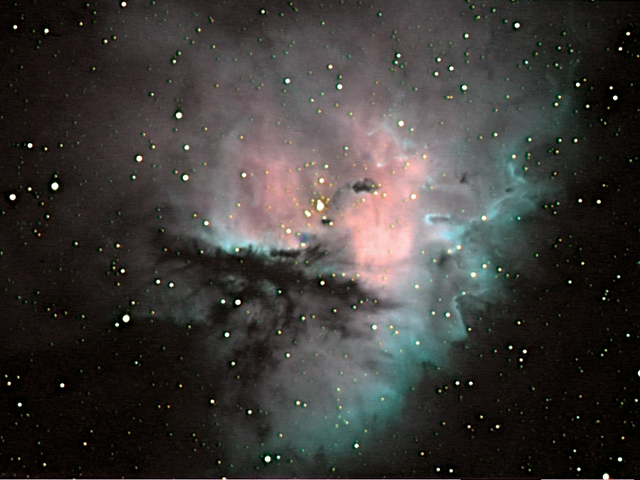
Below "Pacman" narrowband mapped to CMY (OIII, SII, Ha)
Attached Image:
John Theodossy
http://geocities.com/myastrostuff/
