Image of the day

Captured by
Erwin Forbragd

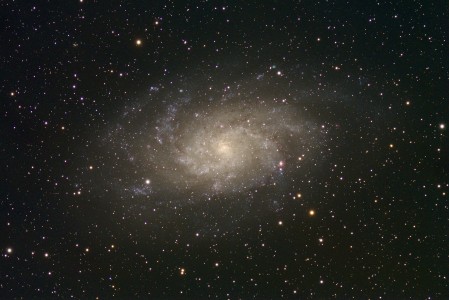
M33 in Triangulum

My Account

New to Astromart?

Register an account...

Need Help?

Need a little DSI help

Started by Ibartman, 12/18/2006 10:49PM
Posted 12/18/2006 10:49PM Opening Post
I firdt put this on beginner forum but got no response so hopefully u guys will be able to help me out a little bit here.

I have a 10" LX200 GPS and want to get into Imaging. I am looking at getting a DSI 2 Color and i have a few questions that i cant seem to find anywhere. The Meade site is pretty Vague.

1st- would this be a good Camera to start with?

2nd- do i need to look into a guide scope with the DSI? and if so what do i use?

3rd- Is there a book like Astrophotography for Dummies that explains all this photography stuff in lamens terms and gives me a good idea of what i need ( ie weights, how to use a guide scope and hook it up. etc)

If i am in the wrong forum please let me know and i will go to CCD one but that one seemed to be a bunch of "got their stuff together" astrophotographer showing their pictures ( which are awesome btw)

I love my scope and wanna get the most out of it. Please help me out. thanks

Rick
Posted 12/18/2006 11:18PM #1
My first thought would be that a color camera is very limiting for deep sky imaging. If you are strting out brand new, you will get better results with a dedicated black&white camera. It will go deeper and give you better resolution (i.e. sharpness).

Your scope is not ideal for first time astrophotographers, but it can be made to work with a bit of perseverance.

I would start out shooting bright objects like M32 or M45 with 30 second exposures and stacking lots of them (50 to 100). This will minimize your guiding issues. It will give you an idea of what you can achive with your setup.

Long exposures of many minutes are only possible if you have some kind of guiding mechanism, and for CCD images, you really do not want to guide manually. Otherwise you will drive yourself nuts.

If you really want color on, you can either get a set of filters, or if you want, start out with a color camera, but be prepared to be somewhat disappointed in the results. A black&white camera can get you results that are close to what top imagers get, especially on the brighter objects. For the faint stuff, you will have lots of trouble with a color camera.

Rolando
Posted 12/20/2006 03:18PM #2
Hello Rick,

I am in no way an accomplished astrophotographer as some of the guys here, but I believe that my experience could be of some help to you.

Although what Roland says is absolutely true, I would begin with a one-shot color camera. I did that (I started with an ST-2000 XCM from SBIG) and I don't regret it. After practicing a bit with that camera and solving some of the problems related to astrophotos, I decided it was time to go into the B&W and bought a mono camera and filter wheel. I'm still fighting my battle with this camera and all the additional problems related to capturing (a lot more time needed for the same object because you have to shoot through all the different filters, usually LRGB) and processing (because you simply have at least 3 times the quantity of shots you would have with a one shot color camera) but I'm now enojoying it more because some of the problems I already solved with the previous simpler camera.

So my advice is: get accustomed to all the issues and problems of astrophotos with a simple camera, shooting many short exposures, as Rolands suggests, to dispense with the problem of guiding, which is a handful by itself, and then slowly move on to different more challenging cameras that involve more problems, but also give you more satisfying results. Luckily, this hobby has a good second hand market for just about all items, basic and semi-pro, so, by the time you grow out of whatever camera you decide to buy (and trust me, you will) you can always sell yours and buy a new or used one grin

Hope this helps.

Ciao
Luca

www.amun-ra.org
Solar Imaging Website
Posted 12/20/2006 04:38PM #3
Rick,
You might want to check out the DSI group on Yahoo--they can help you with more specific questions about the DSI. FWIW, I started out with a monochrome (Starlight Xpress MX716--about $700 used these days) after first using a webcam for planets and moon. I have been very happy shooing monochrome, then adding filters, particular shooting from the suburbs. It is easier to learn processing with just one channel, and I also think that black & white can be quite thrilling to many subjects. In fact, before moving to color filters, you could even think about going to Ha if you have much light pollution (although Ha does require longer exposures, thus guiding, which should be a second step after mastering shorter exposures).
Plus, do not worry about your scope--I use an LX90 with pretty good results. (Of course, in a quest to spend even more money, I always am thinking about going to a good GEM!)
Hope all this rambling helps,
Larry
