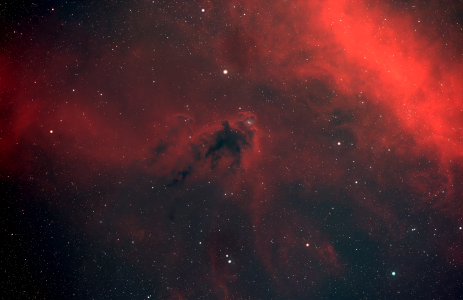

I took my first shot in H-alpha tonight. This is the narrower CS filter from SBIG. It has actually taken several evenings of scope "fiddling" without getting much done to get to this point, but most of that is another story. This was a total of 48 minutes with 3 minutes subs. I probably re-focused twice in the middle, and re-started autoguiding 4-5 times. (Arrggg! ^%$#@) But I only had to toss ~4 subs. Maybe another night I can try the SII and OIII, and get my own Hubble image, but for some reason the threads on this filter don't fit quite right on that wheels. (This is the third filter with screwy threads, has anyone else had this problem?) Oh well.
I think this narrow band stuff is a great idea for a full moon. Especially since I totally forgot I could look for a comet.
Charlie
Details:
Scope - Meade 16" LX200; mounted Alt-Az with field de-rotator; f6.3 focal reducer
Focus - JMI Motofocus
Camera - SBIG ST-10XE; binned 2x2 (~.88"/pixel)
Software - CCDSoft; TheSky; PHDGuiding
Guiding - Meade 5"/DSI/PHD
I think this narrow band stuff is a great idea for a full moon. Especially since I totally forgot I could look for a comet.
Charlie
Details:
Scope - Meade 16" LX200; mounted Alt-Az with field de-rotator; f6.3 focal reducer
Focus - JMI Motofocus
Camera - SBIG ST-10XE; binned 2x2 (~.88"/pixel)
Software - CCDSoft; TheSky; PHDGuiding
Guiding - Meade 5"/DSI/PHD
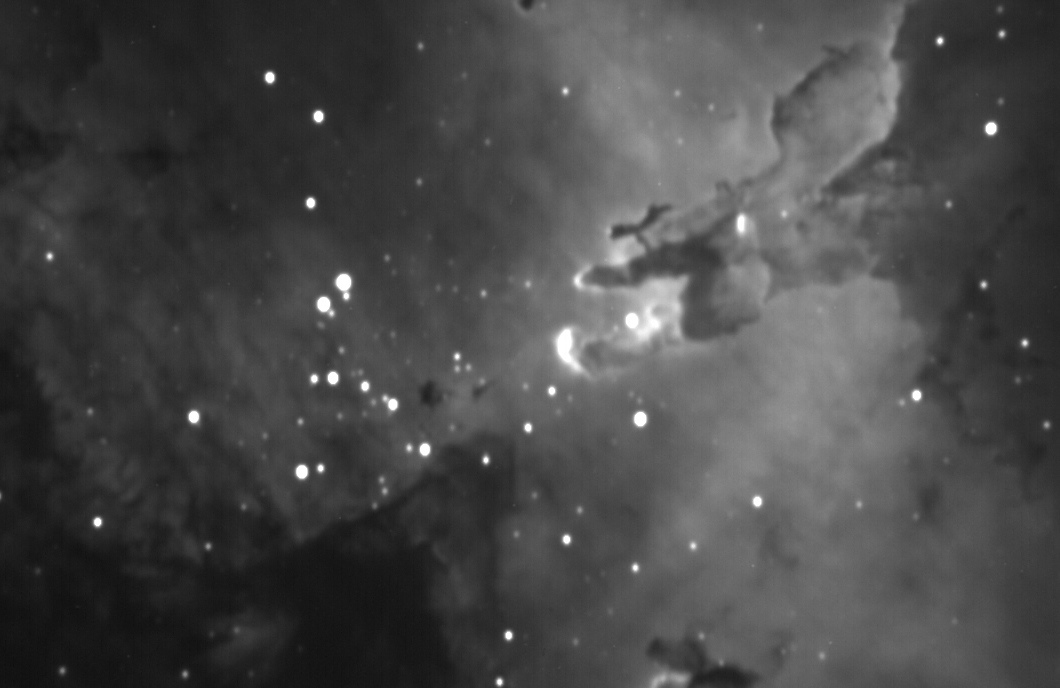
Attached Image:
Fort Lewis Observatory: (37.238, -108.052) ~2360m (7744 ft.) elevation.
Darkness - typically 6.5+
Scope - Meade 16" LX200; f6.3 focal reducer
Focus - JMI Smart focus
Camera - SBIG ST-10XE; (~.5"/pixel)
Guiding - AO-8 and/or Meade 5"/DSI/PHD
http://www.fortlewis.edu/observatory


