
Hello all,
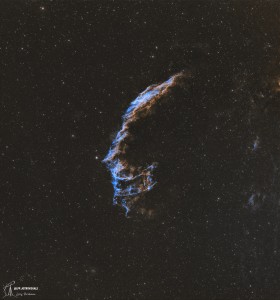
After a couple of years messing around with webcams, digital cameras and DV, I took the plunge and bought a dedicated astro-ccd. I got a SAC8 and have been doing some tests over the last couple of weeks. The imager is only 8-bit, but seems to be very sensitive. I have posted some test results on my webpage and a couple of "first light" images. There have been some good discussions on the SAC8 yahoo group, and thought I would get some opinions from the GURUs here.
I have been through Ron Wodaski's book and some other references and it seems that the SAC8 behaves somewhat differently than the more traditional imagers and as such may require some different techniques.
A couple of specific questions:
1. Assuming I am correct in my conclusion that this device is ridiculouly sensitive what filters will be of most use (H-alpha, OIII, etc). Any filter work well for imaging galaxies?
2. I hope to be able to at least partially overcome the 8-bit limitation by using a combination of traditional image stacking and the "layer masking" technique. Is this a realistic expectation? Any other techniques to overcome the 8-bit limitation?
Let me know what you all think.
my SAC8 test page:
http://www.geocities.com/myastrostuff/SAC8_Tests.html
my home page:
http://geocities.com/myastrostuff/
Thanks for your input
John
John Theodossy
http://geocities.com/myastrostuff/

 First, the 8 bit ccd is only going to show half the number of shades of gray that a 16 bit camera will, obviously. So stacking the images will only improve the signal/noise ratio.
