Image of the day

Captured by
Lawrence Parchman

Eastern Veil Nebula (NGC 6992) - Wide View

My Account

New to Astromart?

Register an account...

Need Help?

Advice wanted on planetary cams

Started by gregbradley, 02/06/2009 05:17AM
Posted 02/06/2009 05:17AM Opening Post
I usually do DSO imaging so a bit out of the loopon planetary cameras.

What are some of the better planetary cams to use?

I see DMK and SKYnyx are used often. There are several models though, so which are better and
which are best?

Is mono and colour filters the way for best resolution like it is with DSO imaging?

Greg.
Posted 02/06/2009 04:10PM #1
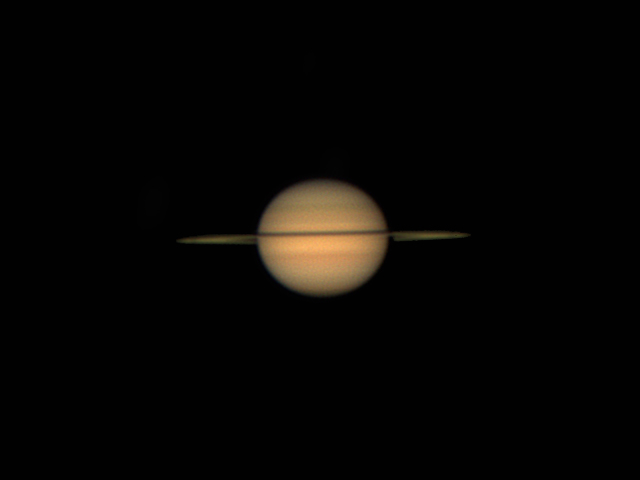
You will get different opinions on this depending on your area and scope used. I have been happier using color cameras than mono with a filter wheel. I have done many comparisons using a C9.25, Mewlon 210, and a TMB 8" refractor. Unless you have consistently good seeing it is really difficult to get your RGB captures each with good seeing before you start having rotation problems with Jupiter and Mars...Saturn isn’t a problem unless your after super fine details like a storm. You can still separate the channels and add luminance in Photoshop to tweak your image to perfection. Again this is what works for me and you will find many awesome planetary images made with mono cameras as well. As for cameras the names you mention are very good cameras. I have used a DMK (have it for sale…shameless plug) and made good images with it, but personally like the Lumenera cameras. However, they are more expensive and it is more about budget IMO. I would recommend buying used to get started and find out which works best for you. I have attached my latest Saturn from two days ago made by a color camera. You can also see some samples at my Flikr site (address in my sig). Hope this helps

Russell


Attached Image:

RLH's attachment for post 128063

www.flickr.com/photos/61135315@N00/
Posted 02/06/2009 07:36PM #2
I agree with most of Russell's points.

The different DMK and SKYnyx cameras have different
chip sizes and pixel sizes. The more expensive ones
have more pixels, but also have slower readout speeds
(which is bad for planetary). You will be fine with the
cheapest models. The only advantage I have found
with the larger chips, is that it is easier to keep
the planet in the field of view when tracking is bad.
But other than that, there is not much advantage to
larger chips -- more pixels does not get you more
resolution.

In theory mono and filters will get the best image,
since there is no Bayer interpolation to blur the
result. And some of the best images have been taken that way.
But as Russell mentions, planetary rotation becomes a
problem, especially if you need to expose 2 or 3 minutes
to get enough signal and sharpness. If you have poor
seeing, then color camera is probably the way to go,
in my opinion. If you've got great seeing, and can
get a decent image in 30 seconds, then you probably
have time to deal with three separate exposures for the
different color filters.

These are some important differences from deep-sky --
for planetary, the seeing is extremely important.
And the target is changing (rotating) so you only have
a couple minutes to get the image. For deep sky
you could even take the different filters on different
nights, and get good results.

I have sometimes wondered if the best strategy would be
to buy the cheapest camera you can find, and use the
rest of the money on a plane ticket to somewhere with
decent seeing. I think good seeing is about 70% of the
game, good optics about 20%, and all the rest (camera, etc.)
is only about 10%. Here is a link to an image I got 3 years
ago using a $90 ToUcam (cheap color web cam) from Florida Keys.
http://www.astromart.com/common/image_popup.asp?image=/images/forums/426000-426999/426182.jpg
Here's another I got with SKYnyx 2-1c. Is it $1500 better? Maybe not.
http://www.astromart.com/common/image_popup.asp?image=/images/forums/586000-586999/586100.jpg
Posted 02/07/2009 01:42PM #3
This is a great thread as I'm considering some planetary photography myself after a 20 year break.

Can you use a camera with a color wheel with large achromats? Of course you would have to refocus for the different colors.

Jeff

"Don't sweat the petty things and don't pet the sweaty things" 8O
