Image of the day

Captured by
Byron Davies

Sh2-86 (NGC-6820)

My Account

New to Astromart?

Register an account...

Need Help?

AO7 Users... A question

Started by Joe Bruessow, 11/13/2004 01:01AM
Posted 11/13/2004 01:01AM Opening Post
If you are an experienced AO7 user can you give some insights on how much improvement to expect when using one vs. normal autoguiding? How much tighter did you stars become?

I get nice round stars for the most part when autoguiding but wonder if one of these wouldn't further improve my images with an ST2000XM, on my Meade 12" SCT OTA on an MI250 mount. Or am I better off putting the funds into a more sensitive imager?

Thanks for your advice...
Posted 11/13/2004 04:03PM #1
How about a reply from an inexperienced AO7 user?
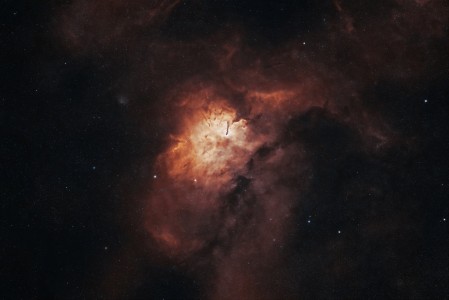
I just finished puting a 12" reflector on an MI-250 with an AO7 in the optical train. The attached image is one of the first that I have taken with this setup. I haven't played with the setttings on the AO7, just using the default values and the seeing was about 2/5 that night. The telescope was manualy focused so that may be off. The stars were not sharpened or tightened up in processing.
My initial impression of the AO7 is that I'm extremely impressed. I don't have any hard data to give you, however.
If you're getting nice round stars now, the AO7 is going to help but I don't know how much. For me it was money well spent. Upgrading to a more sensitive imager may cost much more than the AO7, too.
I hope this helped you some, Joe.

dan kowall

Attached Image:

dan  kowall's attachment for post 84924
Posted 11/13/2004 04:24PM #2
It won't do anything about bad seeing if the seeing is such that the stars are bloaty. It will improve star diameters when the seeing is wandering quickly which cannot be followed by your guider. It will also help if your mount is poor quality and not steady in a wind, or the drive gear is erratic.

Best results are achieved when the AO7 is set up to make 10 corrections or more per second. For that to work, you will need to find a bright guide star that can register above the noise with .1 second or shorter exposures. This is not always easy, especially in star poor regions of the sky, or if your scope is less than 10" aperture.

The AO7 works best in situations where you have a very large scope mounted on a marginal mounting where normal guiding produces large errors due to vibration or wind or poor tracking.

Roland Christen