Hi All,
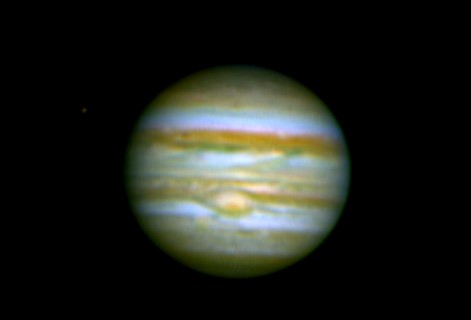
Every time I image Jupiter, I end up with a very pronounced red halo and a blue halo around Jupiter after I stack the frames. This happens even when the seeing is good. I use the RGB shift feateure in Registax to try and align the colors but it never seems to work right. I'm wondering if I may have a problem with my camera? Anyone else have this problem? I attached an image I took a few weeks ago. I shifted the blue and red channels around as best I could but I always end up with a a large area of smeared blue around the planet's limb (look on the right side of the image). My equipment is a C11, a Toucam 740 pro, A Shular IR blocking filter, a Celestron 2x shorty barlow, and Registax and K3CCD tools for software. Thanks.
John
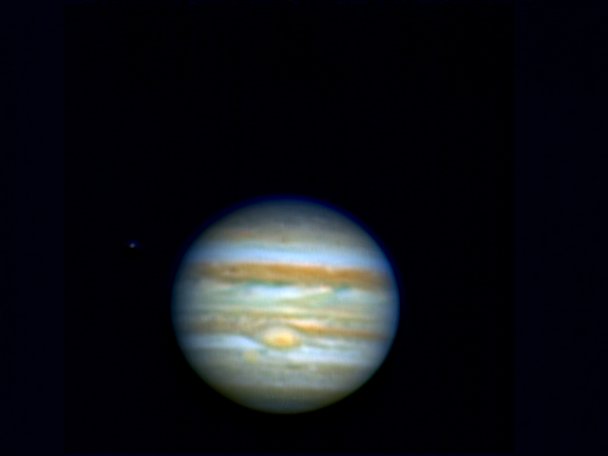
Every time I image Jupiter, I end up with a very pronounced red halo and a blue halo around Jupiter after I stack the frames. This happens even when the seeing is good. I use the RGB shift feateure in Registax to try and align the colors but it never seems to work right. I'm wondering if I may have a problem with my camera? Anyone else have this problem? I attached an image I took a few weeks ago. I shifted the blue and red channels around as best I could but I always end up with a a large area of smeared blue around the planet's limb (look on the right side of the image). My equipment is a C11, a Toucam 740 pro, A Shular IR blocking filter, a Celestron 2x shorty barlow, and Registax and K3CCD tools for software. Thanks.
John
Attached Image: