Image of the day

Captured by
John Roach

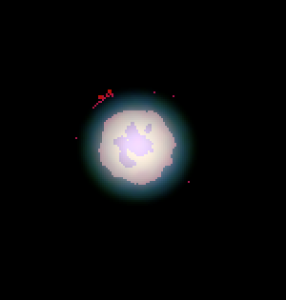
Enhanced Uranus showing Polar Cap and possible Aurora

My Account

New to Astromart?

Register an account...

Need Help?

dark frame question

Started by [email protected], 03/01/2010 01:34PM
Posted 03/01/2010 01:34PM Opening Post
This is going to sound really basic to those who have been doing this for awhile, but what is the typical method for taking/making a dark frame? I'm just starting out in DSLR astrophotography, and I'm interested in taking shots just with my Nikon D60 (I have the stock 18-55mm lens, and a Sigma 75-300mm). I've done webcam imaging and Registax for a few years, but this is new to me.

I gather that you take a blank, dark, shot to minus the noise that is inherent in the image. However, doesn't the camera do that automatically, and why does one need so many? From what I understand, the D60 takes as long to process the image as it took to take it, b/c it's doing the dark frames automatically--but I certainly could be mistaken. Lastly, what software do you like to use for these images? Like I said, I've used Registax for years, but never for star images...

Thanks,

Guy

16" f/4.52 ATM Truss Dob, Discovery Mirror
Denk II w/nags junkie

Posted 03/01/2010 03:14PM | Edited 03/01/2010 03:16PM #1
>>>>>what is the typical method for taking/making a dark frame?

After an evening of imaging, take a series of exposures with the same ISO and shutter time as the light frame exposures you just took. THe only difference is that you have to put the cover on the scope so that no light reaches the sensor. (Alternatively, you can remove the camera from the scope and put a cover over the sensor with a body cap or a capped camera lens. You should also block off the camera viewfinder so no light leaks back in from there.) You take them the same evening so that they are at the same ambient temperature as the light frames.

>>>>>>I gather that you take a blank, dark, shot to minus the noise that is inherent in the image.
Yes. The concept is that there is a certain amount of noise due to heat in the camera. This noise forms a pattern based on the hotspots on the imaging sensor (say, near an internal camera power amplifier or something). If you know the pattern of this noise, you can subtract it from the good signal that comes from the celestial object.

>>>>> However, doesn't the camera do that automatically,
Yes, if you have "Noise Reduction" set in your camera. No if you do not.

If you have set the "Noise reduction" function in your camera, the camera takes the regular light frame and immediately takes a dark frame, subtracting the dark from the light. THis is all very good. However, that means that it takes ten minutes to take a five minute exposure. (Five for light frame, five for dark.) THis cuts down the number of light frames you can get to half. Most of us would rather use time under a dark sky to take light frames. So, we prefer to take the darks at the end of the session while we are packing up or going off to take a nap.

>>>and why does one need so many?

In addition to fairly fixed noise, the camera has random noise (gamma rays, quantum fluctuations, whatever.) Taking multiple darks (and same applies to lights) lets you remove these weirdnesses by averaging and other algorithms.


>>>>>From what I understand, the D60 takes as long to process the image as it took to take it, b/c it's doing the dark frames automatically
Again, it takes "automatic darks" only only if you have Noise Reduction set, and see the earlier explanation. YOu can see that it takes as long to take a dark as it does to take a light (as you said.....) but to take the whole exposure (light plus dark) takes TWICE as long.


>>>>>what software do you like to use for these images?

There are a number of candidates for the software. I uses Images Plus, but others use Nebulosity and a number of other packages.

Alex