Hi all,
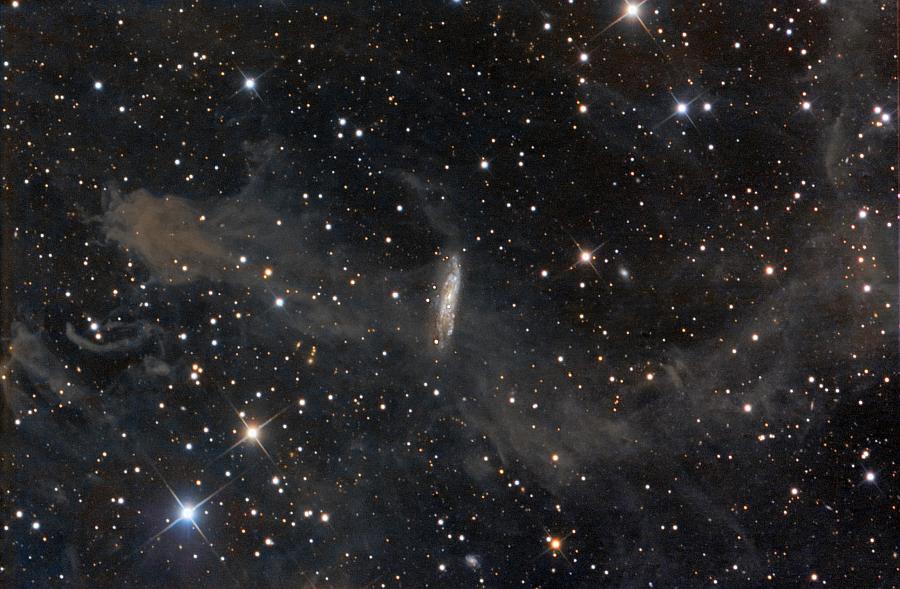
NGC 7497 is a spiral galaxy similar to our own Milky Way galaxy and is seen from our vantage point edge-on. It lies about 60 million light-years away from us in the constellation Pegasus. Its distance makes it a bit tough to capture details of its disk and dust lanes with existing equipment. What adds interest to this part of the sky is the presence of the integrated flux nebula (IFN for short) that lies in our line of sight to the galaxy. This nebula is clouds of interstellar dust that floats about the plane of the Milky Way which reflect the combined light of all the stars in our galaxy! The particular ghostly segments of the IFN captured in this are part of one cloud catalogued as MBM 54 and lies less than a thousand light-years from us.
http://www.skiesbyafrica.com/Galaxies/NGC7497.html
75% size:
http://www.skiesbyafrica.com/Galaxies/Images/NGC7497/NGC7497-2017.jpg
Older data, but newly added/updated:
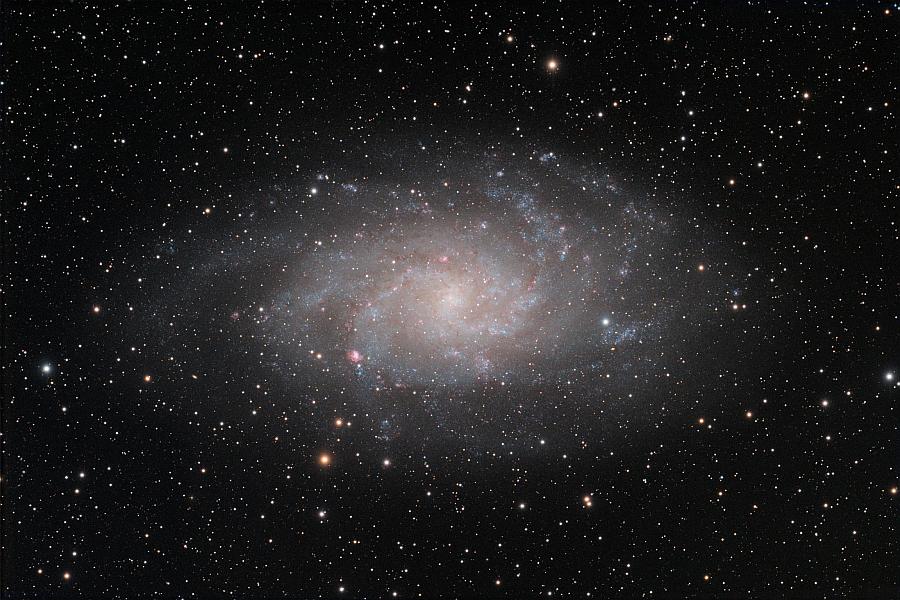
Here is an update to M33:
http://www.skiesbyafrica.com/Galaxies/M33.html
75% size:
http://www.skiesbyafrica.com/Galaxies/Images/M33/M33-HaLRGB-2017.jpg
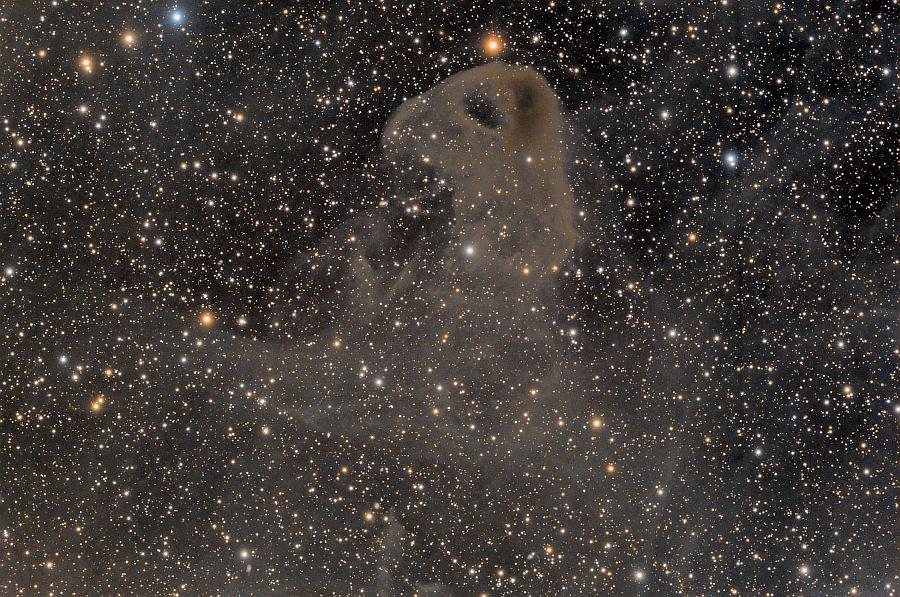
Lynds Bright Nebula (LBN) 777, also known as either the Vulture Head Nebula or the Baby Eagle Nebula, is a faint reflection nebula in Taurus. It lies about 4-1/2 – 5 degrees (that’s 9-10 Full Moon widths) northeast of the much easier-to-see Pleiades star cluster. The brown patch just to the right of the Vulture’s “eye” actually has its own designation: it is a dark nebula cataloged as Bernard 207. LBN 777 is a portion of a large cloud of gas and dust known as the Taurus Molecular Cloud. The brownish color is caused by large dust grains embedded in the gas, which reflects the light of stars inside and near the nebula.
http://www.skiesbyafrica.com/Nebulae/LBN777.html
75% size:
http://www.skiesbyafrica.com/Nebulae/Images/LBN777/LBN777.jpg
Enjoy,
Eric